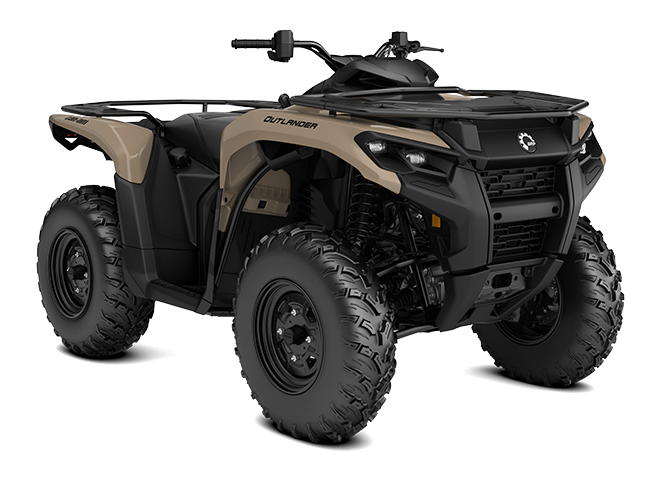
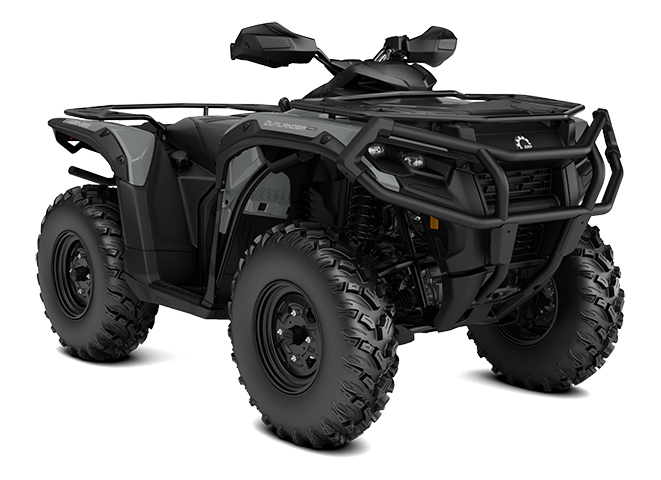
The 2027 Can-Am Outlander 700 is the first Outlander 500/700 package that looks like a complete all-terrain ATV rather than a low-price compromise. It starts at $7,749, makes 50 hp from a 650cc Rotax ACE single, adds selectable 2WD/4WD and a Visco-Lok auto-locking front differential, and keeps the full skid plate, 25-inch tires, rack capacity, and 1,830 lb braked-tow rating of the cheaper models.
The key word is first. It is still a basic package: no EPS, no winch, no aluminum wheels, and no passenger seat. That restraint is precisely why it is interesting. For only $750 more than the entry 2WD Outlander 500, the 700 adds ten horsepower and the front-drive traction most riders need. If you can live without power steering, that is a meaningful step for remarkably little money. If you cannot, skip the add-on temptation and price the DPS package from the start. Our guide to understanding ATV specifications can help put the numbers in context.
What changed for 2027?
Can-Am carries the Outlander 500/700 family into 2027 as its value-oriented recreational ATV range. The base Outlander 700 begins at $7,749 before transportation and preparation. It pairs the 650cc Rotax ACE single with Can-Am’s pDrive CVT and selectable 2WD/4WD, a substantial change in capability over the 2WD-only 500 entry package.
The 700 designation is a family name, not its displacement. The factory sheet lists the engine as a 650cc single that makes 50 hp and 41 lb-ft. That matters when comparing it with other brands’ 700-class machines: read the actual engine and package specification, not just the decals.
Powertrain and 4WD: the reason to spend the extra money
The liquid-cooled Rotax ACE single uses EFI and an Intelligent Throttle Control system. Its pDrive CVT has low, high, neutral, reverse, and park. Fifty horsepower is a useful boost from the 500’s 40 hp, but the front drivetrain is the feature that changes where the ATV can go.
The Outlander 700 lets the rider choose 2WD or 4WD. In four-wheel drive, the Visco-Lok front differential auto-locks when it senses a meaningful speed difference between the front wheels. It is a practical, low-fuss solution for loose climbs, wet grass, snow, and trail ruts. It does not turn the base 700 into a mud-specialist, but it is exactly the additional traction the 2WD model lacks.
Low range is the sensible selection for towing, repeated slow work, rough climbing, and any situation where belt temperature and wheel control matter more than speed. A 4WD system broadens the machine’s margin; it does not replace careful throttle inputs or correct tire pressure.
Chassis and capability: solid basics with honest limits
The Outlander is 47.6 inches wide on a 53-inch wheelbase, with 12 inches of clearance. It rides on 25-inch tires over 12-inch steel wheels, and double A-arms provide 9.75 inches of front travel and 10.25 inches at the rear. Twin-tube shocks, a 740 lb dry weight, and a full skid plate make this a durable-looking, all-purpose layout rather than a high-speed suspension platform.
Can-Am rates the racks at 120 lb in front and 240 lb at the rear, for 360 lb combined. A two-inch receiver and 1,830 lb braked-tow rating give the 700 genuine work value, from hauling equipment to pulling a small braked trailer. Match the actual trailer, slope, surface, and load to the rider’s experience. The published rating is a ceiling, not a target.
Equipment: enough for a working ATV, not a loaded trim
The base 700 includes a 4.5-inch digital display, LED headlights and taillights, a full skid plate, glovebox, front dropdown storage, mechanical key, basic handlebars, rack system, and hitch receiver. Those are sensible essentials at this price.
But Can-Am reserves the more convenient equipment for higher packages. There is no power steering, no winch, no intelligent engine braking, and no aluminum wheel package here. The next DPS trim adds Tri-Mode Dynamic Power Steering and a Visco-Lok QE differential; XT 700 moves farther upmarket with iEB, 26-inch tires, a 3,500 lb winch, and bumpers. Decide which of those items are real requirements before buying a base 700 and trying to recreate them afterward.
2027 Can-Am Outlander 700 specifications
| Specification |
2027 Outlander 700 base |
| Engine |
650cc liquid-cooled Rotax ACE single-cylinder |
| Factory-rated output |
50 hp / 41 lb-ft |
| Fuel system |
Intelligent Throttle Control with EFI |
| Transmission |
pDrive primary CVT, L/H/N/R/P |
| Drive system |
Selectable 2WD/4WD with Visco-Lok front differential |
| Estimated dry weight |
740 lb |
| Width / length / height |
47.6 / 86.7 / 48 in |
| Wheelbase |
53 in |
| Ground clearance |
12 in |
| Fuel capacity |
5.1 gal |
| Rack capacity |
120 lb front / 240 lb rear |
| Towing capacity |
1,830 lb with braked trailer |
| Suspension |
Double A-arm front and rear; 9.75 / 10.25 in travel |
| Tires / wheels |
25 in tires; 12 in steel wheels |
| Brakes |
Dual front hydraulic discs; single rear hydraulic disc |
| Steering / winch |
No power steering; no winch |
| Lighting / display |
LED headlights and taillights; 4.5 in digital display |
| Warranty |
1-year BRP limited warranty |
| Base MSRP |
$7,749, transportation and preparation not included |
How it compares
The 2027 Can-Am Outlander 500 is the clearest in-house comparison. It costs $750 less and makes 40 hp, but it is rear-wheel drive only. For riders who encounter variable ground, the 700’s 4WD system is usually the better investment. Compare them →
The 2027 Polaris Sportsman 500 is a same-price rival with AWD and a factory winch in ATVPedia’s current data. The Can-Am answers with a 50 hp engine and familiar Outlander package. Dealer service quality and the exact equipment you value should settle a close call. Compare them →
The 2025 CFMoto CForce 600 is the value-equipment challenge, listing EPS and a winch in ATVPedia’s current data. It is the reminder to compare the whole machine and local support, not only the initial price. Compare them →
The 2025 Outlander 700 remains worth checking if one is in stock. Compare the actual package, model year, price, and warranty start date. Compare 2025 and 2027 →
Price advice: the 4WD value point, if steering effort is acceptable
Can-Am’s $7,749 starting price excludes transportation and preparation, along with the usual tax and dealer charges. That is still attractive considering the 4WD system, full skid plate, racks, LED lighting, 50 hp engine, and real towing capacity. The basic 700 makes a good case as a first serious ATV or a simple property machine.
The crucial test is low-speed steering. The base model has no EPS. If tight turns, deep ruts, snow work, or all-day trail riding are part of the plan, test ride it and compare its out-the-door price with the DPS trim. Saving money on the sticker only makes sense if the machine is comfortable to control in the conditions you actually face.
Verdict
The 2027 Can-Am Outlander 700 is the sensible value choice in the 500/700 family. Its 50 hp Rotax single, pDrive CVT, selectable 4WD, Visco-Lok front differential, full skid plate, 25-inch tires, rack capacity, and 1,830 lb braked-tow rating turn a low-priced ATV into a genuinely versatile one.
Just be clear about the trim. It has no EPS, winch, or passenger setup, and its suspension is built for dependable all-round riding rather than hard charging. If that matches your use, it is a remarkably well-priced 4WD ATV. If it does not, step up before you buy instead of expecting accessories to solve a package-level limitation.