A 40-hp rating does not tell you why the 2027 Can-Am Outlander PRO S HD5 exists. Its work-calibrated transmission and published 1,830-lb braked-trailer tow rating do. If your weekdays involve gates, tools and a small trailer, this $7,749 one-rider ATV deserves a closer look than a top-speed claim.
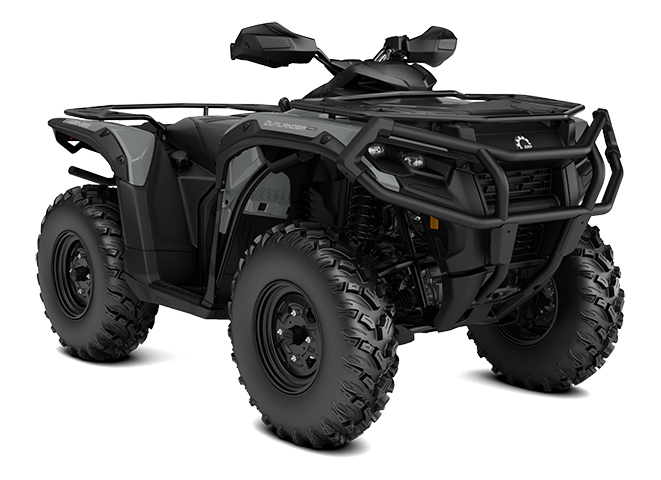
This review covers the Outlander PRO S HD5 in Granite Grey. Can-Am also offers an HD7 engine and more equipped PRO packages, but their horsepower and hardware do not apply to this machine. It is a specification-based review, not a claim that we have ridden it. For a quick explanation of dry weight, towing and other figures, see how to read ATV and UTV specs.
Price and the 2027 name change
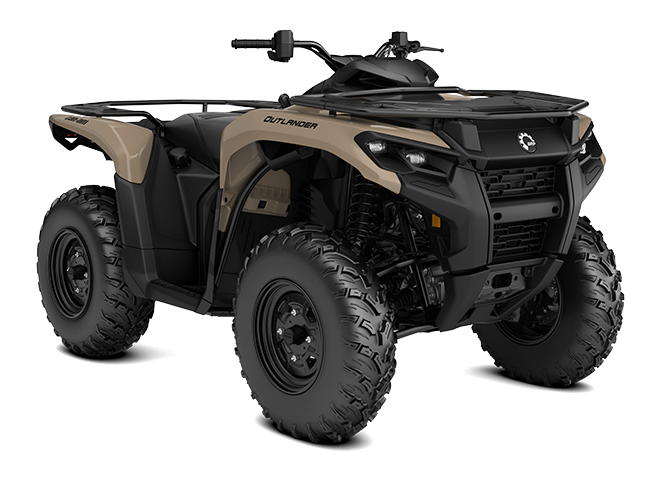
Can-Am lists the 2027 PRO S from $7,749 U.S. MSRP, excluding transportation and preparation. The 2026 Outlander PRO family started at $7,799. More important than that $50 difference is what the new S sheet actually describes: the HD5 now lists Work and Standard modes plus intelligent engine braking, while the 2026 HD5 sheet listed only a speed limiter under driving assistance. The 2027 S sheet also names fender flares, handguards, footwell protection and a trailer hitch mount among its equipment. Check a dealer’s VIN and written build sheet before treating any item in a family photograph as included.
The 2027 model keeps the 650cc single, 53-inch wheelbase, 13 inches of ground clearance, 800-lb estimated dry weight and 1,830-lb braked-trailer rating published for the previous PRO HD5. Can-Am’s 2027 PDF mistakenly pairs that 800-lb figure with 482.9 kg. Eight hundred pounds converts to about 363 kg, and this page uses the published pound figure. It is a conversion error in the source, not a 283-lb weight increase.
Engine and work gearing
The HD5 is a liquid-cooled, fuel-injected 650cc Rotax ACE single rated at 40 hp and 37 lb-ft. Can-Am’s pDrive CVT has high and low ranges plus an extra-low ratio intended for slow, loaded work. A selectable 2WD/4WD system uses a Visco-Lok auto-locking front differential. That is not the manually selectable 4Lok front lock fitted to some more expensive PRO packages.
The power figure is modest, but a work ATV lives much of its life at partial throttle. Extra-low range is the relevant feature when moving a trailer across uneven ground or crawling through a muddy approach. It helps keep the CVT in a more suitable operating range, though it does not excuse exceeding the tow rating or ignoring belt care. The published Work and Standard modes, intelligent engine braking and speed limiter add useful control options. Verify their operation with the dealer and follow the operator’s guide for loaded descents.
The five-gallon-class tank holds 5.1 U.S. gallons. Can-Am does not publish a single real-world range, and stop-start work with 4WD, low range or a trailer can change consumption sharply. Plan fuel around the job rather than multiplying an optimistic mileage estimate by tank size.
Chassis, protection and the cost of skipping EPS
At 47.6 inches wide, the PRO S is compact enough to navigate many property tracks, but trail access still depends on local rules, actual tire width and gates. The wheelbase is 53 inches. Front double A-arms provide 9.75 inches of travel, with 10.25 inches at the rear. Both ends use twin-tube shocks. The 26-inch six-ply tires ride on 12-inch steel wheels, a practical choice for a machine likely to meet ruts and brush rather than a showroom floor.
The steel wheels and 800-lb dry weight also describe the tradeoff. This is not a light recreational quad. A loaded front rack, low tire pressure or repeated tight turns will make steering effort noticeable because PRO S has no electronic power steering. The 2027 Outlander PRO DPS starts $1,000 higher and lists Tri-Mode DPS. If long workdays include repeated low-speed maneuvers, try both packages before deciding that the base price is the better deal.
Factory protection is a stronger case for the S. The spec sheet lists heavy-duty front and rear bumpers, HMWPE A-arm and footwell guards, fender flares, handguards and a full skid plate. The bike also has LED lighting, a 4.5-inch digital gauge and D.E.S.S. security. It does not include a factory winch. If recovery gear is essential on your routes, price the correct winch and installation into the out-the-door comparison.
Racks, storage and towing without inflated numbers
Can-Am rates the front rack at 120 lb and the rear at 240 lb. It lists nine gallons of storage, including the glovebox and front drop-down compartment. Those areas suit straps, hand tools and items that should not ride loose on a rack. Racks are not a substitute for securing loads, and the two rack ratings should not be presented as a published total payload capacity. The PRO S sheet leaves payload unspecified.
The 1,830-lb rating applies to a braked trailer. That qualification matters. A receiver and hitch mount are included, but tongue load, terrain, trailer brakes and local rules still govern what is sensible to pull. Keep heavy rack cargo off the machine when towing near its limit, and confirm the hitch setup and operator-guide limits for the actual trailer. A strong engine cannot fix poor braking or an unstable load.
The PRO S is rated for one person. Its long, flat seat is not a passenger rating. If the work regularly involves a second person, look at a purpose-built two-up ATV or a side-by-side rather than treating the rear rack as an occasional perch.
Where it sits against other ATVs
Can-Am’s 2027 Outlander 700 costs the same $7,749 in its entry 4WD package and makes 50 hp. It is the better starting point if the ATV spends more time on recreational trails and you want stronger acceleration for the money. The PRO S counters with its extra-low work gearing, 26-inch tires, 13-inch clearance and heavier standard protection. The 2WD Outlander 500 saves $750, but it gives up the PRO S’s selectable 4WD, which can be a poor saving on wet property tracks.
The 2027 Polaris Sportsman 600 starts at $7,999, makes 44 hp and lists 1,350 lb of towing. Its 48-inch width and 50.5-inch wheelbase make it another useful single-rider utility comparison. Read the equipment lists closely: a model with more peak horsepower is not automatically the better slow-speed tow vehicle, and Can-Am’s higher rating is for a braked trailer. A direct Outlander PRO S versus Sportsman 600 comparison puts the published figures side by side.
Pros and cons
The good: extra-low work gearing, a substantial braked-trailer rating, real underbody and hand protection, useful enclosed storage, and 4WD at a price close to a recreational Outlander 700.
The catch: no EPS or factory winch, only one rated seat, a heavy 800-lb dry weight, and no published total payload figure. The engine makes 40 hp, not the 50 hp advertised for the HD7. Buyers who need steering assistance or recovery gear should calculate the equipped price before choosing this trim.
Verdict
The Outlander PRO S HD5 makes sense when the vehicle’s main job is slow, repeatable work and its owner values protection and low-range control more than extra horsepower. It is less convincing as a one-ATV answer for long recreational rides, two people or frequent winch recovery. Take a dealer quote for this exact HD5 package, then compare it with the 700 and PRO DPS rather than assuming every ATV wearing an Outlander PRO badge has the same equipment. Browse more machines in the ATVPedia catalog or use the comparison tool to narrow the choice.