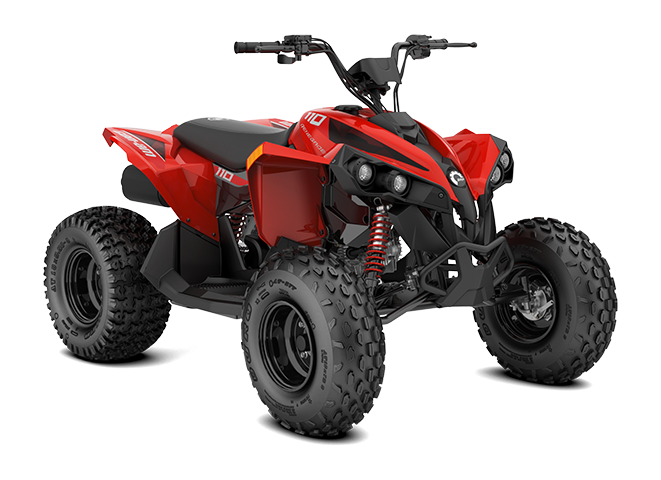
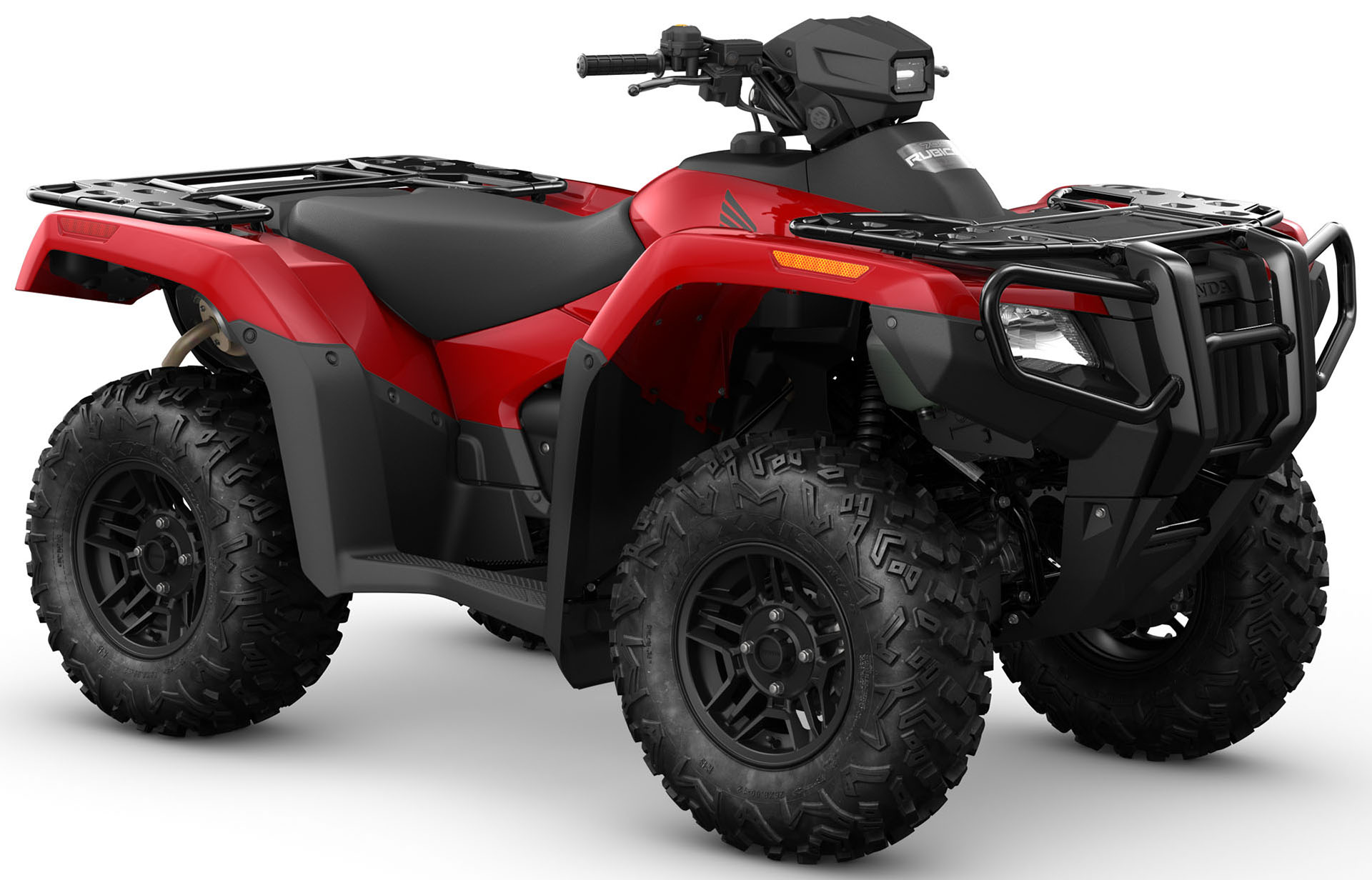
The 2027 Can-Am Renegade 110 EFI is the middle step in Can-Am’s small sport ATV lineup: more substantial than the 70 EFI, less expensive than the X xc 110 EFI. The standard 110 starts at $3,899 U.S. MSRP before transportation and preparation. Its 112cc fuel-injected single, automatic transmission with reverse and built-in throttle limiter make sense on paper for a supervised learning machine. The important question is whether this exact ATV is appropriate for the rider who will use it, not whether it looks like the big Renegade parked beside it.
This review covers the standard Renegade 110 EFI in Legion Red, not the X xc. Specifications come from Can-Am’s 2027 U.S. model page and North American 70/110 EFI spec sheet. It is a researched buyer’s review, not a ride test.
A simple drivetrain, with an important distinction
The air-cooled four-stroke single displaces 112cc. EFI removes the carburetor from the ownership routine, while electric start and a shiftless CVT reduce what a new rider has to manage. The selector has forward, neutral and reverse. Reverse matters more than the aggressive bodywork suggests: a young rider can back out of an awkward parking spot without an adult having to drag a 295 lb machine around by hand. The ATV is chain-driven 2WD, so it is for suitable off-road ground, not deep mud or heavy chores.
There is a built-in throttle limiter. It gives an adult a way to restrict available speed while teaching basic control, but it does not replace a suitable riding area, protective equipment or close supervision. Can-Am does not publish horsepower for this trim. The 8 hp number in ATVPedia’s catalog is an approximate reference value, not a Can-Am rating and not a dynamometer result. For this purchase, throttle response, rider fit and instruction matter more than a guessed peak-output figure.
The standard 110 uses single A-arm front suspension with 5 inches of travel and a swingarm rear with 6 inches. Twin-tube shocks and drum brakes at both ends are straightforward youth-ATV hardware. Front tires measure 19 x 7 x 8 inches, while the rears are 18 x 9.5 x 8 inches. Do not confuse it with the X xc’s specifications on Can-Am’s family page: that $4,399 package adds double A-arms up front and gas shocks. Those are real chassis differences, not just a graphic kit.
Fit and clearance are worth checking in person
The seat is 28 inches high, the ATV is 40.4 inches wide, and its wheelbase is 41 inches. Those numbers can help narrow a shopping list, but they cannot show whether a particular rider reaches the controls comfortably, can shift body weight appropriately or can stop the machine with confidence. Ask the dealer to let the intended rider sit on the actual 110 with the engine off. Check the reach to the bars, brake levers, footwells and throttle before discussing color or price.
Can-Am’s 8.3-inch ground-clearance figure is measured under the frame. The spec sheet also states 4.5 inches under the rear axle, the lower point that is easy to miss when comparing brochures. That matters around rocks, ruts and roots. The 1.6-gallon tank is modest, but there is no credible fixed range figure without knowing pace and terrain. The ATV is rated for one person, with no published rack, towing or payload capacity. It is not a miniature utility ATV for carrying a passenger or pulling a trailer.
The age-label conflict buyers should not ignore
Can-Am’s package description calls the 110 EFI a model for ages 10 and up. Yet the safety text at the bottom of its own 2027 North American spec sheet recommends ATVs with engines over 90cc for ages 16 and older. This model is 112cc. Those statements sit in the same manufacturer’s material and we cannot resolve the discrepancy by treating the promotional line as more authoritative than the warning.
Before buying for a child, inspect the age warning label on the specific ATV and the current operator’s guide with the dealer. Ask Can-Am or the dealer to explain how the model’s 10+ designation fits the printed over-90cc warning, and check applicable local rules. Even if the age label permits the intended rider, age alone is not proof of physical fit, judgment or training. A correctly fitted helmet, eye protection, other protective clothing and direct adult supervision remain essential. Can-Am recommends formal ATV training in the spec sheet. Our beginner ATV guide covers the broader decision, but the actual vehicle warning and current guidance should govern this one.
Which 110 makes sense at this price?
The 2027 Renegade 70 EFI starts at $3,299, so the standard 110 asks another $600. Its 28-inch seat is two inches higher than the 70’s, and it gets larger tires. Moving up merely because a child will eventually grow is poor reasoning if the current machine does not fit today. At the other end, the X xc 110 EFI costs $500 more than this standard 110. Its upgraded front suspension and shocks are worth considering for a rider who is already ready for this size of ATV and will use them, but the X xc is not a shortcut around the age-warning question.
Older model-year alternatives in our catalog include the 2025 Yamaha Raptor 110 and 2025 Polaris Sportsman 110 EFI. Their listed MSRPs are historical, so ask for current-year, written out-the-door quotes before treating any price gap as real. You can compare the Can-Am and Yamaha or read our specification guide to separate published figures from estimates.
Verdict
The standard Renegade 110 EFI offers the practical pieces many families want: EFI, electric start, reverse and a limiter, without paying for the X xc suspension package. Its biggest buying caveat is not a missing feature. It is the unresolved conflict between Can-Am’s 10+ marketing and the 16+ over-90cc warning in its 2027 spec sheet. Settle that against the actual vehicle label and operator guidance first. If the ATV is appropriate and fits the rider, the standard 110 is the value choice within the 2027 Renegade EFI range. Browse the ATVPedia catalog or use the comparison tool for other options.