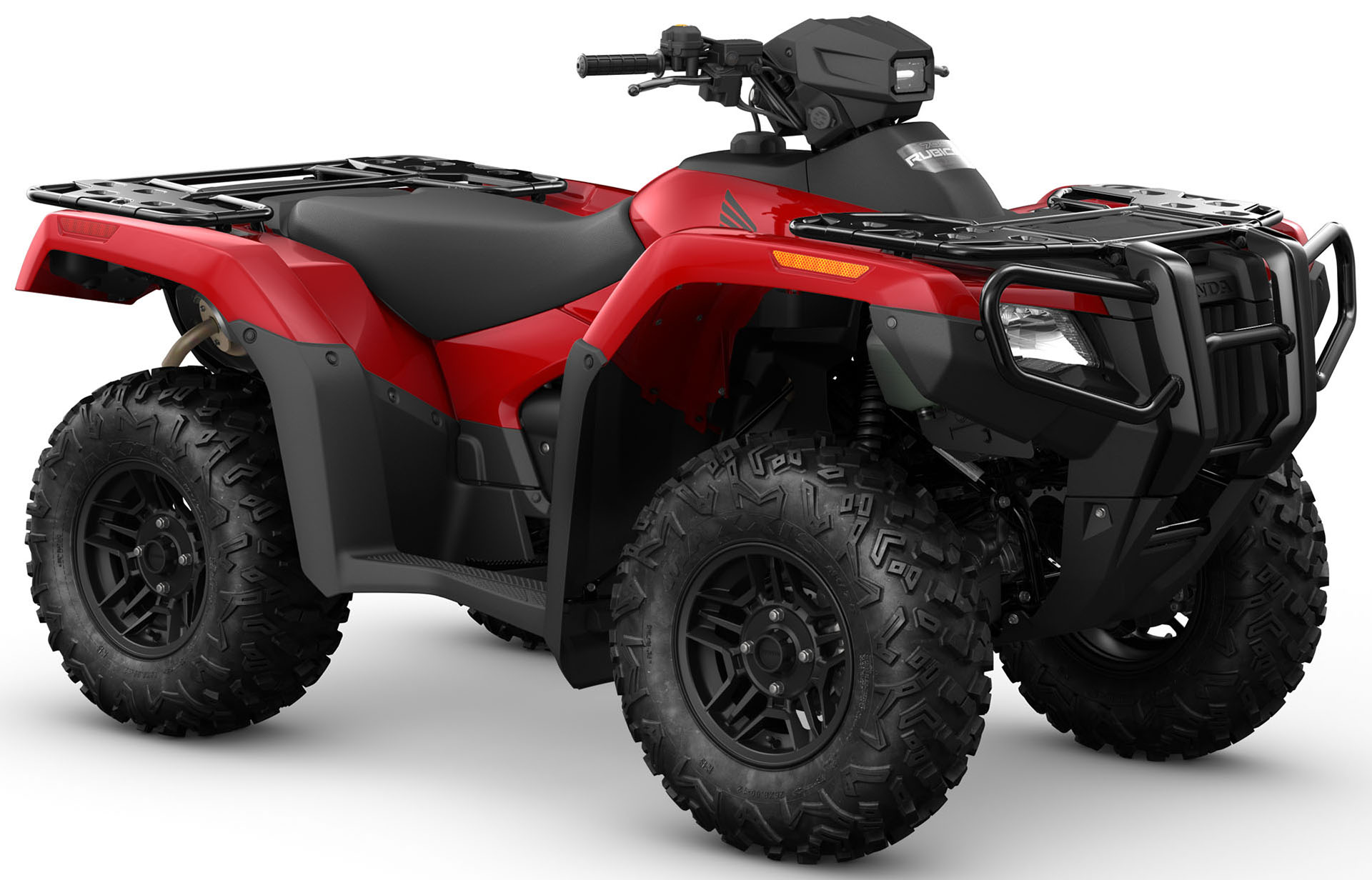
The 2025 Yamaha Raptor 110 is a youth sport ATV for riders age 10 and older. Its 110cc engine makes about 7 hp, while an automatic transmission, reverse and electric start keep the controls approachable. Sporty bodywork gives it the look of Yamaha’s adult Raptor, but this remains a supervised learning machine. Parents should begin with the speed limiter set conservatively and increase freedom only as skills develop. Our beginner ATV guide covers the wider youth field, while the guide to reading ATV and UTV specs explains the numbers used here.
The Raptor uses a 110cc air-cooled single-cylinder engine producing about 7 hp. Power goes to the rear wheels through a 2WD drivetrain and an automatic transmission with reverse. There is no manual clutch to coordinate, and electric start avoids the frustration of repeated pull starts.
Seven horsepower is enough for a developing rider to practice throttle control without approaching adult-class performance. The speed limiter matters more than the maximum output. An adult can restrict the machine at first, then make gradual adjustments as the rider demonstrates consistent braking, steering and judgment.
Safety and rider fit
Yamaha’s age label is 10 and older. Age is only the first test. The rider must comfortably reach and operate every control, keep both feet planted on the footrests, and shift body weight without losing control. An adult should supervise every ride in a closed area away from roads, traffic, passengers and adult ATVs.
A properly fitted full-face helmet, eye protection, gloves, over-the-ankle boots, long sleeves and long pants are essential. The dataset lists a speed limiter but does not list a safety tether. Parents who require a tether should verify the exact machine and available equipment before purchase. No limiter or tether replaces training and direct supervision.
Size and capability
At 278 lb, 40.2 inches wide and 42.1 inches between the axles, the Raptor is larger than Yamaha’s entry-level YFZ50. Its 5.7 inches of ground clearance helps on a prepared trail or riding area, but it is not intended for deep ruts, heavy work or towing. The dataset gives it no tow rating, and the single seat means no passengers.
The 1.5-gallon fuel tank is adequate for supervised sessions. Adults still need to manage fuel, inspect tire condition and controls, and check the riding area before each use.
How it compares
The Polaris Outlaw 110 EFI makes about 8 hp, weighs 264 lb and costs $3,599. Both carry a 10+ label and a speed limiter. The Yamaha costs $400 less and includes reverse in the dataset, while the Polaris is lighter and slightly more powerful. Compare the two youth sport ATVs.
The Honda TRX90X costs $3,349 and is labeled for age 12 and older. Its clutchless four-speed transmission asks the rider to select gears, while the Raptor is automatic and has reverse. See the Honda and Yamaha comparison. The Kawasaki KFX90 matches the Raptor’s $3,199 price but carries a 12+ label, makes about 6 hp and lacks reverse in the dataset. Compare those models directly.
Where it sits in Yamaha’s lineup
The Raptor 110 sits above the Yamaha YFZ50, a smaller 3 hp machine labeled for riders age 6 and older. The Grizzly 110 shares the Raptor’s 7 hp output and 10+ label but uses utility styling, weighs 269 lb and costs $300 more. The Raptor is the sport-styled choice, not a stepping stone that should be rushed toward an adult Raptor 700R.
Price, pros and cons
At $3,199, the Raptor 110 is competitively priced among 10+ youth machines. The good: automatic operation, reverse, electric start, a parent-controlled speed limiter and useful 5.7-inch clearance.
The catch: it is heavier and wider than several youth rivals, the dataset does not list a tether, and there is no towing capacity. Its size and 10+ label also make it inappropriate for a younger child simply because the child has prior riding experience.
The verdict
The 2025 Yamaha Raptor 110 combines simple controls with enough room and performance for a properly sized rider age 10 or older. Reverse, electric start and an automatic transmission reduce distractions, while the speed limiter gives a parent a sensible way to manage early learning.
Its value depends on responsible use. Match the ATV to the child, start slowly, insist on complete protective gear and supervise every session. To continue shopping, use the comparison tool or browse the full database by age class, power and price.