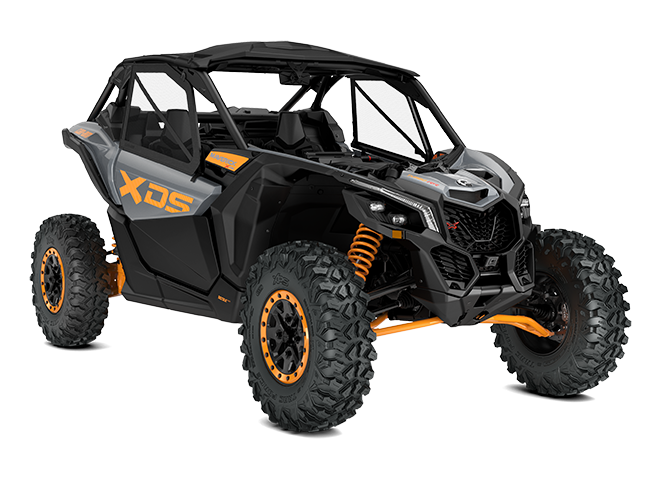
The Polaris RZR Turbo R is a desert weapon with a price to match. It pairs a 181 hp turbocharged twin with a full 74-inch stance, 30-inch tires and premium Walker Evans shocks, a combination built to run flat-out across open ground and land big jumps without flinching. It is one of the most capable high-speed side-by-sides Polaris makes. It also sits in a crowded, expensive part of the RZR range, caught between a cheaper turbo sibling and a more powerful naturally aspirated one, so choosing it well means understanding exactly where it fits. Here is what the Turbo R does, where it gives ground, and who should buy it. (New to spec sheets? Our guide on how to read ATV & UTV specs covers which numbers matter.)
The Turbo R runs a 925cc turbocharged parallel-twin making about 181 horsepower. This is genuine high-performance territory, far beyond the naturally aspirated RZRs and well ahead of an entry turbo like the Can-Am Maverick X3 Turbo (120 hp). The turbo delivers a hard, sustained shove that never seems to run out on an open trail, and the PVT automatic keeps it in the meat of the power. On the fast, open terrain this machine is built for, it is seriously, grin-inducingly quick.
The engine feeds through a CVT, which is worth a word. At this power level the drive belt works hard, and like all high-output turbo side-by-sides, the Turbo R rewards sensible belt care and punishes sustained abuse. Polaris has improved its belt durability over the years, but it remains something owners who ride hard keep an eye on.
The wide-body chassis: built to be planted
The Turbo R’s real signature is its stance. At 74 inches wide, on a 96-inch wheelbase, with 15 inches of ground clearance and 30-inch tires, it is a big, planted machine engineered for stability at speed. Add the standard Walker Evans needle shocks and long-travel suspension, and it soaks up whoops, g-outs and big landings that would upset a smaller machine. This is where the money goes and where the Turbo R earns it. When you are carrying real speed across rough ground, few things feel as composed.
That width is a double-edged trait, though. A 74-inch machine is a desert and dune specialist, and it simply will not fit the tighter trails that a 64-inch or 50-inch machine can run. Know your terrain before you buy this much width.
The Turbo R’s place in the range
The trickiest thing about the Turbo R is that it is surrounded by close relatives. Its same 181 hp turbo engine also powers the narrower RZR Pro XP ($27,999), which costs about $3,000 less if you do not need the full 74-inch width and 30-inch tires. Above it, the RZR Pro R ($35,999) drops the turbo entirely for a 225 hp naturally aspirated four, trading boost for even more power and the linear, lag-free delivery some drivers prefer. The Turbo R splits the difference, taking the wide-body chassis of the Pro R and the turbo engine of the Pro XP. Whether that is the sweet spot or an awkward middle depends on what you value, and it is worth cross-shopping all three before you commit.
Who it’s for
The Turbo R is the right pick if you ride fast and open, want a wide, ultra-stable chassis and premium suspension, and prefer turbo power in a package that costs less than the naturally aspirated Pro R. It suits desert and dune riders who value composure at speed above all, and who have the terrain to use 74 inches of width. For that rider it is a superb tool.
It is not the pick if your trails are tight or narrow, where the width locks you out, or if you want the absolute most power, since the Pro R and the top X3 make more. It is also a poor choice if value or low running costs are priorities, because this is an expensive machine with a hard-working belt, and it does no work at all: no towing, two seats, pure sport.
How it compares
At $30,999 the Turbo R competes at the sharp end of the sport class. Three to weigh:
- Can-Am Maverick X3 X rs Turbo RR, $32,499. The arch-rival, with 200 hp to the Turbo R’s 181 for a little more money, and a well-earned reputation for its chassis. This is the classic desert showdown, and the pick often comes down to brand loyalty and dealer support. Compare them →
- Polaris RZR Pro R, $35,999. The in-family step up, trading the turbo for a 225 hp naturally aspirated four. More power, no lag, but more money. The turbo-versus-natural question, under one roof. Compare them →
- Polaris RZR Pro XP, $27,999. The same 181 hp turbo in a narrower 64-inch body for about $3,000 less. If you do not need the full width and tire package, it is the value-minded way to the same power. Compare them →
If you want the same kind of speed for less, the entry Can-Am Maverick X3 Turbo ($22,899) gets you onto a turbo platform with far less power, and the naturally aspirated Arctic Cat Wildcat XX ($21,999) is a lighter, simpler 130 hp alternative.
Where it sits in the RZR lineup
The RZR ladder climbs steeply. The trail-focused RZR XP 1000 ($21,299) is the naturally aspirated base at 114 hp and 64 inches wide. The RZR Pro XP ($27,999) adds the 181 hp turbo in a 64-inch body. The Turbo R widens that to 74 inches with premium shocks and 30-inch tires. And the RZR Pro R ($35,999) tops the range with its 225 hp naturally aspirated four. The Turbo R is the wide-body turbo option just below the flagship.
Price and value: is it worth it?
At $30,999 the Turbo R is a major purchase, and the value case is nuanced. On one hand it delivers a genuine wide-body, premium-suspension, high-boost package for less than the Pro R above it, and Polaris backs it with the largest dealer network and deepest aftermarket in the business, which matters for a machine you will modify and maintain. On the other hand, the nearly identical-power Pro XP costs less if you can live without the width, and the Pro R offers more power if you can stretch. You are paying specifically for the 74-inch chassis and its suspension, so the value depends on how much you need that stability.
So is it worth it? For the dedicated fast-terrain rider who wants that wide, planted feel and turbo punch, yes, it is one of the best desert tools Polaris builds. Just cross-shop the Pro XP and Pro R first, factor in belt care and running costs, and be sure the 74-inch width fits your terrain. Buy it for the chassis and the speed, with clear eyes on the price and the upkeep.
Pros and cons
The good: a strong 181 hp turbocharged twin, a wide 74-inch chassis with 15 inches of clearance and 30-inch tires, standard Walker Evans shocks and long-travel suspension, superb high-speed stability, and Polaris’s huge dealer and aftermarket support.
The catch: a high price, a 74-inch width that locks it out of tight trails, a hard-working turbo CVT belt that needs care, no work or tow capability, and close siblings that offer either the same power for less or more power for a bit more.
The verdict
The 2025 Polaris RZR Turbo R is a specialist built to go fast across open ground, and it is very good at it. The wide 74-inch stance, premium Walker Evans shocks and 181 hp turbo add up to a machine that stays composed at speeds that would overwhelm lesser rigs. The complication is its own family: the narrower Pro XP offers the same power for less, and the Pro R offers more power for more, so the Turbo R only makes sense if the wide-body chassis is exactly what you want. For the desert and dune rider who values stability and boost, and who has the terrain to use all that width, it is a superb and thrilling machine. Just go in aware of the price, the belt care and the width, and cross-shop its siblings before you sign.
Want to see it head to head with something specific? Drop it into the side-by-side comparison tool, or browse the full database to filter by power, width and price.