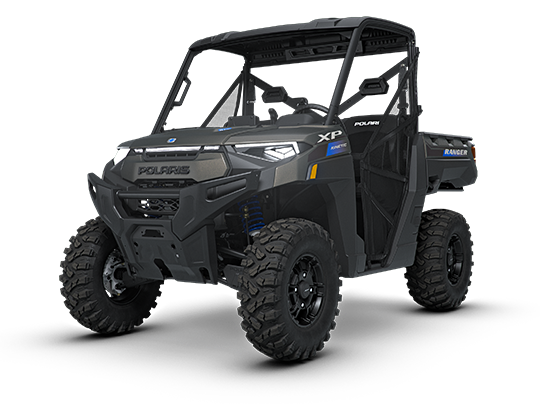
The Polaris RZR Pro R is the flagship of the RZR line and one of the most remarkable engines in all of powersports. While nearly every machine at this level relies on a turbo, the Pro R makes its 225 horsepower from a 2.0-liter naturally aspirated four-cylinder, delivering instant, lag-free power and a high-revving snarl no boosted rival can match. It is the RZR at its most extreme, and it is priced to match at $35,999. Here is what the Pro R does, where it asks for compromise, and who should buy it. (New to spec sheets? Our guide on how to read ATV & UTV specs covers which numbers matter.)
The heart of the Pro R is its ProStar Fury engine, a 1,997cc inline-four that makes about 225 horsepower with no turbo at all. In a class defined by boost, that is a genuinely different approach, and it feels different from behind the wheel. Where a turbo builds pressure and then hits, the Pro R responds the instant you touch the throttle and pulls harder the more it revs, with a hard-edged, high-rpm scream unlike anything else in the segment. There is no lag, no heat-soak worry, just immediate, linear power on tap whenever you ask.
That character has a flip side worth understanding. A naturally aspirated engine makes its power up high, so you have to rev it to get the most out of it, where a turbo delivers a fat wall of low-end torque more lazily. Neither is wrong, but they feel distinct, and the choice between them is really the choice between the Pro R and its turbocharged rivals. The power still flows through a CVT, which works hard at this output, so like any machine in this class the Pro R rewards sensible belt care.
The chassis: width, clearance and active suspension
The Pro R backs its engine with a chassis to match. It runs the full 74-inch stance, a 96-inch wheelbase and a class-leading 16 inches of ground clearance, the most of any RZR, so it clears obstacles and stays stable at speed better than almost anything. Higher trims add Polaris’s Dynamix DV active suspension, which reads the terrain and adjusts damping in real time, firming up for hard cornering and softening for big hits without you touching a dial. It is genuinely trick technology, and on fast, varied ground it makes the big machine feel more composed than its 2,070 lb suggests.
As with any 74-inch machine, that width is the trade. This is an open-terrain specialist, built for desert, dunes and fast trails, and it will not fit the tight, narrow trails a slimmer machine can run. It is also heavy and complex, so it asks for more upkeep and more budget than a simpler rig.
Where it sits: Pro R versus Turbo R
Within the RZR range, the most important comparison is the one just below it. The RZR Turbo R ($30,999) shares the Pro R’s wide-body chassis but uses a 181 hp turbocharged twin instead of the 225 hp naturally aspirated four, and it costs about $5,000 less. So the question for most buyers is simple: do you want the Pro R’s extra power and its lag-free, high-revving character enough to pay the premium, or is the Turbo R’s turbo torque plenty for your riding? Both are superb, and there is no wrong answer, just a difference in feel and price. Below them sit the narrower RZR Pro XP ($27,999) and the trail-focused RZR XP 1000 ($21,299) for riders who want less width, less power or a lower price.
Who it’s for
The Pro R is the right pick if you want the most powerful, most capable RZR, you love the immediacy and sound of a big naturally aspirated engine, and you have the budget and the open terrain to use it. It suits serious desert and dune riders, enthusiasts who prefer naturally aspirated response to turbo torque, and anyone who wants Polaris’s flagship with its trick active suspension. For that rider, nothing else in the RZR line comes close.
It is not the pick if your trails are tight, where 74 inches of width shuts you out, or if you want the lazy low-end grunt of a turbo, or if value and simplicity matter, because this is an expensive, complex, thirsty machine that does no work at all. It seats two, tows nothing, and exists purely to go fast.
How it compares
At $35,999 the Pro R sits at the very top of the sport class, so it faces the best. Three to weigh:
- Can-Am Maverick R, $44,999. Can-Am’s newer flagship counters with 240 turbocharged horsepower and a real seven-speed DCT gearbox, but it costs about $9,000 more. The Pro R answers with naturally aspirated response and a lower price. Ultimate versus ultimate. Compare them →
- Polaris RZR Turbo R, $30,999. The in-family alternative, with 181 hp of turbo on the same wide-body chassis for about $5,000 less. The core naturally-aspirated-versus-turbo decision, under one badge. Compare them →
- Can-Am Maverick X3 X rs Turbo RR, $32,499. The established turbo benchmark, with 200 hp for less money. The Pro R gives up nothing on power but leans on its naturally aspirated character to justify the step up. Compare them →
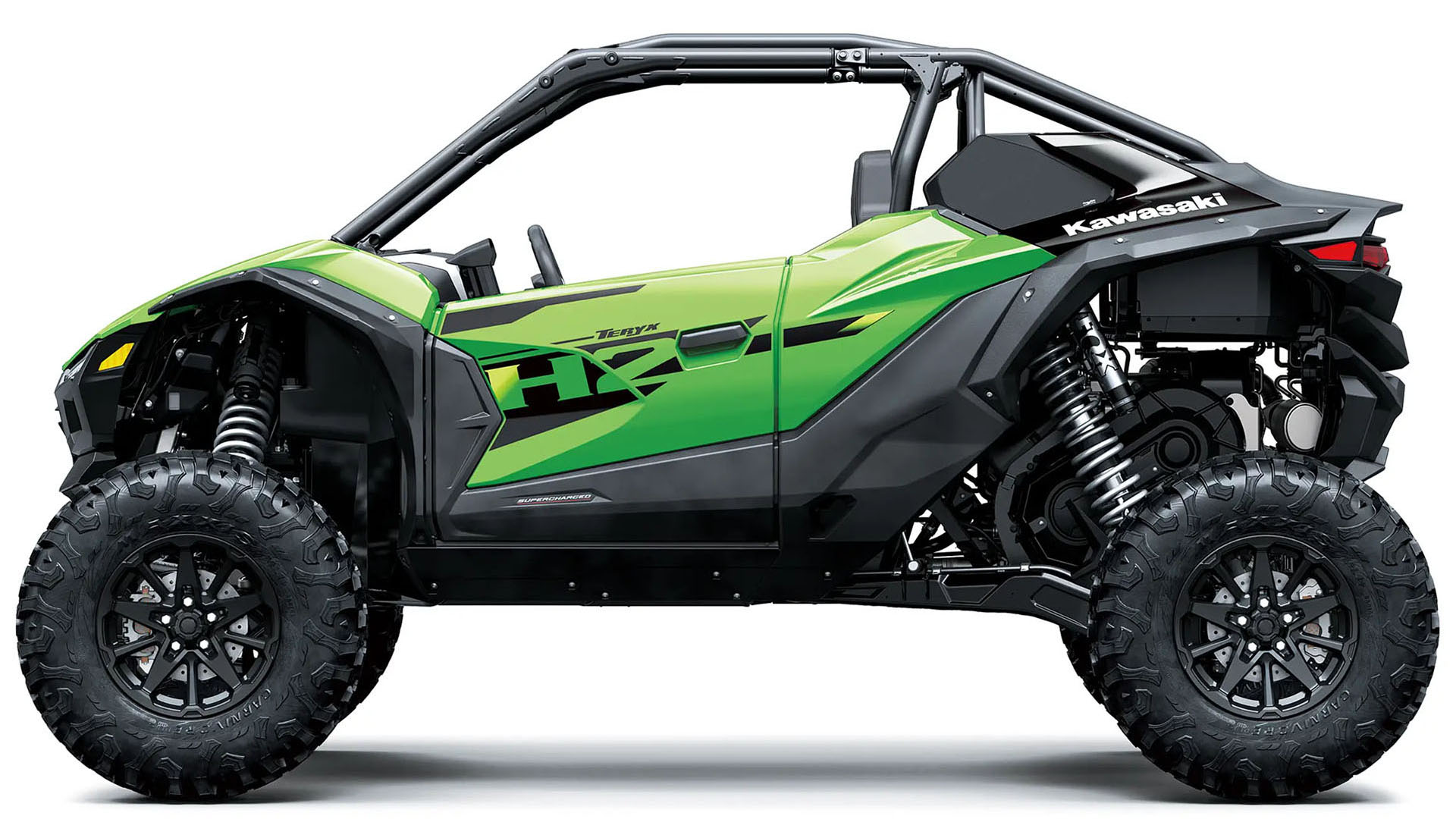
At the extreme edge, the supercharged four-seat Kawasaki Teryx4 H2 ($37,199) makes a wild 250 hp if you want the most power of all, and for a far cheaper naturally aspirated thrill the Arctic Cat Wildcat XX ($21,999) delivers 130 hp without a turbo.
Where it sits in the RZR lineup
The Pro R is the summit of the RZR range. Below it, the RZR Turbo R ($30,999) offers the same wide-body chassis with a turbo twin, the RZR Pro XP ($27,999) narrows that to 64 inches, and the RZR XP 1000 ($21,299) anchors the line as the naturally aspirated trail machine. Nothing in the RZR family sits above the Pro R, which is exactly its appeal for the buyer who wants the best Polaris makes.
Price and value: is it worth it?
At $35,999 the Pro R is a flagship purchase, and value is not really the point at this level. That said, the case holds up. It undercuts the pricier Can-Am Maverick R by about $9,000 while matching it closely on capability, it wears a genuinely special naturally aspirated engine that nothing else quite replicates, and Polaris backs it with the largest dealer and aftermarket network in the business. What you are paying for is the top of the range, the most power, the most clearance and the trickest suspension in the RZR line.
So is it worth it? For the buyer who specifically wants naturally aspirated power, the flagship chassis and the active suspension, and who has the terrain and budget for it, yes, it is a spectacular machine. But cross-shop the Turbo R hard first. Many riders find its turbo power more than enough and pocket the $5,000, and the choice really comes down to whether the Pro R’s character is worth the premium to you. Buy it for the engine, the clearance and the flagship experience, with clear eyes on the price and the upkeep.
Pros and cons
The good: a remarkable 225 hp naturally aspirated four with instant, lag-free response, class-leading 16 inches of ground clearance, the wide 74-inch flagship chassis, available Dynamix DV active suspension, and Polaris’s huge support network.
The catch: a very high price, a naturally aspirated engine that wants revs where a turbo makes lazy low-end torque, a 74-inch width that locks out tight trails, a hard-working CVT belt, and a heavy, complex machine with no work capability at all.
The verdict
The 2025 Polaris RZR Pro R is the RZR at its absolute peak, and its naturally aspirated 2.0-liter four is one of the great engines in the sport. It delivers 225 horsepower with a lag-free immediacy and a high-rpm sound no turbo can copy, wrapped in the widest, highest-clearance, most technologically advanced chassis Polaris builds. It is also expensive, heavy and singular in purpose, and its own Turbo R sibling delivers most of the thrill for thousands less. If you want the best RZR, love naturally aspirated power and ride the open terrain that suits 74 inches of width, the Pro R is a spectacular way to spend $35,999. If you are not sure you need it, drive the Turbo R before you decide. Either way, remember this is a pure sport machine, built for speed and nothing else.
Want to see it head to head with something specific? Drop it into the side-by-side comparison tool, or browse the full database to filter by power, clearance and price.