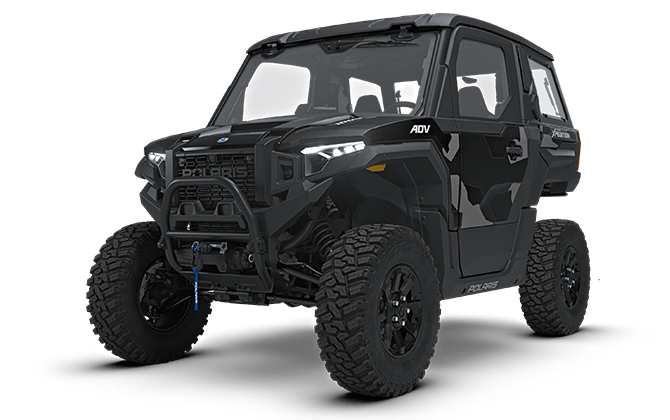
The 2027 Polaris XPEDITION ADV addresses the one problem that mattered most in an otherwise convincing adventure side-by-side: spending a full day inside a powerful UTV cab could be tiringly loud. Polaris has not solved that by fitting another layer of upholstery or quietly revising a seal. It has replaced the conventional clutch behavior with a pneumatically controlled system called NUMATIX, then built the entire 2027 XPEDITION range around it.
That change gives the ADV a clearer purpose. This is still a 114-hp, 64-inch-wide machine with 14 inches of clearance, serious FOX suspension, a heated and air-conditioned cab, and room for camping or hunting equipment under a covered rear body. Now it also promises more controlled power delivery, three drive modes, easier shifting, onboard air, and—according to Polaris—up to 40 percent less cab noise.
The price makes a careful review essential. Polaris advertises the two-seat ADV from $41,499, but the exact Matte Super Graphite NorthStar configuration represented in ATVPedia currently shows $41,799. Add the published $1,895 destination charge and the subtotal reaches $43,694 before tax, registration, setup, dealer charges, or accessories. This is not a casual upgrade from a basic UTV. It is a premium enclosed adventure vehicle that needs to replace several lesser purchases to make financial sense.
The exact 2027 XPEDITION ADV reviewed here
This entry covers the two-seat XPEDITION ADV NorthStar in Matte Super Graphite. That detail matters because family-page pricing and the amount shown for a particular color do not always match. It also prevents the specifications of the longer five-seat ADV 5 from being mixed into the shorter model.
The two-seat machine measures 122.5 inches long, 64 inches wide, and 74.9 inches high. Its wheelbase is 87.5 inches and published dry weight is 2,410 lb. Polaris lists a curb weight of 2,531 lb, which is the more useful starting point when estimating what a fueled machine will ask of a trailer. Accessories, passengers, and cargo come after that.
Standard NorthStar equipment includes a fully enclosed cab, heat and air conditioning, full doors with power windows, a laminated tip-out glass windshield with wiper and washer, an extended roof, and a rear panel. A 7-inch RIDE COMMAND screen, rear camera, RIDE COMMAND+ connectivity, and JBL Trail Pro 4100 audio are also included. Outside, there is a 4,500-lb winch, bull bumper, full-coverage skid protection, 30-inch eight-ply tires, and LED lighting.
In other words, the base ADV is already the version many owners would create by buying a cheaper open machine and adding a long accessory list. That helps explain the MSRP, but it does not make the payment small.
What changed for 2027: NUMATIX is the headline
The 2027 model is defined by the NUMATIX Controlled CVT. Instead of relying only on the conventional mechanical relationship between engine speed, weights, springs, and belt movement, the system uses regulated air pressure to control clutch operation. Polaris says it can adapt up to 200 times per second, changing its response to the selected mode and the driver’s demand.
Comfort, Standard, and Sport settings give the driver meaningful choices. Comfort is intended to soften response and make low-speed operation less abrupt. Standard is the general-purpose setting. Sport sharpens engagement when immediate response matters more than calm cabin behavior. These modes do not change the engine’s 114-hp ceiling; they change how the vehicle reaches it.
For an ADV buyer, smoother engagement may be more valuable than another peak-power claim. A machine loaded with passengers, coolers, tools, and camping equipment is often asked to creep around a campsite, back toward a trailer, or climb a technical ledge without a dramatic burst of revs. Better clutch control can make those jobs less clumsy.
Polaris also says the new drivetrain reduces cab noise by up to 40 percent. The qualification matters: “up to” is a manufacturer claim, not a promise that every speed, surface, or load will be 40 percent quieter. Tires still meet the ground, bodywork still resonates, cargo still rattles, and wind becomes dominant at speed. Even so, moving the engine away from its noisiest operating behavior during ordinary travel directly targets a common complaint about enclosed high-output UTVs.
NUMATIX brings two smaller improvements that may prove useful every week. Revised shifting is intended to reduce the lever resistance familiar to anyone who has tried to move a loaded CVT machine out of park on a grade. An auxiliary air port lets the system supply onboard air for tire-pressure adjustments and compatible tasks. It is not an unlimited shop compressor, but it can save a trip when airing down for a trail and restoring road or load pressure later.
The liquid-cooled 999cc ProStar 1000 Gen 2 is a double-overhead-cam parallel twin rated at 114 hp. In this class, that is enough power to move the ADV with authority despite its 2,410-lb dry weight. The number should be read in context: this is not a pure sport UTV, and the enclosed body, luggage capacity, HVAC system, and two-inch receiver all encourage jobs that involve mass rather than lap times.
Low range remains the right choice for sustained slow work, steep terrain, or heavy pulling. High range suits ordinary trail travel. On-Demand True AWD engages the front axle when the rear needs help, while 2WD and VersaTrac Turf Mode handle predictable ground and sensitive surfaces. Turf Mode unlocks the rear differential so tight turns are less likely to tear grass; it is not the setting for a muddy climb.
The three drive modes help tailor accelerator response, but the driver’s restraint remains the most important control. A 114-hp enclosed UTV can gather speed quickly, and its cabin can make rough ground feel more distant than it is. The ADV carries substantial momentum. Sightlines, trail traffic, cargo security, and stopping distance should set the pace, not the amount of power still available.
Suspension and handling: built to cover ground, not hide weight
Polaris gives the ADV 14 inches of front travel and 15 inches at the rear. FOX Podium QS3 shocks use 2.0-inch bodies in front and 2.5-inch bodies behind, with three-position compression adjustment. The simple QS3 knobs are a good match for an adventure machine: an owner can firm the vehicle for cargo or faster open terrain without turning suspension setup into a notebook exercise.
Ground clearance is 14 inches. Thirty-inch Pro Armor Trekker tires use eight-ply construction and mount on 15-inch cast-aluminum wheels. This combination gives the ADV useful clearance and sidewall durability without pushing tire size into the range where gearing, steering effort, and replacement cost become needlessly extreme.
The 64-inch width is familiar on recreational UTV trails but excludes routes restricted to 50- or 60-inch machines. It also makes the enclosed body easier to place than a 72-inch desert UTV. The shorter ADV has a 16.6-foot turning radius, and its 87.5-inch wheelbase is notably tidier than the five-seat version. It will still feel like a large vehicle in trees, around a barn, or on a narrow trailer.
No suspension specification can erase 2,410 lb. In soft soil, snow, or mud, the ADV loads its tires heavily. In repeated chop, the shocks must control both the vehicle and whatever is packed behind the seats. Owners who treat the cab as permission to maintain road speed across rough ground will eventually find the limits in heat, tire damage, or occupant comfort. The chassis is capable, but physics has not been optioned out.
The NorthStar cab is the reason to buy it
The ADV makes the strongest case for itself when weather changes. Heat and air conditioning turn a cold morning, dusty summer trail, or wet transfer section from an endurance exercise into a manageable day. The cab uses full power-window doors, a roof, rear panel, and laminated glass windshield. The windshield can tip out for ventilation, and the standard wiper and washer handle spray and light debris.
Seating is limited to two bucket seats in this configuration. The driver’s seat slides, and the steering wheel both tilts and telescopes. That adjustment range is more useful than a decorative interior flourish because the same vehicle may be shared by drivers in heavy winter clothing and drivers in summer gear. A rearview mirror and the camera help compensate for the substantial rear body.
An enclosed UTV should not be mistaken for a passenger car. Dust can still enter when doors or the windshield are open, and pressure differences can pull fine material through seals. HVAC performance changes when the sun heats a large glass area or occupants repeatedly open doors. Interior panels are intended to survive off-road use, not provide luxury-car isolation. The ADV is comfortable by side-by-side standards, which is exactly the standard that should be applied.
The 140-amp alternator supports the cab systems and common accessories. Buyers planning extensive lighting, communication equipment, refrigeration, or heated gear should still total the electrical load rather than assume the large rating makes capacity infinite.
ADV cargo design versus the XP’s open box
The decisive difference between XPEDITION ADV and XP sits behind the seats. The ADV extends its roof and body over a covered cargo area, creating protected storage and pass-through access from the cabin. It suits luggage, camera cases, hunting equipment, recovery gear, groceries, or camping supplies that should stay out of rain and dust.
The box measures about 36.2 by 47.25 by 13.38 inches and is rated for 600 lb. Total payload is 1,000 lb. The vehicle can tow 2,000 lb from its two-inch receiver. Those numbers are useful, but they are not independent allowances. Occupants, installed accessories, cargo, and trailer tongue weight all consume payload. A box loaded to its maximum leaves only 400 lb for two occupants, accessories, and tongue weight.
The 2025 Polaris XPEDITION XP in ATVPedia’s existing database uses an open 600-lb dump box. That layout is better for firewood, feed, muddy recovery gear, and loads that need to be tipped out. The ADV’s covered compartment is better for expensive or weather-sensitive equipment. Neither is universally superior; the right answer depends on what actually travels in the rear.
The older XP record is useful for understanding the body choice, not for treating its $28,999 price as a direct 2027 trim comparison. Polaris moved the 2027 XPEDITION range to NorthStar-only specifications and added NUMATIX, so the current model belongs in a more expensive equipment tier.
Two seats or five?
The five-seat XPEDITION ADV 5 offers a second row without surrendering the covered 600-lb cargo box or 2,000-lb tow rating. That sounds like free practicality until the dimensions are compared.
The ADV 5 stretches to 152.5 inches long with a 117-inch wheelbase. It weighs 2,816 lb dry. Relative to the two-seat model, it is 30 inches longer, has 29.5 inches more wheelbase, and carries 406 additional pounds before people or cargo climb aboard. Its total payload rises only from 1,000 to 1,100 lb.
Families and crews who regularly fill the second row will accept those costs. A couple who occasionally imagines carrying friends should think harder. The two-seat ADV turns more easily, fits a shorter trailer, places less weight on soft terrain, and gives its suspension and brakes less mass to control. Buying the seat count actually used most weekends is better than buying for a hypothetical annual trip.
Technology that earns its place
The seven-inch RIDE COMMAND display provides mapping, vehicle data, and supported group functions. Offline trail information can be genuinely useful when cellular coverage disappears. RIDE COMMAND+ adds connected features such as vehicle health and security information, subject to service coverage and subscription terms. The rear camera is valuable every time the driver backs toward a hitch, tree, garage wall, or crowded staging area.
JBL’s Trail Pro 4100 system is standard. Audio is not essential, but the quieter drivetrain may allow it to operate at a more reasonable volume than in earlier enclosed high-output machines. That is better for conversation and less fatiguing over a long day.
Polaris also includes P.A.S.S. anti-theft security. Electronic deterrence should accompany, not replace, a locked building, visible trailer security, and appropriate insurance. A machine with an MSRP above $40,000 deserves a storage plan before it arrives.
Price and value against realistic alternatives
At $41,799 for the selected color plus $1,895 destination, the ADV competes with more than other UTVs. Its delivered price approaches capable used road vehicles, compact tractors, and a UTV plus a substantial accessory budget. The case for it rests on combining climate control, trail capability, covered cargo, towing, navigation, and year-round recreation in one machine.
The 2027 Polaris GENERAL XP 1000 Sport starts at $22,999 in ATVPedia’s current record. It makes 100 hp, weighs 1,685 lb dry, has 14 inches of suspension travel, carries 600 lb in an open dump box, and tows 1,500 lb. The GENERAL is nearly $19,000 cheaper and more playful, but it lacks the ADV’s enclosed HVAC cab, covered rear body, integrated technology, and 2027 NUMATIX system.
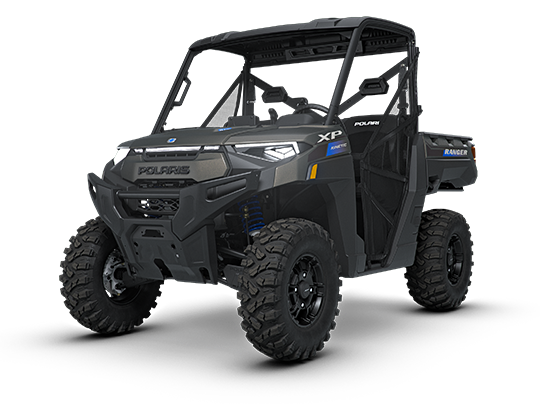
The 2025 Ranger XP 1000 NorthStar is the work-focused Polaris alternative in the current database. Its $30,999 price, 82 hp, three-seat bench, 2,500-lb tow rating, and enclosed HVAC cab favor property work. The ADV costs more, seats one fewer in short form, and tows 500 lb less. It answers with substantially more power, longer-travel FOX suspension, larger tires, a more recreation-oriented cabin, and protected adventure cargo.
The 2026 CFMOTO UForce U10 Pro Highland sharpens the value question. At $24,499 in ATVPedia’s record, it includes a fully enclosed three-seat HVAC cab, power windows, an 88-hp triple, 1,000-lb power-tilt bed, 2,500-lb tow rating, winch, display, audio, and Apple CarPlay. The Polaris commands $17,300 more before comparing destination. Its case is 114 hp, superior recreation suspension, covered adventure storage, RIDE COMMAND, and the new controlled-clutch behavior—not basic work capacity.
Buyers should price the complete machine they intend to own. Roof racks, spare tire, storage organizers, communication hardware, lighting, a refrigerator, and trailering equipment can turn a premium MSRP into a much larger invoice. The ADV arrives unusually complete, but adventure catalogs are exceptionally good at finding the remaining space in a budget.
Trailering and ownership realities
The two-seat ADV’s 2,410-lb dry weight means many light single-axle utility trailers are inappropriate before cargo is considered. Start with the 2,531-lb curb figure, then add accessories and any gear carried in the machine. Compare that total with the trailer’s payload rating, tire ratings, axle capacity, coupler, and the tow vehicle’s limits. Use proper tie-down points and maintain suitable tongue weight.
Width is only part of trailer fit. The ADV is 74.9 inches high, and its mirrors, roof accessories, or rack can create clearance problems at enclosed-trailer doors. Measure the narrowest and lowest opening, not the empty floor. A five-seat ADV needs another 30 inches of deck length and more than 400 lb of additional trailer capacity.
The XPEDITION is an off-road vehicle. Street-registration rules vary by jurisdiction and can change; a windshield, lights, and comfortable cab do not automatically make it road legal. Owners should check current state or local requirements rather than relying on a dealer anecdote or another rider’s plate.
Routine ownership still involves CVT inspection, engine oil, filters, fluids, brakes, suspension joints, tires, and belt-related service. The sophisticated pneumatic clutch and integrated electronics make dealer competence more important, not less. Ask which nearby shop has current diagnostic equipment and NUMATIX training before buying for remote or commercial use.
Polaris lists two-year limited coverage for 2027 NorthStar models. The written warranty for the actual VIN and sale date controls, so confirm coverage, exclusions, transport responsibility, and any promotional terms in writing.
Who should buy the 2027 XPEDITION ADV?
The ideal owner uses the machine in all four seasons and carries equipment that benefits from protection. Hunters, overland travelers, photographers, land managers, and couples who explore far from a warm building can make use of the cab and covered cargo every trip. The shorter two-seat layout is especially persuasive when maneuverability and trailer size matter more than a second row.
It is less convincing for buyers who mainly haul loose material, need three-across seating, or tow near 2,500 lb. A Ranger NorthStar or another utility model serves those jobs more directly. Riders who only venture out in mild weather can buy a very capable open crossover for dramatically less money. Families who genuinely travel as a group should move straight to the ADV 5 comparison rather than pretending the rear cargo space can substitute for legal seating.
The 2027 update also makes the most sense for people sensitive to fatigue. A quieter, smoother cabin may not look dramatic on a spec table, but after hours of conversation, mapping, and rough-road travel, reduced drivetrain commotion can be more valuable than a modest power increase.
Verdict
The 2027 Polaris XPEDITION ADV is expensive because it tries to be several machines at once: a fast trail UTV, a climate-controlled cabin, a covered equipment carrier, a 2,000-lb tow vehicle, and a connected navigation platform. Its 114-hp engine and FOX suspension supply the expected capability. The more important 2027 work happened in NUMATIX, which promises calmer engagement, selectable response, better shifting, onboard air, and a substantial reduction in the noise that previously weakened the enclosed-cab experience.
Polaris’s “up to 40 percent quieter” claim needs independent, condition-matched testing before it becomes a universal verdict. The price difference between the advertised family minimum and the exact Matte Super Graphite configuration also deserves attention at quote time. Neither caveat changes the fundamentals: this is a deeply equipped, unusually capable two-person adventure UTV with excellent weather protection and a rear body designed for gear rather than gravel.
Buy it when the cab, covered cargo, and all-season range replace the need to compromise on every trip. Skip it when an open bed, more seats, heavier towing, or a lower payment matters more. The 2027 ADV is not the sensible answer to every UTV question. For the narrow group that actually needs everything it combines, it may be the most complete answer available.