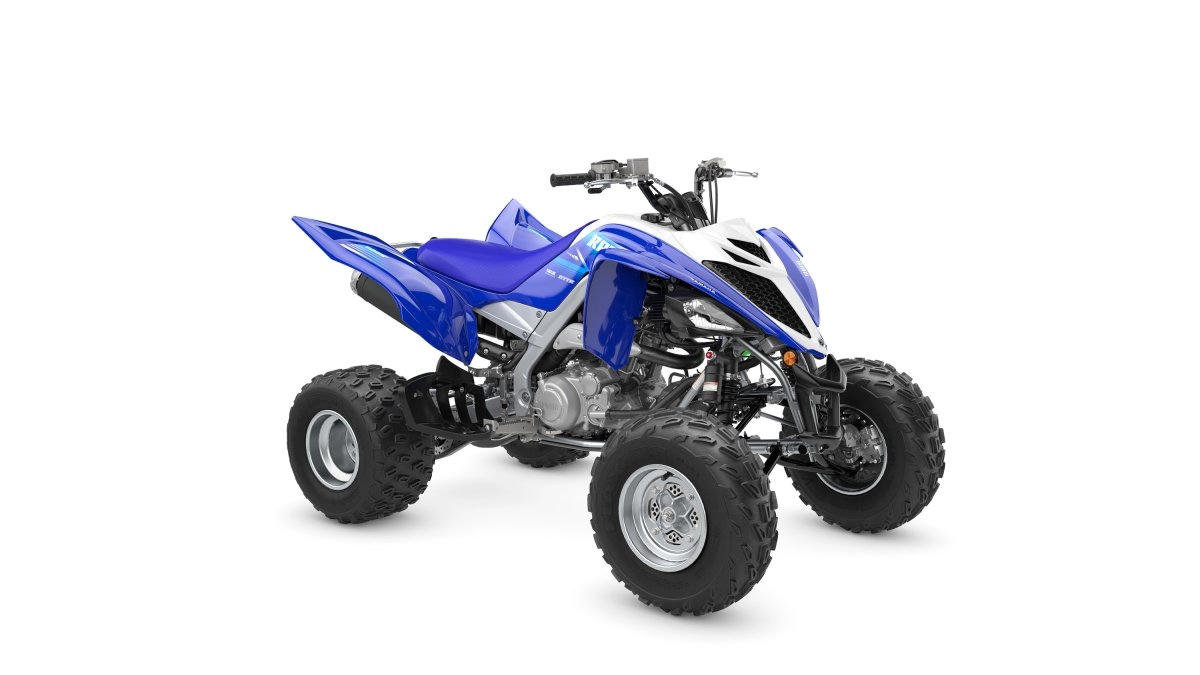
The 2027 Yamaha Raptor 700R remains one of the few adult sport ATVs that puts a large-displacement single, a clutch lever and rear-wheel drive ahead of electronic shortcuts. It is a 686cc, fuel-injected, five-speed machine with reverse, 422 lb wet weight, fully adjustable piggyback suspension and a $10,799 MSRP before Yamaha’s separate $700 destination charge.
That is an appealing formula because it has not been softened into a utility ATV with sport plastics. There is no 4WD, power steering, automatic transmission, tow rating or passenger seat. The rider manages the clutch, gears, body position and rear-wheel traction. The Raptor’s payoff is directness: a relatively light quad with broad single-cylinder torque, a long sport seat and a chassis that rewards a rider who wants to be involved.
It is also a more serious purchase than the nostalgic reputation suggests. Yamaha does not publish a horsepower figure, the 2.9-gallon fuel tank is modest, and 2WD demands judgment in loose or off-camber terrain. This is not an entry-level ATV just because it is familiar. It is best for an adult rider who already has the basics of clutch control, standing technique and throttle discipline, and who rides places that suit a sport quad.
What is new for 2027
The Raptor 700R carries into 2027 in Team Yamaha Blue with the familiar 686cc SOHC four-valve engine, Yamaha Fuel Injection, five-speed transmission with reverse, 45.5-inch width and 422 lb wet weight. Yamaha’s current 2027 material does not describe a new engine, chassis or suspension architecture. The price is $10,799, plus a $700 destination charge.
This is a continuation, not a ground-up relaunch. That does not make it stale; it means a remaining 2026 Raptor 700R deserves a direct equipment and out-the-door-price check. A buyer should compare actual color, warranty start date, included accessories and dealer quote rather than pay a premium merely for the calendar. The 700R remains the higher-spec model beside Yamaha’s less expensive Raptor 700, while the Raptor 700R SE adds a different color and equipment package at a higher price.
The big single: useful torque, no invented horsepower claim
The engine is a 686cc liquid-cooled, SOHC, four-valve four-stroke single with a 102.0 x 84.0 mm bore and stroke, 10.0:1 compression, a forged piston, connecting rod and crankshaft, and Yamaha Fuel Injection through a 44 mm throttle body. Dual counterbalancers are fitted to keep the engine smoother through its 9,000 rpm redline. Those are the manufacturer facts worth using to understand the Raptor.
Yamaha does not publish a peak horsepower figure for this model. ATVPedia lists approximately 44 hp to keep database filters and comparisons useful, but that is an estimate, not factory output. Be skeptical of a dealer listing or comparison chart that presents a precise horsepower number without saying where it came from. The more meaningful point is that this large single delivers broad, immediate response through a lightweight rear-drive package.
Yamaha’s five-speed transmission with reverse uses a wet multi-plate clutch and a YZ-style ratchet shifter. It gives the rider an actual ratio choice, but it also asks for real input. A manual sport ATV is rewarding when a rider can modulate the clutch and select gears before a climb or corner. It can be tiring and unforgiving when the rider expects it to behave like a CVT utility quad. Reverse makes tight trailheads, truck loading and parking less awkward, but it does not reduce the need to learn clutch control properly.
Adjustable suspension and a chassis meant for movement
The Raptor 700R has independent double-wishbone front suspension with 9.1 inches of travel. At the rear, a cast-aluminum swingarm provides 10.1 inches. The piggyback shocks offer high- and low-speed compression, rebound and threaded preload adjustment at both ends. That is the meaningful step up over the base Raptor 700: it gives a knowledgeable owner a real tuning range for rider weight, pace and terrain.
Adjustment is not an invitation to randomly turn clickers. Start from Yamaha’s recommended setting, record each change and alter one parameter at a time. Preload, compression and rebound affect different parts of the ride. A setting that feels firmer on a smooth test loop may become harsh, nervous or traction-poor on roots and braking bumps. For most owners, a well-chosen baseline and correct tire pressure will matter more than chasing a race setup.
The 45.5-inch width, 50.4-inch wheelbase and 32.7-inch seat height form a familiar sport-quad stance. At 72.6 inches long, it is physically much easier to load and store than a wide 4WD performance ATV or a side-by-side. Its 9.5 inches of ground clearance, however, are not a utility-ATV number. Pick lines carefully, protect the underside and understand that this is designed to flow through trail terrain, not plow through deep ruts with cargo onboard.
Tires, braking and the limits of rear-wheel drive
Yamaha fits Maxxis AT22 x 7-10 front tires and AT20 x 10-9 rear tires on lightweight aluminum wheels. The compact tire sizes and low unsprung weight help the Raptor feel quick to change direction. They will not create the all-terrain confidence of 4WD, tall utility tires or a locking differential. In sand, mud, snow and steep loose climbs, rider skill, momentum and tire condition carry much more weight than an engine-size badge.
Braking is handled by dual hydraulic front discs and a hydraulic rear disc. Yamaha specifies drilled front discs with aluminum-piston calipers and a twin-piston rear caliper. It is a serious brake package for a 422 lb quad, but the rider still needs to adjust for slope, speed and surface. Smooth inputs, a helmet, boots, eye protection and an area with room to make a mistake are essential. The Raptor is capable of getting into a corner or hill faster than an inexperienced rider can safely solve it.
The long YZ-style seat and 45 mm serrated footpegs matter more than they sound. They allow the rider to stand, move forward and back, and use body position instead of sitting passively. That is central to sport-ATV riding. If that degree of involvement is not appealing, a utility ATV or an automatic sport model will be a better match—even if it has a less exciting name.
2027 Yamaha Raptor 700R specifications
| Specification |
Raptor 700R |
| Engine |
686cc liquid-cooled SOHC four-stroke single; four valves |
| Output |
Yamaha does not publish horsepower; ATVPedia estimate: about 44 hp |
| Fuel system |
Yamaha Fuel Injection, 44 mm |
| Transmission |
Five-speed with reverse; wet multi-plate clutch |
| Final drive |
X-ring chain; 2WD |
| Front suspension |
Independent double wishbone, adjustable piggyback shocks; 9.1 in travel |
| Rear suspension |
Cast-aluminum swingarm, adjustable piggyback shock; 10.1 in travel |
| Tires |
Maxxis AT22 x 7-10 front; AT20 x 10-9 rear |
| Brakes |
Dual hydraulic front discs; hydraulic rear disc |
| Length x width x height |
72.6 x 45.5 x 43.9 in |
| Wheelbase |
50.4 in |
| Seat height |
32.7 in |
| Ground clearance |
9.5 in |
| Wet weight |
422 lb |
| Fuel capacity |
2.9 gal |
| Lighting |
Two 30-watt Krypton headlights; LED taillight |
| Warranty |
Six-month limited factory warranty |
| Base MSRP |
$10,799, plus $700 destination charge listed separately |
Raptor 700R alternatives worth considering
The 2025 Yamaha YFZ450R is the important same-brand comparison. It weighs less in the current database and has a more motocross-oriented chassis, but it lacks reverse and asks the rider to keep a competition-style 450 moving. The Raptor has more displacement, a broader trail personality and reverse; the YFZ is the choice for the rider who values race-track intent over relaxed big-single torque. Compare the two Yamaha sport ATVs.
The 2025 Polaris Scrambler XP 1000 S makes the opposite argument. It has 4WD, a CVT, a much larger twin-cylinder engine and a 54-inch stance, but it is more than twice as heavy in the existing data and costs more. The Polaris is for brute-force terrain capability; the Yamaha is for a rider who wants light weight, a clutch and a more traditional sport-quad feel. See the Raptor and Scrambler comparison.
The 2025 Can-Am Renegade 1000R is another high-power 4WD performance ATV. Its V-twin, automatic drivetrain and utility-based traction systems suit a different kind of fast riding. A buyer who wants mud, rough ground and simple transmission operation should look there; a rider who wants to actively shift and manage a rear-drive chassis should choose the Raptor. Compare the Raptor and Renegade.
The prior 2025 Raptor 700R is the relevant remaining-inventory alternative. Its data reflects the same fundamental machine at a much lower historic MSRP, so actual dealer pricing may make it more attractive than a 2027 model. Confirm the suspension trim, service history, condition and warranty rather than treating a lower year alone as a bargain. Compare both Raptor model years.
Price and buying advice
Yamaha lists $10,799 MSRP and a $700 destination charge. That does not include tax, title, preparation or dealer fees. Ask for the complete out-the-door number, then price the gear and ownership pieces that make a manual sport ATV enjoyable: a good helmet, boots, eye protection, tie-downs, a ramp or trailer, basic tools and a safe place to ride. The Raptor has no cargo bed and no tow rating, so do not force work accessories onto a machine bought for a different job.
Buy the Raptor 700R if you want a full-size sport quad with a big fuel-injected single, manual gearbox with reverse, adjustable suspension and a relatively light 2WD chassis. It suits riders who already enjoy using body position and clutch control across trail or open recreational terrain.
Skip it if you want 4WD traction, a passenger, an automatic transmission, cargo capability or the narrow focus of a motocross racer. Yamaha makes products for all of those needs, but the Raptor is strongest when it is allowed to be exactly what it is: a direct, single-rider sport ATV.
Verdict
The 2027 Yamaha Raptor 700R still earns its place because Yamaha has not diluted its core idea. It combines a 686cc injected single, five real gears plus reverse, fully adjustable suspension and a light, rear-drive chassis in a package that feels increasingly rare beside big automatic performance ATVs.
It is neither a first-rider quad nor a one-machine solution for chores and trail exploration. But for an experienced rider who wants to shift, move around on the seat and use a sport ATV’s chassis rather than just point a heavy 4WD quad at an obstacle, the Raptor 700R remains a convincing choice. Browse more Yamaha ATVs, visit the 2027 model-year hub, explore sport ATVs, or add the Raptor to the comparison tool.