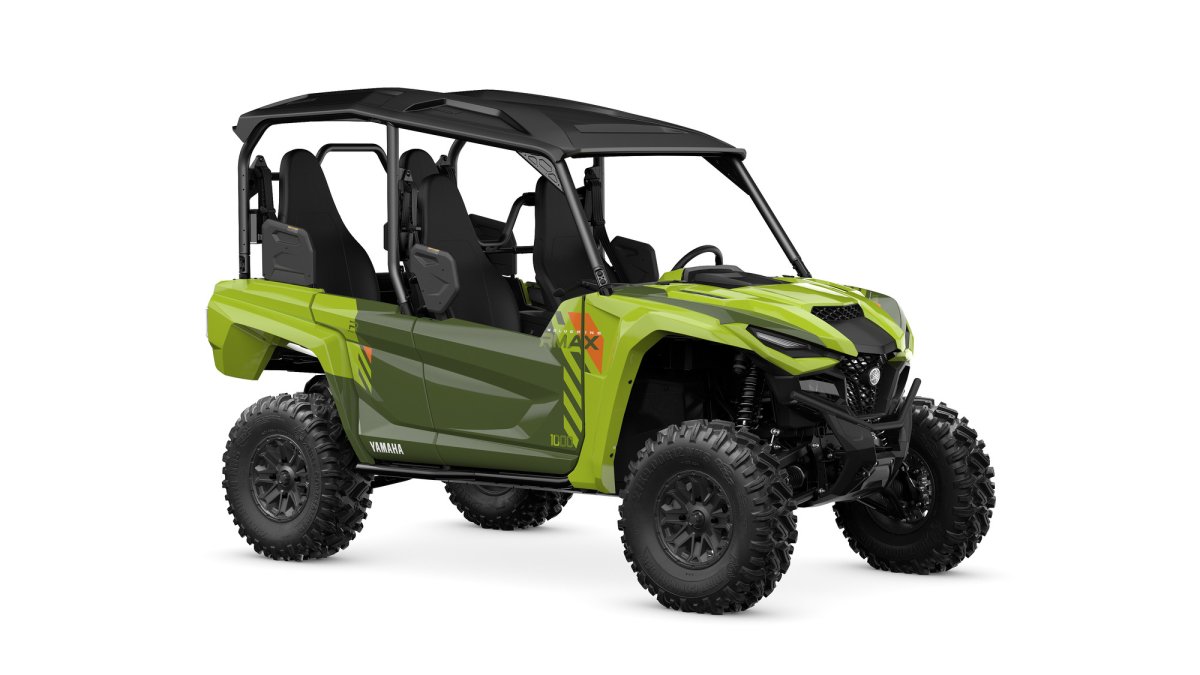
The 2026 Yamaha Wolverine RMAX4 1000 Compact R-Spec is the four-seat RMAX for buyers who want serious engine and suspension hardware without committing to the full-size machine’s long wheelbase and higher trim price. Yamaha lists $22,999 MSRP, plus a separate $1,400 destination charge. That makes the real starting point $24,399 before tax, registration, dealer fees, and the accessories most owners will eventually add.
This is the entry four-seat RMAX, not a stripped utility cart. It has Yamaha’s 108-hp 999cc parallel-twin, a 66-inch overall width, FOX QS3 piggyback shocks, 29-inch tires, and selectable four-mode drive. The Compact name matters: its 90.2-inch wheelbase is dramatically shorter than the full-size RMAX4, while the rear seats can slide and fold to turn passenger space into a 600-lb cargo area.
What the Compact R-Spec is built to do
The RMAX4 Compact is for a group that rides together and wants a machine that still feels manageable on tighter wooded trails. Four adults can fit, but this is still a 66-inch-wide side-by-side; it is not a substitute for a 50-inch access machine or a narrow farm path runabout. Check the true overall width, not the 64-inch stance figure, before treating a route, trailer, or garage as a given.
The 999cc liquid-cooled, DOHC parallel-twin is rated at 108 hp. It uses Yamaha Fuel Injection with dual 48mm throttle bodies and drives through the Ultramatic V-belt CVT with low, high, neutral, reverse, and all-wheel engine braking. The power is a genuine advantage when the vehicle is loaded with people, but it also means this is not a machine that rewards casual inputs on awkward terrain.
Yamaha backs the Ultramatic belt with a 10-year belt warranty. That is reassuring, but it should not be confused with a blanket operating-cost guarantee. Belt condition, heat management, routine maintenance, tire choice, and the weight you ask the machine to carry will still shape ownership.
Drive system and suspension: real trail equipment
The On-Command system provides Turf Mode, 2WD, 4WD, and full-differential-lock 4WD. Turf Mode is useful when a tight turn or sensitive ground calls for the rear differential to unlock. Full lock is the slow-speed traction setting for a rut, climb, or obstacle—not a mode to leave selected across higher-traction ground just because it is available.
Independent double-wishbone suspension with anti-sway bars works with FOX 2.0 QS3 piggyback shocks. Yamaha lists 14.2 inches of front travel and 13.3 inches at the rear, plus 13.4 inches of maximum clearance. The tires are 29-inch GBC Dirt Commanders, with 9-inch-wide fronts and 11-inch-wide rears. It is a capable, intentionally trail-focused package, but it does not have the 30-inch tires, extended travel, iQS electronic damping, audio, camera, or winch of the more expensive Limited and XT-R packages.
That distinction is useful. The R-Spec gets the essential RMAX driving hardware and lets the buyer decide whether the premium features are worth the additional cost. A windshield, mirrors, winch, doors or enclosure pieces, and other protection should be budgeted according to the terrain and season, not assumed to be included.
The rear-seat arrangement is this model’s practical trick. The seats slide and fold forward, and Yamaha says the resulting rear area can carry up to 600 lb of cargo with multiple tie-down points. It makes the Compact R-Spec more flexible than a fixed four-seat recreational SxS: take passengers one weekend, then use the space for gear the next.
The important caveat is towing. Yamaha’s current US R-Spec specification page does not state a towing capacity, so this review does not invent one from an older RMAX or another trim. If trailer work is central to the purchase, a Pioneer, Ranger, Defender, or another vehicle with the required published rating is the safer decision. The convertible cargo space is real; it is not evidence of an unlisted tow rating.
At 2,114 lb wet, including a full 9.2-gallon fuel tank, it is also worth matching vehicle, trailer, tow vehicle, and tie-down plan before delivery day. Four people, a load of gear, and a few accessories add up quickly.
2026 Yamaha Wolverine RMAX4 1000 Compact R-Spec specifications
| Specification |
2026 Wolverine RMAX4 1000 Compact R-Spec |
| Engine |
999cc liquid-cooled DOHC parallel-twin; Yamaha Fuel Injection with dual 48mm throttle bodies |
| Factory-rated output |
108 hp |
| Transmission |
Ultramatic V-belt CVT; L/H/N/R; all-wheel engine braking |
| Drive system |
On-Command Turf Mode / 2WD / 4WD / full-diff-lock 4WD |
| Seating |
4, with convertible rear seating |
| Cargo capacity |
Up to 600 lb in the converted rear cargo area |
| Wet weight |
2,114 lb |
| Overall width / length / height |
66.0 / 128.1 / 83.1 in |
| Stance width / wheelbase |
64.0 / 90.2 in |
| Ground clearance / fuel |
13.4 in / 9.2 gal |
| Towing |
Not rated by Yamaha on the current US R-Spec specifications page |
| Tires |
GBC Dirt Commander: 29 x 9-14 front; 29 x 11-14 rear |
| Suspension |
FOX QS3 piggybacks; 14.2 in front / 13.3 in rear travel |
| Warranty |
Six-month limited factory warranty; 10-year belt warranty |
| Base MSRP / destination |
$22,999 / $1,400 |
How it compares
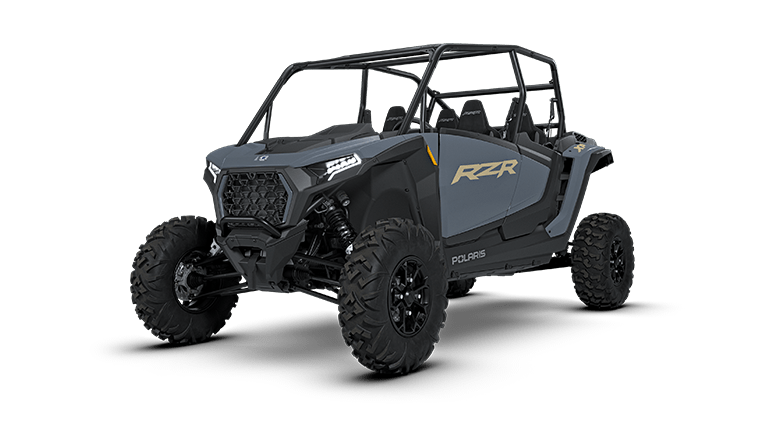
The 2025 Yamaha Wolverine RMAX4 1000 is the larger, long-wheelbase version of the idea. The new Compact R-Spec has a much shorter 90.2-inch wheelbase and a lower entry price, making it the better fit for buyers who prioritize maneuverability and convertible space. The full-size RMAX4 makes more sense when its longer platform and premium-trim equipment are specifically the point. Compare them →
The 2025 Yamaha Wolverine RMAX2 1000 puts the same 108-hp family of power in a two-seat package. It is the focused choice for a couple that rarely needs rear passengers. The RMAX4 Compact costs more and weighs more, but its extra seats and folding rear area make it materially more adaptable. Compare them →
The 2026 Yamaha Wolverine X2 1000 R-Spec is another powerful two-seat trail machine, rated at 105 hp and shorter still. Choose the X2 when two riders and a more compact footprint matter most; choose the RMAX4 Compact when carrying friends or converting the rear seating into cargo space is a regular part of the plan. Compare them →
The 2025 Honda Pioneer 1000-6 Deluxe Crew is the utility-side alternative. It adds two more seats, a published 2,500-lb tow rating, and a more work-oriented mission. The RMAX4 Compact has two fewer seats and no published tow rating, but it offers vastly more power per passenger and a more performance-minded trail chassis. Compare them →
Verdict
The 2026 Yamaha Wolverine RMAX4 1000 Compact R-Spec is a smart four-seat trail SxS for a buyer who wants Yamaha’s 108-hp RMAX powertrain and usable suspension without buying into the long, premium full-size RMAX4. The short wheelbase, convertible rear seating, FOX QS3 shocks, 29-inch tires, and four-mode drive give it a clear purpose rather than a vague do-everything pitch.
It is not the value choice for towing-heavy work, nor is it a slim trail machine. Yamaha’s missing tow rating is a meaningful limitation for shoppers with a trailer-first use case. For riders who mainly want four people on varied trails, plus a rear area that can become cargo space when needed, the Compact R-Spec earns its place as the most accessible current four-seat RMAX.