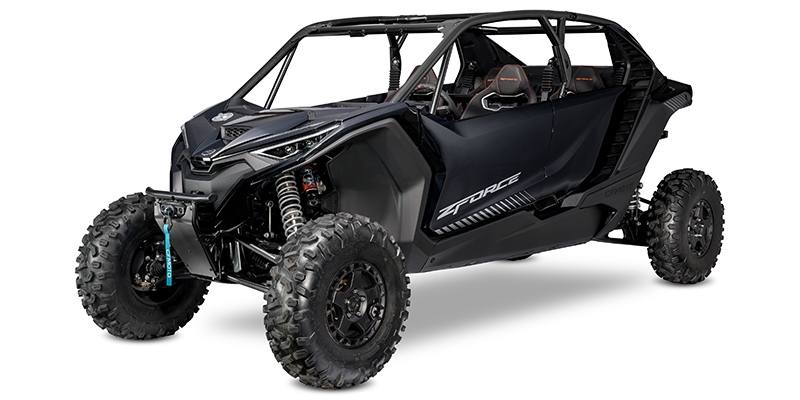
The 2026 CFMOTO ZForce Z10-4 is the family-sized version of CFMOTO’s first serious high-performance turbo platform. It seats four, makes 154 horsepower and stays 64 inches wide, while a 129-inch wheelbase creates room for the second row. MSRP is $22,999.
The easy summary is that it adds two seats to the Z10 for $3,000. The more useful summary is that those seats add 30 inches of overall length, 30 inches between the axles and 254 lb of dry weight. The Z10-4 keeps the same engine output, suspension travel, tires, ground clearance and 11.8-gallon tank as the two-seater.
That makes it a specific purchase rather than an automatic upgrade. If three or four people ride often, the longer machine solves the problem properly. If the rear seats would usually be empty, the owner carries their size and mass on every mile.
This review is based on CFMOTO’s current U.S. catalog specifications and launch information, not a personal trail test. Published dimensions and equipment can establish the buying case. Heat management, belt behavior, cabin noise and long-term reliability still require a thorough demo and real owner mileage.
Four actual buckets, not occasional jump seats
The Z10-4 uses four adjustable bucket seats across two rows. Each seating position has a headrest, and the long cab gives the rear passengers a permanent space rather than converting a cargo area when extra people come along.
That arrangement is right for families and groups who ride together regularly. A dedicated second row avoids the compromises of small temporary seats, but four places on a spec sheet do not guarantee comfort for four specific people. Bring the intended passengers, sit in the rear with helmets on and check knee room, sight lines, handholds and belt geometry.
Rear passengers experience a different ride from the people in front. Their seats are farther from the vehicle’s center of rotation, so pitch and side movement can feel stronger. A driver who is comfortable at a given pace may be asking much more of the second row. Communication matters, and Bluetooth audio is not a substitute for driving to the least comfortable passenger.
Half doors provide more coverage than nets, while the open upper cab preserves airflow. A roof is not shown as standard in CFMOTO’s platform equipment matrix, despite appearing in many accessory photographs. Buyers should verify the exact unit on the written build sheet instead of assuming a promotional configuration matches the base price.
Thirty additional inches change the machine
CFMOTO lists the Z10-4 at 159 inches long, 64 inches wide and 68.5 inches high. Wheelbase is 129 inches, ground clearance is 14 inches and the turning radius is 24 feet. Dry weight is 2,164 lb.
Width is the reassuring number. The four-seater remains in the 64-inch class, making it much narrower than many 72- and 74-inch four-seat sport machines. That helps on wooded routes, through gates and on trailers where width is the limiting factor.
Length is the warning. At 13 feet 3 inches before allowing space for tie-downs, the Z10-4 needs a genuinely long trailer and storage area. A 24-foot turning radius can turn a simple switchback or barnyard U-turn into a multi-point maneuver.
The long wheelbase can make the machine feel settled across repeated bumps, but it lowers breakover capability compared with the two-seat Z10. Fourteen inches of axle clearance does not guarantee that the center of a 129-inch wheelbase will pass over a sharp ridge. Approach abrupt crests and trailer transitions diagonally where conditions safely allow.
The 2,164 lb figure is dry. Add 11.8 gallons of fuel, four adults, safety equipment, tools and a spare tire, and trail weight climbs quickly. Trailer ratings, ramp capacity, tie-down hardware and tow-vehicle payload should be checked against that real number rather than the brochure minimum.
The revised 2026 turbo triple
The engine is a 998cc liquid-cooled DOHC inline-three with a turbocharger and Bosch electronic fuel injection. CFMOTO rates the 2026 model at 154 hp at 7,750 rpm and 107 lb-ft at 6,500 rpm.
Those figures are higher than the 143 hp and 100 lb-ft numbers printed in earlier Z10 platform material. The current Z10-4 catalog also lists 2,164 lb dry rather than the former 2,105 lb. Search results may show both sets, but a page labeled 2026 should use the revised U.S. launch specifications.
With four occupants, power-to-weight changes more than the shared 154 hp figure suggests. The Z10-4 is 254 lb heavier than the two-seat model before the rear passengers climb in. It should still have substantial acceleration, but the shorter Z10 will carry less mass with one or two people.
Comfort, Trail and Sport throttle modes shape electronic pedal response. Comfort is useful when grip is inconsistent or passengers prefer smooth inputs. Trail provides the general-purpose middle calibration. Sport sharpens response when conditions, visibility and occupant comfort permit it.
The modes do not change maximum output. Their job is to make 154 hp easier to meter. Smooth control is especially valuable in a long four-seater because abrupt acceleration and deceleration are amplified for the rear row.
OmniDrive CVT and heat-management questions
An OmniDrive continuously variable transmission provides park, reverse, neutral, high and low. The CVT removes gear selection from the driver’s workload and lets the engine remain in its useful range as speed changes.
Low range should be selected before slow, high-load operation such as deep sand, sustained crawling or technical climbing. Moving slowly in high can ask the belt to slip and create heat. The fact that the machine continues moving does not mean the operating choice is kind to the belt.
A four-seat turbo UTV deserves a deliberate heat check during the demo. Let it reach operating temperature, drive slowly as well as quickly and note heat around both rows, the center tunnel and the rear bodywork. Ask how the intake and CVT filter are serviced, how often the belt is inspected and what access panels must be removed.
The 11.8-gallon tank is unchanged from the two-seat model. CFMOTO does not publish one universal range because load, pace, elevation, sand and temperature alter consumption. Four passengers and repeated boost will produce a different result from a gentle solo loop.
FOX QSE suspension carries the same travel with more mass
The Z10-4 has 17 inches of front travel and 20 inches at the rear. FOX Performance Elite QSE shocks use piggyback reservoirs and electronic compression adjustment. Soft, Medium and Firm settings can be selected from the cabin.
The ability to change damping without leaving the seat is useful when a ride alternates between chopped trail, open terrain and slower technical sections. Soft can reduce harshness, Medium is the general setting and Firm adds compression support when impacts and body movement increase.
The four-seater uses the same published wheel travel as the two-seater while carrying 254 lb more dry weight and potentially two additional occupants. Correct spring preload is therefore important. Electronic compression control can change damping force, but it cannot restore ride height consumed by an unsuitable spring setting.
Have the dealer explain the baseline preload for the expected passenger load. Evaluate suspension with representative weight if possible, not with only the driver on a smooth parking-lot loop. Check whether the rear row remains composed over repeated bumps and whether each QSE setting produces a clear, useful change.
High-clearance independent front suspension uses a stabilizer bar. The rear is an independent long-travel arrangement with dual shocks and a rear stabilizer bar. A-arm guards, an HDPE skid plate and an aluminum bash plate protect vulnerable areas, but no skid system makes an impact consequence-free.
Thirty-inch tires and a 64-inch stance
All four corners use 30 x 10-14 ITP Terra Hook tires on 14-inch aluminum wheels. The square sizing simplifies tire rotation and keeps the package inside the 64-inch stance.
The width makes the Z10-4 unusual in the current four-seat performance market. Wider machines gain lateral stability and often carry more suspension travel, but they can be awkward on tighter routes and trailers. The CFMOTO keeps access manageable without dropping to a narrow recreational chassis.
Selectable 2WD, 4WD and locked 4WD let the driver add traction as needed. Two-wheel drive is appropriate on firm surfaces. Four-wheel drive shares work with the front axle, while the locked setting is reserved for obstacles where both front tires must pull.
Electronic power steering offers Auto, Low, Medium and High assistance. These steering settings are separate from the three throttle maps and the three suspension modes. The number of possible combinations looks impressive, but the practical benefit is finding two or three setups that suit the driver’s terrain rather than changing settings continuously.
Hydraulic disc brakes are fitted front and rear. The test drive should include controlled stopping after the machine is warm and, where a dealer permits, with representative passenger mass. Four adults change braking demand much more than the engine specification suggests.
A technology package built for a flagship
The center of the dashboard is a 12.3-inch CFMOTO RideSync MMI touchscreen with Apple CarPlay and a backup camera. A separate seven-inch display in front of the driver handles essential information. Bluetooth audio and mobile-app connectivity are included.
The split-screen approach is sensible in a performance machine. Navigation, media and the camera can use the large center panel without displacing speed, warnings and drivetrain status from the driver’s direct sight line. The backup camera is especially valuable in a vehicle 159 inches long.
Buyers should try every common control with gloves and in direct sunlight. Confirm whether Apple CarPlay requires a cable, which app functions need phone service and how firmware updates are delivered. A large screen earns its place only if basic tasks remain quick and legible.
The multi-function steering wheel carries start and chassis controls. An NFC key handles normal access. Ask what backup procedure is available if that key is lost or damaged, and confirm whether the dealer provides a spare.
A 900-watt charging system gives useful headroom for communications, lighting and other accessories. Continuous draw still matters. A light bar, heated gear and audio can consume substantial power together, particularly at idle.
Standard equipment and the real $22,999 price
The Z10-4 includes a 4,500 lb winch with synthetic rope, half doors, LED lighting, recovery points, power steering, electronic FOX suspension, the two displays, a backup camera and the HDPE/aluminum protection package.
That equipment changes cross-shopping. A cheaper four-seat machine may need shocks, a winch, display and camera to match the CFMOTO. A more expensive machine may justify its premium with additional power, width, travel or a longer ownership record.
Do not compare advertised MSRP alone. Obtain an out-the-door quote that separates freight, assembly, document fees, tax and registration. Confirm the roof and any dealer-installed parts line by line. A factory-looking accessory in a photograph is not necessarily included.
There is no published towing rating for this sport configuration. The winch and recovery hooks do not turn it into a utility machine. Owners who need to tow trailers or carry significant cargo should shop the UForce line instead.
2026 CFMOTO ZForce Z10-4 specifications
| Specification |
ZForce Z10-4 |
| Engine |
998cc liquid-cooled DOHC turbocharged inline-three |
| Output |
154 hp at 7,750 rpm; 107 lb-ft at 6,500 rpm |
| Fuel system |
Bosch electronic fuel injection |
| Throttle modes |
Comfort, Trail and Sport |
| Transmission |
OmniDrive automatic CVT; P/R/N/H/L |
| Drive system |
2WD / 4WD / locked 4WD |
| Steering |
Electronic power steering; Auto/Low/Medium/High assistance |
| Front suspension |
Independent high-clearance A-arm; stabilizer bar; 17 in travel |
| Rear suspension |
Independent long-travel system; dual shocks; 20 in travel |
| Shocks |
FOX Performance Elite QSE with in-cab electronic compression adjustment |
| Brakes |
Front and rear hydraulic discs; parking brake |
| Tires |
30 x 10-14 ITP Terra Hook front and rear |
| Wheels |
14-inch aluminum |
| Length x width x height |
159 x 64 x 68.5 in |
| Wheelbase |
129 in |
| Turning radius |
24 ft |
| Ground clearance |
14 in |
| Dry weight |
2,164 lb |
| Fuel capacity |
11.8 gal |
| Seating |
Four adjustable bucket seats |
| Winch |
4,500 lb with synthetic rope |
| Displays |
12.3-inch RideSync MMI touchscreen and 7-inch driver display |
| Charging output |
900 watts |
| Warranty |
12 months |
| Base MSRP |
$22,999 |
ZForce Z10-4 versus two-seat ZForce Z10
The 2026 ZForce Z10 uses exactly the same 154 hp turbo triple, 64-inch width, 14-inch clearance, 17/20-inch suspension travel, 30-inch tires and 11.8-gallon tank. It seats two and starts at $19,999.
The Z10-4 adds $3,000, 30 inches of length and wheelbase, and 254 lb of dry weight. The performance hardware does not increase to compensate; the premium buys a full second row and the structure required to carry it.
Choose the four-seater when three or four people ride routinely. Choose the two-seater when the rear row would be empty most of the time. The shorter Z10 is easier to transport, turn and place over sharp terrain, while carrying less mass with the same power. Compare the Z10 and Z10-4.
ZForce Z10-4 versus ZForce 950 Sport 4
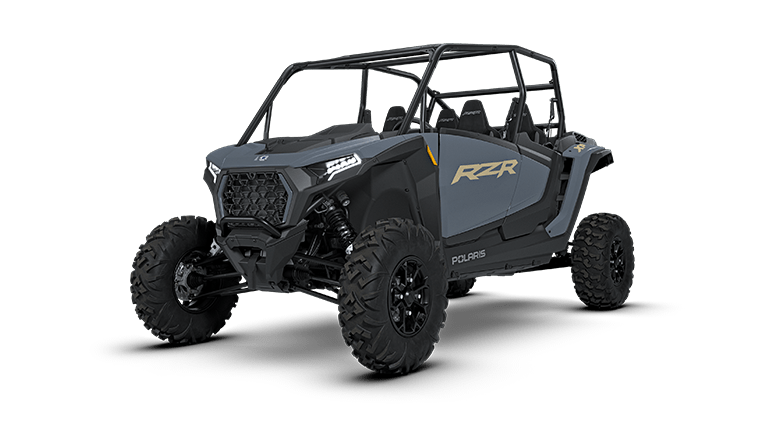
The 2026 ZForce 950 Sport 4 is CFMOTO’s less expensive four-seat sport model. It starts at $18,999 with an 83 hp 963cc V-twin, 60-inch width, 120-inch wheelbase, 1,700 lb dry weight, 12 inches of clearance and 12.1/13.1 inches of suspension travel.
The Z10-4 costs $4,000 more and makes 71 additional horsepower. It adds four inches of width, nine inches of wheelbase, two inches of clearance, 464 lb and substantially more suspension travel. Both include a 4,500 lb synthetic-rope winch.
The 950 is the rational choice for moderate trails where 83 hp and its suspension are enough. It is lighter, narrower and less expensive. The Z10-4 earns its premium when turbo power, electronic damping and the larger cockpit technology will actually be used. Compare the Z10-4 and ZForce 950 Sport 4.
ZForce Z10-4 versus Honda Talon 1000X-4
ATVPedia’s 2025 Honda Talon 1000X-4 record lists 104 hp, a 64-inch width, 116.9-inch wheelbase, 12.7 inches of clearance, 1,740 lb weight and a $25,999 base price.
The CFMOTO makes 50 more horsepower and costs $3,000 less in the recorded model years. It also weighs 424 lb more, uses a wheelbase 12.1 inches longer and carries 4.5 gallons more fuel. Honda’s defining difference is its six-speed dual-clutch transmission with paddle control rather than a CVT.
The Talon suits a driver who specifically values a geared transmission, lower mass and Honda’s established network. The Z10-4 offers more output, electronic FOX control and a lower recorded price, but carries the ownership questions of a new turbo platform. Verify current Honda pricing before treating the $3,000 gap as a live quote. Compare the Z10-4 and Talon 1000X-4.
ZForce Z10-4 versus Can-Am Maverick X3 MAX X rs Turbo RR
The 2025 Can-Am Maverick X3 MAX X rs Turbo RR is a wider and more expensive four-seat turbo alternative. ATVPedia records 200 hp, a 72-inch width, 135-inch wheelbase, 15 inches of clearance, 1,720 lb weight and a $34,999 starting price.
The Can-Am makes 46 more horsepower, is eight inches wider and is 444 lb lighter on the recorded figures. Its wheelbase is six inches longer. The CFMOTO costs $12,000 less, stays in the 64-inch class and includes a large technology and recovery package.
The Maverick is the stronger specification for high-speed open terrain and power-to-weight performance. The Z10-4 is more accessible in price and width. These machines answer different versions of the four-seat performance question, so trail access and terrain should be decided before horsepower. Compare the Z10-4 and Maverick X3 MAX X rs.
Who should buy the 2026 ZForce Z10-4?
The Z10-4 fits a family or group that regularly carries four people and wants turbo performance without moving to a 72- or 74-inch chassis. It is especially compelling where width matters more than length and where the factory display, camera, winch and electronic shocks would otherwise be added later.
It is a poor fit for occasional rear-seat use. The owner pays for and transports the extra 30 inches and 254 lb every day. It is also not a cargo or towing substitute for a utility UTV.
Early adopters should evaluate the dealer as carefully as the machine. Ask about parts lead times, technician training, CVT service, electronic-diagnostics capability and warranty procedure. The specification is mature enough to justify interest; the ownership history is not yet long enough to remove uncertainty.
Before buying, load all four intended riders, use both displays, check rear-seat comfort and confirm the trailer fit. Drive the machine long enough to evaluate heat and noise in both rows. Get every included accessory and fee in writing.
Verdict
The 2026 CFMOTO ZForce Z10-4 makes a coherent promise: four proper seats, 154 turbocharged horsepower, electronically controlled FOX suspension and flagship-level technology in a 64-inch-wide chassis for $22,999.
Its compromises are equally clear. At 159 inches long and 2,164 lb dry, it is not compact, and a 24-foot turning radius will be obvious on tight ground. The four-seat body dilutes the two-seater’s power-to-weight advantage without adding more engine or suspension travel.
For riders who genuinely need the second row, that is a fair exchange. The Z10-4 undercuts established four-seat turbo machines while including equipment that often appears on higher trims. Buyers who usually ride with one passenger should save $3,000 and choose the shorter Z10. Browse more CFMoto models, explore sport UTVs, visit the 2026 model-year hub, or create another matchup in the comparison tool.