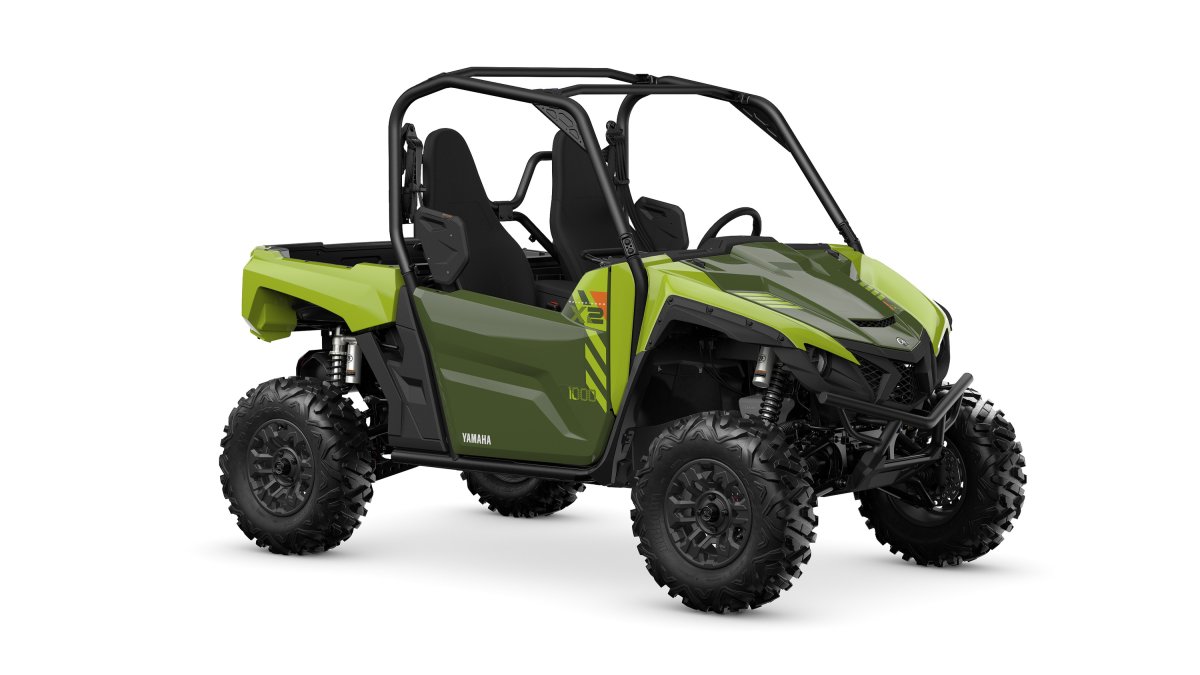
The 2026 Yamaha Wolverine X2 1000 R-Spec is the two-seat answer for riders who want more than a compact utility UTV but do not need a 72-inch sport machine. It starts at $16,999, makes a factory-rated 105 hp from a 999cc parallel-twin, and combines 28-inch tires, adjustable SACHS piggyback shocks, and Yamaha’s locking On-Command 4WD in a 63.6-inch overall package. With the $1,400 destination charge included, the real starting point is $18,399 before the ordinary dealer and ownership costs.
The key word is balance. The X2 is not a dump-bed workhorse, and it is not a long-wheelbase desert SxS. Its 83.7-inch wheelbase, 12.5 inches of clearance, and 13.3/15.5 inches of suspension travel place it between those jobs. It makes sense for two people covering mixed trails at a quick pace, with enough suspension and engine to keep that ride enjoyable when the terrain stops being smooth.
Price and purpose: a two-seat recreation machine
The R-Spec has a $16,999 MSRP plus $1,400 destination. That is a serious price for a two-seat UTV, but it includes the things that define the trim: the 105-hp engine, 28-inch Maxxis Bighorns, adjustable SACHS ZF piggyback shocks, a more finished cockpit, and the locking 4WD system. The XT-R costs more and brings its own package differences; this review covers the R-Spec specifically.
Do not use a recreation SxS as if it were a Ranger or Pioneer simply because it has a small rear area. Yamaha’s current US R-Spec specifications page does not publish a bed-capacity or towing rating. That does not mean the X2 is fragile; it means there is no factory number to quote responsibly. If a trailer, pallet, or large bed load is central to the job, choose a vehicle with the published capacity you need.
The 105-hp twin changes the conversation
Yamaha rates the liquid-cooled 999cc DOHC, eight-valve parallel-twin at 105 hp. Fueling is Yamaha Fuel Injection through dual 48mm throttle bodies. That is a substantial step beyond the old 850-class X2 and is the reason this model needs a considered right foot rather than an optimistic reading of the word “Wolverine.”
Power goes through Yamaha’s Ultramatic V-belt CVT with low, high, neutral, and reverse, plus all-wheel engine braking. The system uses a V-belt, not a geared DCT, but Yamaha backs it with a 10-year belt warranty. Engine braking is especially useful on a descent; it helps hold a chosen pace before the brake pedal becomes the only plan.
On-Command provides 2WD, 4WD, and full-differential-lock 4WD. That last setting is a traction tool for the slow, awkward section of a route—not a setting to leave engaged casually on higher-traction ground. Use it to get through the situation cleanly, then return to the least aggressive drive mode that fits the surface.
The R-Spec uses independent double wishbones and anti-sway bars at both ends. SACHS ZF piggyback shocks have compression and preload adjustment, with 13.3 inches of front travel and 15.5 inches at the rear. The 28 x 10.00R-14 Maxxis Bighorns are wrapped around 14-inch wheels. That is real recreational-trail hardware, not decorative suspension language.
Yamaha calls the stance width 61.18 inches, while overall width is 63.6 inches. For trail signs, trailer fit, and storage, the overall number is the one to check. It remains more maneuverable than a 72-inch sport UTV, but it will not fit the 50-inch or 60-inch route restrictions that make smaller machines attractive. Measure first; an otherwise excellent vehicle is useless behind a narrow gate.
At 1,773 lb wet, with a full 9.2-gallon fuel tank, the X2 is not featherweight. The longer-travel suspension and 12.5 inches of maximum clearance help it work through rough terrain, but they do not remove the consequences of speed, passenger weight, or a poor line. The better setup is the one that gives you enough composure at the pace you actually ride—not the setup that looks best in a parking lot.
Cabin and ownership details that matter
The R-Spec inherits several higher-grade controls and touchpoints: a blue-backlit LED meter, adjustable seat belts, sealed console and glove boxes, an open-gate shifter, and two cupholders. None of those items will make the vehicle climb a ledge, but they improve the experience of spending several hours in it. This is one area where Yamaha understands the difference between a fast test ride and a full day outside.
Yamaha supplies a six-month limited factory warranty and its 10-year belt warranty. A windshield, roof, mirrors, audio, winch, and extra protection are accessory decisions, not automatic R-Spec equipment. Buy for the routes, season, and recovery plan you have, then budget for the protection that makes those conditions realistic.
2026 Yamaha Wolverine X2 1000 R-Spec specifications
| Specification |
2026 Wolverine X2 1000 R-Spec |
| Engine |
999cc liquid-cooled DOHC 8-valve parallel-twin; dual 48mm YFI throttle bodies |
| Factory-rated output |
105 hp |
| Transmission |
Ultramatic V-belt CVT; L/H/N/R; all-wheel engine braking |
| Drive system |
On-Command 2WD / 4WD / full-diff-lock 4WD |
| Seating |
2 |
| Wet weight |
1,773 lb |
| Overall width / length / height |
63.6 / 115.0 / 74.7 in |
| Stance width / wheelbase |
61.18 / 83.7 in |
| Ground clearance / fuel |
12.5 in / 9.2 gal |
| Towing / cargo bed |
Not rated by Yamaha on the current US R-Spec specifications page |
| Tires |
28 x 10.00R-14 Maxxis Bighorn front and rear |
| Suspension |
SACHS ZF piggybacks; 13.3 in front / 15.5 in rear travel |
| Warranty |
Six-month limited factory warranty; 10-year belt warranty |
| Base MSRP / destination |
$16,999 / $1,400 |
How it compares
The 2025 Yamaha Wolverine X2 850 is the obvious lower-power sibling comparison. It is narrower and costs less, but the X2 1000 R-Spec brings 105 hp, longer travel, 28-inch tires, and a much more serious performance envelope. A used or leftover 850 can still be the rational answer when pace and budget matter more than peak capability. Compare them →
The 2025 Yamaha Wolverine RMAX2 1000 is the more substantial two-seat Yamaha with a larger, heavier chassis and a higher price. The X2 has a more compact recreational footprint; the RMAX is the answer for a buyer who values the larger platform and its additional equipment. Compare them →
The 2026 Honda Pioneer 520 is a completely different kind of two-seater: 50 inches wide, equipped with a 450-lb dump bed, and rated to tow 1,000 lb. It is the compact work and access choice. The Yamaha costs more because it is designed for power and suspension travel, not because it is the better answer to every property chore. Compare them →
The 2027 Kawasaki Teryx KRX 1000 is a much wider 68.1-inch sport-oriented alternative with substantially more suspension travel and a higher price. The Wolverine is the more compact two-seat cross-country option. The Kawasaki is the choice when big, rough terrain and chassis width are deliberate parts of the plan. Compare them →
Verdict
The 2026 Yamaha Wolverine X2 1000 R-Spec is a strong choice for two riders who want quick, capable trail performance without moving into the size and cost of a full-width sport UTV. Its 105-hp twin, locking 4WD, 28-inch tires, adjustable SACHS suspension, engine braking, and comparatively compact overall dimensions give it a clear identity.
It is not the right tool for buyers who need a published bed rating, a towing number, three seats, or a 50-inch access width. Yamaha’s omission of cargo and towing ratings should be treated as a real shopping constraint. If those limits fit the way you ride, however, the X2 1000 R-Spec is a properly focused, well-equipped two-seat recreation SxS rather than a generic middle ground.