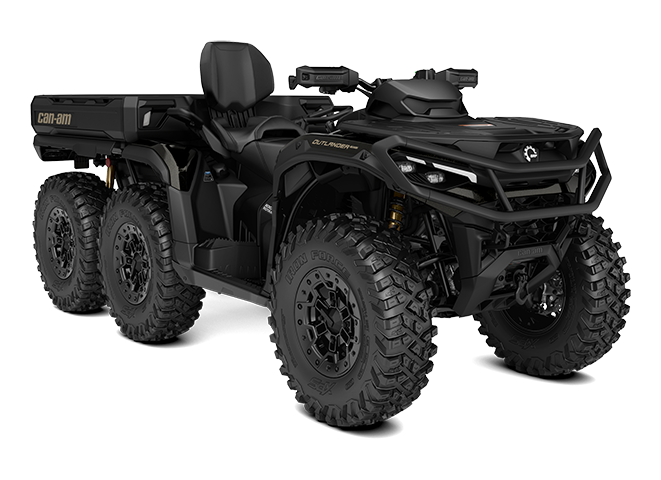
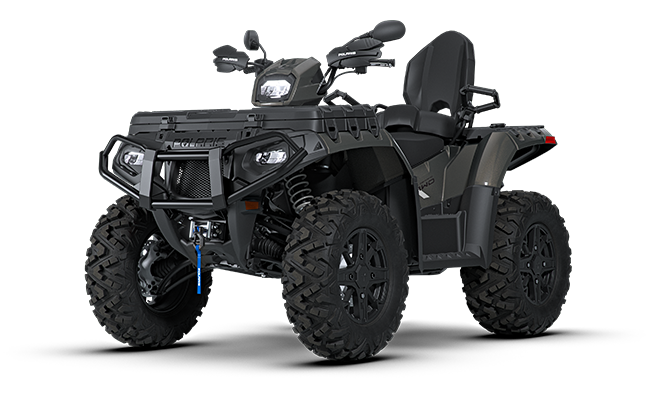
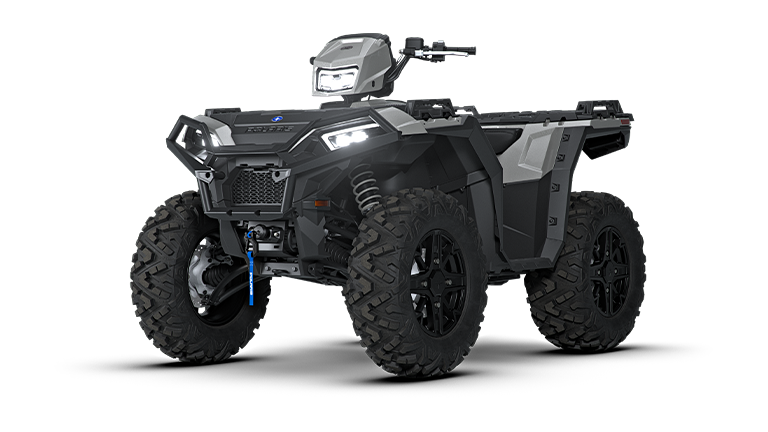
The 2027 Can-Am Outlander MAX 6x6 Backcountry 1000R is not a normal ATV with two extra wheels. It is a compact work vehicle built around ATV trail access: a 1,000 lb cargo bed, 2,475 lb braked-tow rating, removable passenger seat, 101 hp V-twin and selectable six-wheel drive in a 49.7-inch-wide package. That is a rare mix of capacity and footprint.
It is also a $21,099 specialty machine before transportation, preparation, tax or accessories. The question is not whether it can do more than a conventional ATV—it plainly can. The question is whether you will use its bed, towing capacity and extra axle often enough to justify the cost, 1,449 lb dry weight and 126.9-inch length. For a hunting camp, large property, remote work crew or backcountry user, the answer can be yes. For a rider who mostly wants a fast trail quad, it is the wrong answer.
What’s new for 2027
Can-Am describes the current Outlander 6x6 as newly redesigned, with the emphasis on capability rather than styling. The Backcountry 1000R combines the 101 hp Rotax V-twin with a work-calibrated pDrive CVT, an extra-low range, selectable 4WD/6WD/Lock 6WD and a revised cargo-focused chassis. The model sheet lists a 1,000 lb rear bed, 2,475 lb braked tow rating and 72.6 gallons of total cargo storage.
The Backcountry is not the base 6x6. It is the premium 1000R configuration with 30-inch XPS Iron Force tires, 14-inch beadlocks, SHOWA IFP shocks, a 3,500 lb synthetic-rope winch, guards and a removable passenger seat. The $14,499 entry 6x6 offers a very different 700cc, 50 hp proposition. Be careful with generic “Outlander 6x6” prices and feature lists—they cover very different machines.
Powertrain and six-wheel drive: a work-first drivetrain with serious output
The 999cc Rotax DOHC V-twin makes 101 hp and 69 lb-ft. That is plenty of engine for a loaded bed, long climb or deep mud, but the more telling specification is the CVT calibration. The pDrive primary CVT has an extra-low range and work calibration, with low, high, neutral, reverse and park. It should let the engine operate in its useful torque range at low speed without asking the belt to do everything through throttle alone.
Can-Am provides Work, Standard and Sport engine modes, intelligent engine braking and a speed limiter. Work and low range are not concessions; they are the settings that protect belt life, improve precision and make a loaded machine easier to control. Sport is useful when the bed is empty and the ground opens up, but this is a 1,449 lb dry utility ATV. Its performance should be used with the same restraint as its capacity.
The transmission sends power through selectable 4WD, 6WD and Lock 6WD modes. The listed Visco-6Lok front differential and six driven wheels can make a material difference on soft ground, wet grass, ruts and slow, loaded climbs. Lock 6WD should be used deliberately where traction demands it, not as a default on high-grip surfaces. A six-wheel machine still needs sensible tire pressure, a thoughtful line and enough room to turn.
Chassis, size and suspension: compact width, very long wheelbase
The 49.7-inch width is deceptively important. It keeps this cargo-capable 6x6 close to the 50-inch trail threshold in many places, although rules vary and some networks measure clearance more strictly than a brochure. The trade-off is length: at 126.9 inches long with a 93.3-inch wheelbase, it needs more room for switchbacks, trailers and storage than any ordinary ATV.
Ground clearance is 13 inches. The Backcountry rides on 30-inch XPS Iron Force tires, which support that clearance and help it bridge soft, uneven terrain. The 14-inch aluminum beadlock wheels are a sensible choice for a machine expected to work far from pavement, especially where a low-pressure tire setting improves flotation. They do not remove the need for a real spare-tire and recovery plan.
SHOWA IFP shocks manage 7.5 inches of front travel and 9 inches at the rear. Those numbers are modest compared with sport ATVs, which is appropriate. The 6x6 needs predictable control under a load, not a suspension setup tuned for jumping. The rear middle axle has a sway bar, and the whole platform is engineered around stability and carrying ability rather than sharp corner entry.
The cargo bed is the reason to buy it
The 1,000 lb cargo-bed rating is the Backcountry 1000R’s defining number. Its cargo layout includes eight gallons up front, 58 gallons at the rear and 6.6 gallons under the rear cargo area, for 72.6 gallons total storage. That is enough volume to turn the vehicle into a serious camp, property or hunting tool without attaching a trailer for every task.
But capacity must be read as a system. A high, poorly secured load affects steering, braking and side-slope stability. Heavy material should sit low and forward in the bed when possible, and the bed rating does not eliminate the load limits of the tires, brakes or trail surface. The six driven wheels help put power down; they do not make an overloaded vehicle safe.
Towing is equally serious. Can-Am rates the machine to pull 2,475 lb with a braked trailer through its two-inch receiver. That is a substantial rating, particularly for an ATV-format vehicle. It assumes an appropriate braked trailer and a controlled environment. A 2,475 lb trailer on a steep, slick or off-camber trail is a handling problem waiting to happen, regardless of the engine’s 101 hp output.
Protection, recovery and passenger use
The Backcountry includes the hardware a remote-work ATV should have: a heavy-duty front bumper, full skid plate, footwell protectors, front and rear A-arm protectors, handguards and a HD3500 3,500 lb synthetic-rope winch. These are functional factory additions, not an accessory catalog exercise. The winch is useful for recovery and route clearing, but it needs correct anchoring and safe rigging practices; extra power on the line is not a substitute for judgment.
The removable passenger seat adds versatility. It permits two riders when the job requires an extra person, then frees space when cargo takes priority. It does not make the Backcountry a substitute for a fully enclosed side-by-side. Passenger safety, load distribution and the specific operating instructions in the owner’s manual deserve particular attention on a long, heavy 6x6.
2027 Can-Am Outlander MAX 6x6 Backcountry 1000R specifications
| Specification |
Outlander MAX 6x6 Backcountry 1000R |
| Engine |
999cc liquid-cooled Rotax DOHC V-twin |
| Output |
101 hp / 69 lb-ft |
| Fuel system |
Intelligent Throttle Control with EFI |
| Transmission |
Work-calibrated pDrive CVT; extra-low L/H/N/R/P |
| Drive system |
Selectable 4WD / 6WD / Lock 6WD with Visco-6Lok |
| Engine braking |
Intelligent Engine Braking; Work, Standard and Sport modes |
| Power steering |
Tri-Mode Dynamic Power Steering |
| Front suspension |
Arched double A-arm with sway bar; 7.5 in travel |
| Rear suspension |
Arched double A-arm with middle-axle sway bar; 9 in travel |
| Shocks |
SHOWA Internal Floating Piston gas shocks |
| Tires |
XPS Iron Force, 30 x 9-14 front and rear |
| Wheels |
14-inch aluminum beadlock |
| Brakes |
Dual 252 mm front discs; dual 214 mm rear discs |
| Length x width x height |
126.9 x 49.7 x 57.3 in |
| Wheelbase |
93.3 in |
| Ground clearance |
13 in |
| Estimated dry weight |
1,449 lb |
| Fuel capacity |
5.1 gal |
| Cargo bed capacity |
1,000 lb |
| Storage capacity |
72.6 gal total |
| Towing capacity |
2,475 lb, braked trailer |
| Winch |
Can-Am HD3500, 3,500 lb, synthetic rope |
| Seats |
2; removable passenger seat |
| Base MSRP |
$21,099; transportation and preparation extra |
Outlander 6x6 Backcountry versus the alternatives
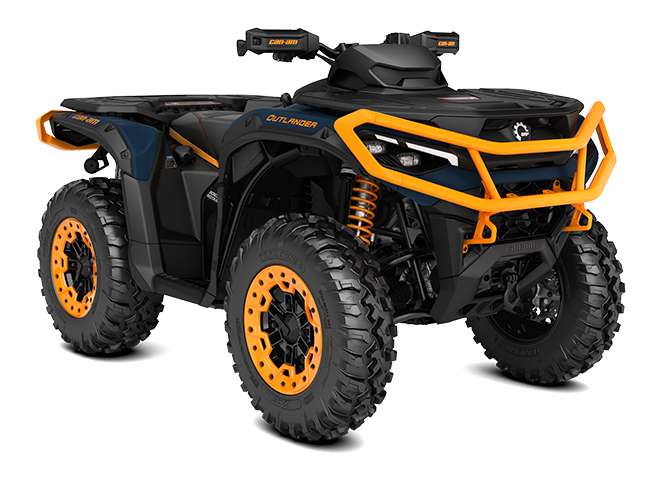
The Outlander XT-P 1000R is the obvious same-brand alternative. It has the same 101 hp output in a much shorter, lighter single-seat ATV and costs $3,850 less. The XT-P is better for regular trail riding; the 6x6 earns its premium only when a real cargo bed, two-up capability, extra axle and 2,475 lb tow rating are useful. Compare the two current 1000Rs.
The CFMoto CForce 1000 Overland has a lower price, a single-seat format and a 79 hp V-twin. It is the sensible trail-touring choice for someone who wants a capable large ATV, not a small cargo vehicle. The Can-Am’s six wheels, bed and nearly 900 lb higher tow rating place it in a different working category. Compare the CForce and Outlander 6x6.
The Can-Am Defender HD10 is the more conventional work alternative. It has a proper side-by-side cab layout, three seats and a 1,000 lb box, but is wider and has less listed towing capacity in ATVPedia’s data. Choose the Defender when cab seating and in-vehicle protection matter most; choose the 6x6 when a narrow ATV-format machine needs to carry big loads into tight ground. See the 6x6 versus Defender comparison.
The Polaris Ranger 1000 is another useful reality check. It also carries 1,500 lb in its cargo box and has three seats, but it is a different tool: 60 inches wide, less powerful and designed around a side-by-side cab. The Backcountry 6x6’s narrow width, six-wheel traction and extra tow rating justify it only where trail access and terrain truly reward them. Compare the Ranger and Outlander.
Price and who should buy it
The $21,099 MSRP is only the beginning because Can-Am separates transportation and preparation. A buyer should ask for an out-the-door number that includes the delivery charge, winch confirmation, accessory needs and trailer setup. At 126.9 inches long and 1,449 lb dry, it also deserves a properly sized trailer, secure tie-downs and a storage plan.
Buy it if heavy cargo, a braked trailer, remote recovery and soft-ground traction are recurring parts of the job. It can carry more into tighter ground than a conventional side-by-side, and the standard protection keeps it ready for actual backcountry use.
Skip it if the cargo bed will stay empty or your trails are mostly fast, narrow and winding. The extra axle, wheelbase and mass are liabilities when the task is simply recreational trail riding. A conventional Outlander XT-P or a sport ATV will be less expensive, easier to maneuver and more entertaining at normal trail speeds.
Verdict
The 2027 Can-Am Outlander MAX 6x6 Backcountry 1000R is a purpose-built machine, and that is its appeal. It combines 101 hp with a true work drivetrain, 1,000 lb bed, 2,475 lb braked tow rating, six-wheel traction and unusually complete recovery/protection equipment.
It is not a substitute for a light ATV or an enclosed side-by-side. For the owner who needs its specific blend of cargo, traction and tight-trail width, though, it is one of the most capable utility ATVs available. Explore more Can-Am models, browse the 2027 model-year hub, see utility ATVs, or add it to the comparison tool.