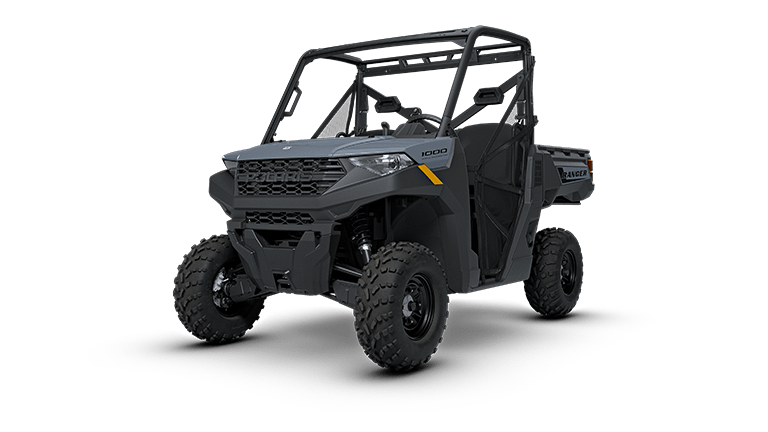
The Polaris Ranger is the machine that built the modern work side-by-side, and the Ranger 1000 is the version most buyers actually land on. It sits in the sweet spot of the lineup, with full-size capability, a 999cc twin and a price that stays thousands below the loaded XP and NorthStar trims. The catch is that Polaris saves some of the good stuff for those pricier models, so the real question is whether the 1000 gives you enough. Here is what it does well, where it holds back, and who should buy it. (If spec sheets aren’t your thing yet, our guide on how to read ATV & UTV specs breaks down the numbers that matter.)
The Ranger 1000 runs Polaris’s 999cc ProStar parallel-twin, the same basic engine you find in the XP models, but tuned here for roughly 61 horsepower instead of 82. That sounds like a big gap, and at wide-open throttle it is. In the kind of work this machine is built for, though, you rarely go looking for it. The tune favors low-end and midrange torque, so the Ranger pulls a loaded bed up a grade or drags a trailer out of a wet field without fuss. The automatic PVT transmission handles the shifting for you, and engine braking keeps things controlled on the way back down. If most of your hours are spent hauling, feeding and getting from one end of a property to the other, 61 hp is plenty. If you want to blast down two-track at speed, the XP’s extra power is where your money would go.
Drivetrain and ride: On-Demand AWD and ground clearance
Polaris’s On-Demand True AWD is the trick that keeps the Ranger moving when the ground turns ugly. You drive in 2WD to save the driveline and lighten the steering, and the instant the system senses the rear wheels slipping it feeds power to the front axle on its own, then lets go once you are back on solid footing. It is quick and it asks nothing of you, which is what you want when your attention is on the work and not the terrain. There is 13 inches of ground clearance to clear ruts and rock, and the 60-inch width keeps the machine planted without making it a squeeze on tighter trails.
The one thing to watch is steering. The base Ranger 1000 does not come with electronic power steering. At crawl speeds, on side-hills and near the end of a long day of chores, you will feel the wheel. Polaris keeps EPS for the Premium trim and the XP models, so if effortless steering is high on your list, plan on stepping up the range or cross-shopping a rival that includes it.
Work capability: towing, the box and real chores
This is the reason the Ranger exists, and it delivers. The 2,500 lb tow rating covers a real utility trailer, a loaded implement or a small machine on a light hauler, and the cargo box takes up to 1,500 lb of feed, fence posts, firewood or gravel. The box tilts to dump, and it works with Polaris’s Lock & Ride accessory system, one of the deepest catalogs in powersports, so toolboxes, cargo dividers and bed racks clip in without hardware. Put that capacity together with On-Demand AWD and engine braking and you have a machine that earns its keep doing real work on a farm or ranch, not just hauling coolers to a campsite.
Seating and everyday use
Unlike a utility ATV such as the Polaris Sportsman 570, the Ranger seats three across a bench, so you can bring a hand, a passenger or a kid old enough for the job. That single difference is why a lot of buyers cross from quads to side-by-sides in the first place, and it is worth reading our ATV versus UTV breakdown if you are still weighing the two formats. The bench is comfortable for two adults and workable for three, the cab is easy to get in and out of all day, and the controls are simple enough that anyone on the property can run it without a lesson.
Who it’s for
The Ranger 1000 is the right pick if you want one full-size side-by-side for property work, hauling, hunting access and the odd trail loop, without paying for loaded XP kit you may never use. It is a workhorse first. It carries three, tows a genuine load and takes the Lock & Ride accessories that make it useful, and it does all of that for thousands less than a NorthStar cab model.
It is not the pick if you want the strongest engine or the plushest ride in the range, because the XP models are built for exactly that. It is also a harder sell if low-effort steering matters to you and your budget is tight, since the base trim skips EPS. And if you regularly move a full crew, you will want the six-seat Crew version rather than squeezing everyone onto one bench.
How it compares
At $14,299 the Ranger 1000 lands in the busiest part of the full-size utility class. A few rivals belong on your shortlist:
- Can-Am Defender HD7, $12,999. Cheaper, with a torquey 52 hp single and the same 2,500 lb tow rating. You give up some power up top but save real money. Compare them →
- Kawasaki Mule PRO-FX 1000, $14,999. Priced almost dead even. Quieter and more measured, with a 2,000 lb tow rating and a strong durability reputation, though its 48 hp triple is the mildest engine here. Compare them →
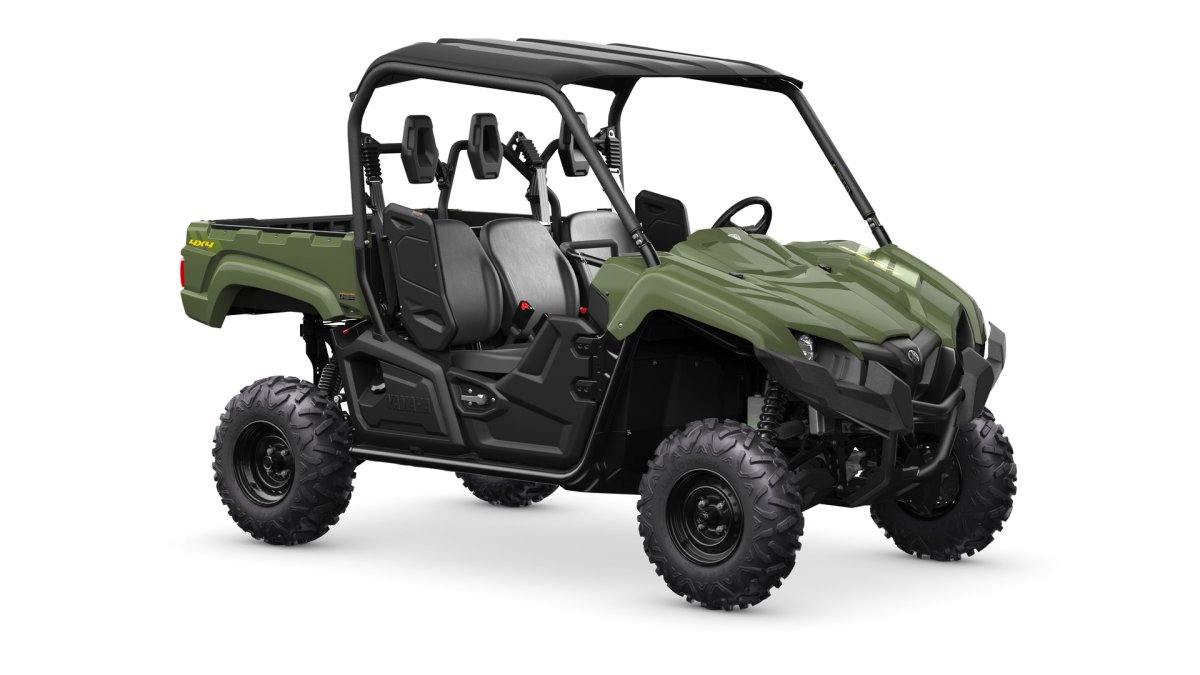
- Yamaha Viking EPS, $15,499. A little more money, but Yamaha includes power steering and its Ultramatic transmission has one of the best belt-durability records in the business. Compare them →
One more to flag: the CFMoto UForce 1000 ($14,999) matches the Ranger on price while adding standard EPS and more claimed horsepower, which is worth a look if the base Ranger’s missing power steering is what bothers you. If you would rather move up than across, the Honda Pioneer 1000-5 Deluxe ($20,300) brings QuickFlip 3-to-5 seating and a six-speed automatic for quite a bit more cash.
Where it sits in the Ranger lineup
Polaris gives you a clear ladder around the 1000. Below it, the Ranger SP 570 ($11,299) trims size and power for tighter jobs and smaller budgets, and the Ranger 500 ($9,999) is the bare entry point. Above it, the Ranger XP 1000 NorthStar ($30,999) wraps the drivetrain in an enclosed cab with heat and air conditioning, while the Ranger XD 1500 Premium ($29,999) steps up to a 1,498cc triple and a 3,500 lb tow rating for the heaviest work. Need seats more than muscle? The six-seat Ranger Crew XP 1000 ($19,999) is the family and work-party answer.
Price and value: is it worth it?
At $14,299 the Ranger 1000 sits mid-pack on price and near the top on capability for the dollar. It costs more than a Defender HD7 and lines up almost exactly with a Mule PRO-FX 1000, but it answers with the strongest name recognition in the segment, the deepest accessory catalog, and the biggest dealer and parts network in powersports, which also props up resale value when you are done with it.
So is it worth it? For most rural buyers, yes. You get true full-size work capability and Ranger reliability without paying XP money. The one asterisk is power steering. If you can live without EPS, or you stretch to the Premium trim that includes it, the Ranger 1000 is one of the safest buys in the category. If effortless steering is a must and the budget is fixed, a Viking or a UForce hands it to you for similar money.
Pros and cons
The good: a proven 999cc ProStar twin with torque where work needs it, a strong 2,500 lb tow rating backed by a 1,500 lb box, three-across seating, the deep Lock & Ride accessory range, and the resale and dealer support that come with the best-selling name in the class.
The catch: no EPS on the base trim, an engine tuned well below the XP’s output, and a couple of rivals that hand you power steering for similar or less.
The verdict
The 2025 Polaris Ranger 1000 is the default answer to “which full-size utility side-by-side should I buy,” and it earns that the same way the Sportsman does on the ATV side. It does nearly everything a working owner needs, at a fair price, backed by support you can actually reach. Go in knowing the base trim skips power steering and that the XP models are there if you want more muscle, decide how much either of those matters to you, and you will not be talked out of it easily.
Want to see it head to head with something specific? Drop it into the side-by-side comparison tool, or browse the full database to filter by power, tow rating and price.