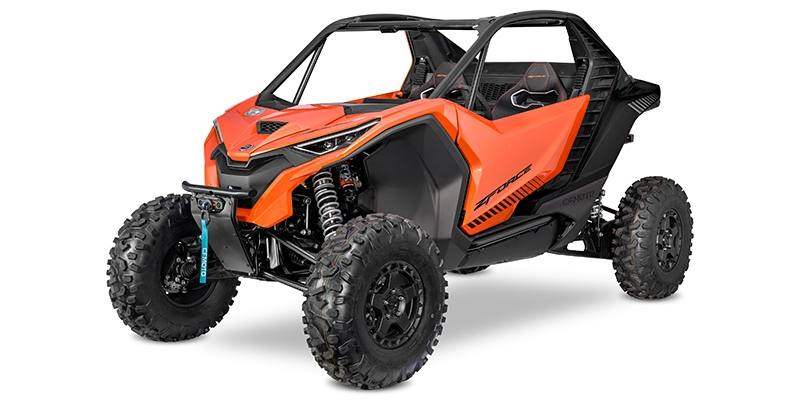
The 2026 CFMOTO ZForce Z10 is the machine that moves CFMOTO from the edge of the high-performance side-by-side conversation into its crowded center. It puts 154 horsepower, electronically adjustable FOX suspension, a 12.3-inch touchscreen and a 4,500 lb winch into a two-seat, 64-inch-wide package for $19,999.
That price is the headline, but it is not the whole argument. The Z10 is narrower than the 72- and 74-inch desert machines that dominate spec-sheet bragging rights, and it gives up power to the fastest models. Its value comes from combining a genuinely strong turbocharged triple with a trail-friendly width and a long list of factory equipment.
This review is based on CFMOTO’s published U.S. specifications and launch material, not a personal trail test. That distinction matters with an all-new platform. Numbers can establish size, equipment and value; they cannot settle throttle calibration, heat management, cabin noise or long-term durability. Those are questions for a careful demo and owners with meaningful hours.
Early Z10 material listed 143 hp, 100 lb-ft of torque and a dry weight of 1,863 lb. CFMOTO’s 2026 U.S. launch information raises output to 154 hp at 7,750 rpm and 107 lb-ft at 6,500 rpm. The current U.S. dealer catalog also lists 1,910 lb dry.
That is an 11 hp and 7 lb-ft increase accompanied by 47 lb more published dry weight. The difference is large enough that a 2026 page should not quietly reuse the earlier numbers. It also explains why shoppers may see conflicting specifications in search results and leftover brochures.
The engine remains a 998cc, liquid-cooled, dual-overhead-cam inline-three with a turbocharger and Bosch electronic fuel injection. It drives through CFMOTO’s OmniDrive continuously variable transmission with park, reverse, neutral, high and low ranges.
Peak output sits below a 181 hp Polaris Pro XP and well below a 200 hp Can-Am Maverick X3 Turbo RR. It is nevertheless 40 hp stronger than the naturally aspirated RZR XP 1000 in ATVPedia’s database and 42 hp above the Yamaha YXZ1000R SS. At this price, the Z10 is not trying to win the absolute-output contest. It is offering serious forced-induction performance at the money often attached to naturally aspirated machines.
Three cylinders and three ways to shape the response
CFMOTO gives the Z10 Comfort, Trail and Sport throttle modes. Comfort is the sensible choice when the surface is slick or a passenger would rather not have every small pedal input magnified. Trail is the everyday middle setting. Sport is intended to sharpen response when conditions and sight lines justify it.
These modes do not create additional peak horsepower. They alter how the electronic throttle translates pedal travel into engine response. That can be more useful than another marketing number because a turbocharged 154 hp machine spends much of its life using a fraction of its output.
The transmission deserves equal attention. A CVT keeps the engine in its useful range without asking the driver to select gears. Low range is for slow, high-load work such as technical climbs, deep sand or careful recovery. Using high range to crawl for long periods can build belt heat even when the machine continues moving.
Cooling and belt behavior should be part of a demo. Let the machine reach operating temperature, drive slowly as well as quickly, and pay attention to heat around the seats and center console. Ask where the intake and exhaust paths sit, how the CVT filter is serviced and what inspection schedule CFMOTO specifies. Turbo horsepower is inexpensive to advertise; managing heat and airflow is what makes it usable.
A 64-inch sport chassis rather than a desert barge
The Z10 measures 129 inches long, 64 inches wide and 68.5 inches high. Wheelbase is 99 inches, ground clearance is 14 inches and dry weight is 1,910 lb. The fuel tank holds 11.8 gallons.
Sixty-four inches is the defining dimension. The Z10 fits the same broad width class as the RZR XP and narrow Maverick X3, not the 72-, 74- or 77-inch class occupied by wide-open desert machines. That makes it easier to place between trees, through gates and on a conventional trailer.
It is not a compact machine. A 99-inch wheelbase is nine inches longer than the RZR XP 1000 record and 8.4 inches longer than the Yamaha YXZ1000R SS. The additional length can settle the chassis over repeated bumps, but it also increases the chance of touching the center over a sharp crest.
The 1,910 lb dry figure also deserves respect. Fuel, tools, a spare tire and occupants push the real trail weight well past two thousand pounds. Use the loaded figure when selecting ramps, tie-downs, trailer capacity and a tow vehicle. A light-looking tube-frame sport machine can still exceed the useful capacity of an undersized utility trailer.
There is no towing rating in this sport-focused configuration. The standard winch is recovery equipment, not evidence that the rear chassis is meant to pull a trailer. Buyers who need cargo capacity or regular towing should look at a utility UTV rather than trying to make the Z10 do a different job.
FOX QSE suspension is central to the package
CFMOTO publishes 17 inches of front wheel travel and 20 inches at the rear. FOX Performance Elite QSE shocks use piggyback reservoirs and electronic compression adjustment, allowing the driver to select Soft, Medium or Firm settings from the cabin.
The useful part is not merely that the shocks are electronic. The driver can change the chassis response without stopping to turn four adjusters by hand. Soft can take the edge off choppy terrain; Medium provides a general-purpose setting; Firm adds support when the pace, impacts or steering load rise.
An electronic setting cannot repeal physics. The Z10 carries 1,910 lb before people and gear, and 20 inches of rear travel can still be consumed by a poorly judged landing. Compression control also does not replace correct spring preload. The suspension should be set for the actual combined weight of occupants and regularly carried equipment.
The vehicle uses high-clearance independent front suspension with a stabilizer bar and a long-travel independent rear arrangement. Protection includes A-arm guards, an HDPE skid plate and an aluminum bash plate. Those pieces reduce exposure; they do not make a hard strike harmless.
A test drive should include braking bumps, a slow technical section and several repeated impacts rather than one smooth loop around a dealership. Listen for rattles, see how clearly each QSE setting changes body control and check whether the suspension remains composed once warm.
Thirty-inch Terra Hooks and selectable traction
The Z10 runs 30 x 10-14 ITP Terra Hook tires at all four corners on 14-inch aluminum wheels. The square tire sizing simplifies rotation and gives the chassis a useful combination of sidewall and clearance without jumping to the heavier 32-inch packages common on wider machines.
Selectable 2WD, 4WD and locked 4WD let the driver match traction to the surface. Two-wheel drive reduces steering load on firm ground. Four-wheel drive distributes work to the front axle, while the lock setting is reserved for conditions where both front tires need to pull.
Electronic power steering has Auto, Low, Medium and High assistance modes. That is separate from the engine-response and suspension settings. The additional steering choices are useful when the same machine alternates between slow rock work and faster open trail, although most owners will probably find one or two preferred combinations and leave the rest alone.
Hydraulic disc brakes are fitted front and rear with a parking brake. Brake feel and heat capacity cannot be read from a table, so the demo should include controlled stops after the machine has warmed. A 1,910 lb turbo UTV on 30-inch tires asks much more of its braking system than a lightweight trail machine.
The cabin technology is unusually complete at $19,999
The main display is a 12.3-inch CFMOTO RideSync MMI touchscreen with Apple CarPlay and a backup camera. A separate seven-inch driver display keeps essential information directly in front of the steering wheel. Bluetooth audio and mobile-app connectivity are also part of the package.
The layout makes sense. Navigation and media can occupy the large center screen without pushing speed, warnings and drivetrain status away from the driver’s sight line. The backup camera is particularly useful because the rear bodywork and spare-tire accessories can restrict the view.
Screen size is not the same as interface quality. Before buying, use the controls with gloves, view both displays in direct sun and try the functions that matter while the vehicle is stationary. Confirm whether Apple CarPlay requires a cable, which RideSync functions depend on phone service and how software updates are handled.
A multi-function steering wheel places start and chassis controls within reach. An NFC key replaces a conventional metal key for normal operation. These features make the Z10 feel modern, but they also add electronic systems that a long-term owner will depend on. Ask the dealer what happens if the NFC key is lost and whether a backup method is supplied.
The 900-watt stator provides meaningful electrical capacity for lighting, communications and accessories. It is still worth adding up continuous loads. A large light bar, heated equipment and audio can consume more power than their catalog descriptions suggest, especially at idle.
Standard equipment changes the price comparison
The $19,999 base price includes a 4,500 lb winch with synthetic rope, half doors, LED lighting, front and rear recovery points, power steering, the FOX electronic suspension system, two displays, a backup camera and underbody protection.
That matters because competing base prices often describe very different equipment levels. A less expensive machine can become more costly after adding a winch, roof, display, camera and upgraded shocks. Conversely, equipment has no value if the owner would not have purchased it separately.
A roof is shown as an accessory in the earlier U.S. platform equipment table rather than standard equipment. Do not assume one is included because many promotional photographs show a roof or roof rack. Ask for a written build sheet and inspect the exact unit tied to the quote.
The same discipline applies to destination and setup charges. Request an out-the-door number that separates MSRP, freight, assembly, document fees, tax and registration. A strong $19,999 headline can be weakened by an opaque dealer worksheet.
2026 CFMOTO ZForce Z10 specifications
| Specification |
ZForce Z10 |
| Engine |
998cc liquid-cooled DOHC turbocharged inline-three |
| Output |
154 hp at 7,750 rpm; 107 lb-ft at 6,500 rpm |
| Fuel system |
Bosch electronic fuel injection |
| Throttle modes |
Comfort, Trail and Sport |
| Transmission |
OmniDrive automatic CVT; P/R/N/H/L |
| Drive system |
2WD / 4WD / locked 4WD |
| Steering |
Electronic power steering; Auto/Low/Medium/High assistance |
| Front suspension |
Independent high-clearance A-arm; stabilizer bar; 17 in travel |
| Rear suspension |
Independent long-travel system; dual shocks; 20 in travel |
| Shocks |
FOX Performance Elite QSE with in-cab electronic compression adjustment |
| Brakes |
Front and rear hydraulic discs; parking brake |
| Tires |
30 x 10-14 ITP Terra Hook front and rear |
| Wheels |
14-inch aluminum |
| Length x width x height |
129 x 64 x 68.5 in |
| Wheelbase |
99 in |
| Ground clearance |
14 in |
| Dry weight |
1,910 lb |
| Fuel capacity |
11.8 gal |
| Seating |
Two adjustable bucket seats |
| Winch |
4,500 lb with synthetic rope |
| Displays |
12.3-inch RideSync MMI touchscreen and 7-inch driver display |
| Charging output |
900 watts |
| Warranty |
12 months |
| Base MSRP |
$19,999 |
ZForce Z10 versus Polaris RZR XP 1000
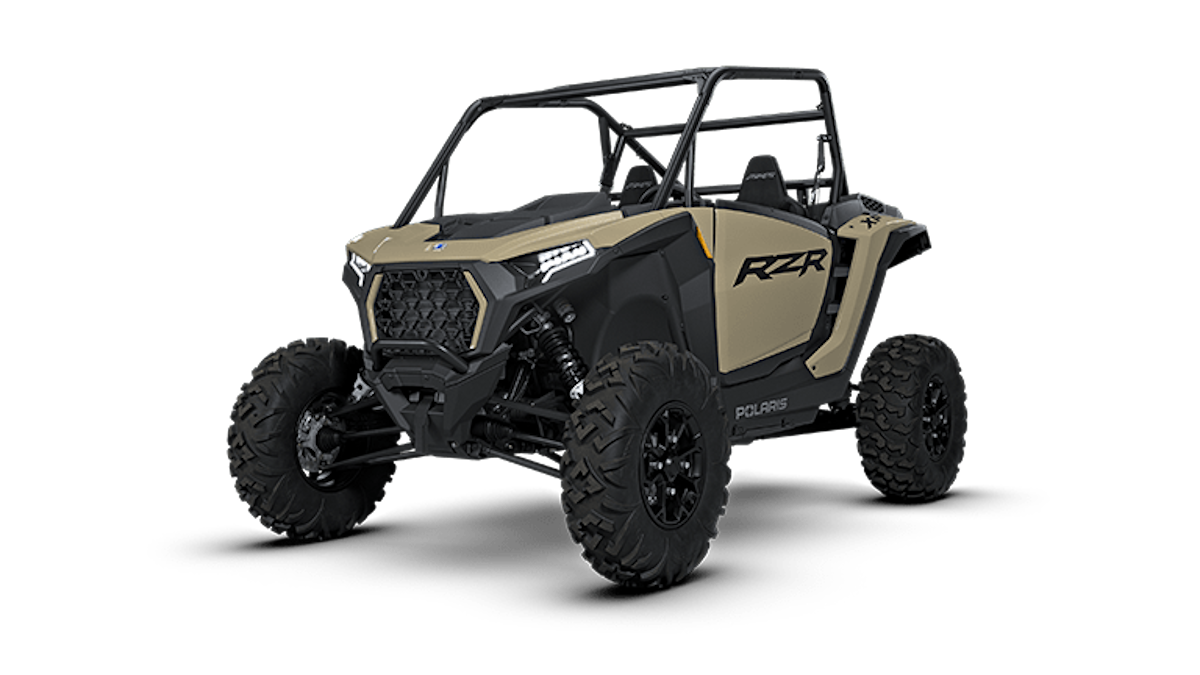
ATVPedia’s 2025 Polaris RZR XP 1000 record lists 114 hp, a 64-inch width, 90-inch wheelbase, 13.5 inches of clearance, 1,543 lb dry weight and a $21,299 starting price.
The CFMOTO records 40 more horsepower, half an inch more clearance and a $1,300 lower base price. It also weighs 367 lb more and stretches the wheelbase by nine inches. The Z10 brings turbo power, electronic FOX shocks, a large screen and a standard winch; the RZR counters with lower mass and a long-established platform.
This is not simply a horsepower decision. The Polaris may feel more agile because it is shorter and lighter, while the CFMOTO offers more factory equipment and stronger acceleration potential for less money. Dealer support, parts availability and an equally equipped out-the-door quote matter as much as the first line of the table. Compare the ZForce Z10 and RZR XP 1000.
ZForce Z10 versus Polaris RZR Pro XP
The 2024 Polaris RZR Pro XP is closer in concept: a two-seat, 64-inch turbo sport UTV. ATVPedia records 181 hp, a 96-inch wheelbase, 14.5 inches of clearance, 1,770 lb dry weight and a $27,999 starting price.
The Pro XP makes 27 more horsepower and is 140 lb lighter. The Z10 costs $8,000 less in the recorded model years, has three inches more wheelbase and carries nearly the same fuel. CFMOTO’s 17/20-inch travel figures and electronic FOX package make it much more than an entry-level alternative, but the Polaris still has the stronger power-to-weight case.
Buy the Pro XP when its extra output, established aftermarket and dealer ecosystem justify the premium. Buy the Z10 when a well-equipped 64-inch turbo machine at $19,999 leaves more useful budget for safety gear, transport and actual riding. Because the Polaris record is older, verify current trim pricing before treating $8,000 as an exact showroom gap. Compare the ZForce Z10 and RZR Pro XP.
ZForce Z10 versus Yamaha YXZ1000R SS
The 2025 Yamaha YXZ1000R SS is the mechanical purist’s alternative. Its naturally aspirated 998cc triple sends power through a five-speed sequential transmission with paddle shifting. ATVPedia records 112 hp, 1,512 lb dry weight, a 90.6-inch wheelbase, 64-inch width and $22,299 base price.
The Z10 makes 42 more horsepower and costs $2,300 less in the recorded model years, while adding 398 lb and 8.4 inches of wheelbase. The Yamaha requires more driver involvement and carries far less mass. The CFMOTO provides stronger turbo output, a CVT, electronic suspension and a technology-heavy cabin.
The right choice depends on what the driver wants to do, not which spec column is larger. The YXZ is for someone who actively wants to select gears and values a lighter, analog-feeling chassis. The Z10 is for someone who wants broad turbo performance and substantial factory equipment without managing a sequential gearbox. Compare the ZForce Z10 and YXZ1000R SS.
Who should buy the 2026 ZForce Z10?
The Z10 makes the most sense for a rider who wants forced-induction performance but needs to remain in the 64-inch class. It suits fast recreational trail use, dunes and rough open terrain where 17/20 inches of travel can be used, yet a 72- or 74-inch machine would be inconvenient.
It is less convincing for a rider who prioritizes low weight, maximum horsepower or four seats. The 1,910 lb figure is substantial, and the Z10-4 exists for passengers. Anyone shopping almost entirely on desert speed should compare wider machines with more output and more lateral stability.
An early buyer should also be honest about platform risk. The 2026 specification is compelling, but long-term belt life, electronics behavior, heat management and parts supply need real owner mileage. A strong warranty process and a nearby dealer with trained technicians are worth more than a distant discount.
Before purchase, verify the exact included equipment, sit in the seats with a helmet, check sight lines over the hood and use both displays. Measure the trailer and garage opening. Ask for the service schedule, belt inspection procedure, air-filter access and replacement cost for vulnerable bodywork and suspension components.
Verdict
The 2026 CFMOTO ZForce Z10 is not the fastest sport UTV and does not pretend to be the lightest. Its achievement is putting 154 hp, electronically controlled FOX suspension, two large displays, a backup camera and recovery equipment into a 64-inch machine at $19,999.
The weight and new-platform questions keep the value proposition from becoming an automatic recommendation. Buyers still need to judge heat, controls, dealer support and long-term ownership. A spec sheet can identify the opportunity; it cannot supply the missing years of field experience.
On paper, the opportunity is real. The Z10 offers considerably more power and equipment than the naturally aspirated 64-inch class while undercutting established turbo models. For a two-seat buyer who wants trail-friendly width and a complete factory package, it deserves a serious demo rather than dismissal as merely the cheaper choice. Browse more CFMoto models, explore sport UTVs, visit the 2026 model-year hub, or create another matchup in the comparison tool.