The Kawasaki Mule PRO-FX 1000 is a work-first side-by-side that does not try to win the spec-sheet fight, and that is rather the point. Where rivals chase horsepower and ground clearance, the Mule chases quiet, comfort and the understated durability that has made Kawasaki’s Mule line a fixture on farms, job sites and hunting properties for decades. It is smooth, roomy and easy to live with. It is also down on power, tow rating and clearance next to some machines at the same price, so it needs the right buyer. Here is what it does well, where it gives ground, and who should own one. (New to spec sheets? Start with our guide on how to read ATV & UTV specs.)
Engine: a big triple tuned for quiet work
The headline number looks strange at first. The Mule PRO-FX 1000 uses a 999cc inline-three, yet it makes only about 48 horsepower. In a class where 999cc twins push past 80 hp, that reads low until you understand the intent. Kawasaki tuned this triple for smooth, low-rpm torque and long-haul durability, not for peak output. The result is an engine that idles almost silently, pulls a load without drama and stays relaxed all day. You are not buying this Mule to go fast. You are buying it to work quietly and to keep working for years.
That focus shows up in how it drives. Power flows through a CVT automatic, so there is nothing to shift, and the whole machine feels calm and unhurried. Top speed is modest, in the low-to-mid 40s by most owner accounts, because the gearing favors pulling power over a big number on flat ground. For farm lanes, food plots and job sites, it is exactly enough.
Drivetrain and ride: capable, but low to the ground
Drive comes through selectable 2WD and 4WD with a locking rear differential for slick going, and the long 92-inch wheelbase gives the Mule a stable, planted ride with the bed loaded. It is a comfortable machine to cover ground in.
The number to watch closely is ground clearance. At just 8.3 inches, the Mule PRO-FX sits noticeably lower than utility rivals like the Can-Am Defender HD10 (15 inches) or the Polaris Ranger 1000 (13 inches). On graded trails, fields and yards it is a non-issue, but on deeply rutted or rocky ground you will drag where a taller machine walks through. This is a jobsite and property hauler, not a rock crawler, and its clearance makes that plain. One more note on the base model: power steering is not standard, so if you want EPS you will be looking at Kawasaki’s EPS and LE trims.
Work capability: tow, steel bed and cabin
For its core job the Mule is well sorted. It tows 2,000 lb and carries up to 1,000 lb in a steel cargo bed built to be abused rather than babied. The three-across cabin is genuinely roomy at 64 inches wide, with supportive seating and a flat, truck-like dash that makes long work days easy. Kawasaki’s accessory catalog and the aftermarket both run deep, so cabs, roofs and hitches are simple to add.
Be clear-eyed about the tow figure, though. At 2,000 lb the Mule trails the 2,500 lb rating of a Ranger 1000, Defender HD10 or Pioneer 1000-5. If you routinely pull near the limit, that gap matters. If your trailer loads are moderate, it will never come up.
Refinement: the quiet Mule advantage
If there is one thing the Mule PRO-FX does better than almost anything at the price, it is stay quiet and smooth. The inline-three runs with little of the vibration you feel from a big twin, and Kawasaki worked hard to keep cabin noise low. On a long day, or when you are easing up on wildlife, or simply when you would rather talk than shout, that refinement is worth more than another ten horsepower. It is the clearest reason to pick this machine over a louder, punchier rival.
Who it’s for
The Mule PRO-FX 1000 is the right pick if your world is property, farm or jobsite work where quiet, comfort and durability beat outright capability. It suits owners who want a machine that starts every morning, hauls without drama and does not wear them out with noise and vibration. Kawasaki’s Mule reputation is built on exactly this kind of long, uneventful reliability, and that is meant as a compliment.
It is not the pick if you want power, speed or trail clearance for the money. Rivals at this price hand you more horsepower and, in a couple of cases, standard power steering. And if your ground is rough and rutted, the low 8.3-inch clearance will frustrate you where a taller utility machine would not.
How it compares
At $14,999 the Mule PRO-FX 1000 sits in the thick of the full-size utility class, and its rivals mostly beat it on paper while missing its refinement. Three to weigh:
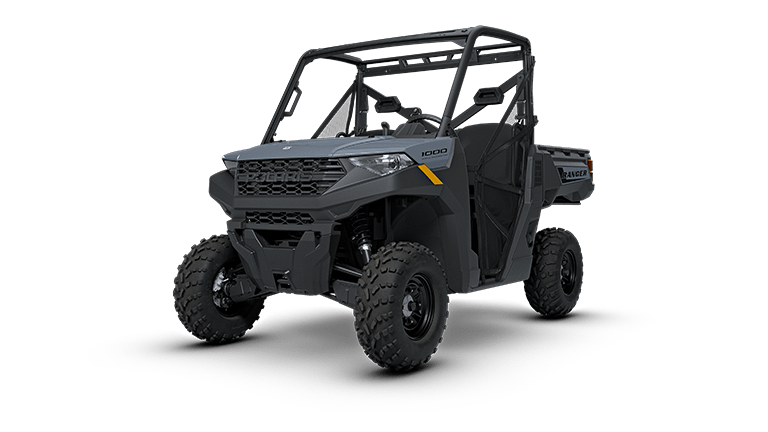
- Polaris Ranger 1000, $14,299. Cheaper, with more power (61 hp), more tow (2,500 lb), more clearance and a bigger box. On raw capability the Ranger wins, though the Mule answers with a quieter, smoother cabin. Compare them →
- CFMoto UForce 1000, $14,999. The same price buys 79 hp and standard EPS, far more engine plus a feature the Mule reserves for pricier trims. The trade is Kawasaki’s stronger reputation and resale. Compare them →
- Can-Am Defender HD10, $16,999. More money, but 82 hp and 15 inches of clearance make it far more capable on rough ground. Choose the Mule for quiet work, the Defender for hard terrain. Compare them →
Also worth a look: the Yamaha Viking EPS ($15,499) matches the Mule’s calm, three-seat character while adding standard power steering.
Where it sits in the Kawasaki lineup
Kawasaki gives you a clear path around the PRO-FX. Below it, the compact Mule SX 4x4 ($8,999) is a small, simple chore machine for tight spaces and light duty. Beside it, the Mule PRO-FXT 1000 ($16,499) shares the drivetrain but adds a Trans-Cab system that converts between three and six seats. Above both, the newer Kawasaki Ridge ($21,599) brings a 116 hp four-cylinder and an available HVAC cab for buyers who want power and comfort in one package.
Price and value: is it worth it?
At $14,999 the Mule PRO-FX 1000 is priced right in the middle of the class, and on a pure numbers basis it can look like a weak value, since same-money rivals offer more power and features. That reading misses the point of the machine. What you are paying for is refinement, comfort and the Mule name, which carries real weight with buyers who keep equipment for a decade and want a tool that simply does not quit.
So is it worth it? For the buyer who prizes a quiet, comfortable, durable hauler over horsepower and clearance, yes. For the buyer chasing capability per dollar, a Ranger 1000 or UForce 1000 will look like the smarter spend. The Mule earns its keep on job sites and back acres rather than on spec sheets, and its owners tend to be loyal for exactly that reason.
Pros and cons
The good: an exceptionally quiet and smooth 999cc triple, a comfortable and roomy three-seat cabin, a tough 1,000 lb steel bed, a stable long-wheelbase ride, and the deep durability reputation of the Mule line.
The catch: modest 48 hp and a 2,000 lb tow rating that trail same-price rivals, low 8.3-inch ground clearance that limits rough terrain, and no power steering on the base trim.
The verdict
The 2025 Kawasaki Mule PRO-FX 1000 is a specialist in work clothes. It will not win a spec-sheet argument against a Ranger 1000 or a Defender HD10, and it is not built to. What it offers instead is quiet, comfort and a durability record that keeps Mules working long after flashier machines have moved on. If your days are about steady property and jobsite work rather than trails and top speeds, and you value a calm cabin over a big power figure, it is an easy machine to recommend and an easy one to own. Just go in knowing the low clearance and modest tow rating before you sign.
Want to see it head to head with something specific? Drop it into the side-by-side comparison tool, or browse the full database to filter by tow rating, power and price.