The Yamaha Viking EPS sells a quality that does not fit neatly on a spec sheet: the confidence that it will start, run and keep running for a very long time. It pairs a torquey single-cylinder engine with Yamaha’s hard-earned reputation for durability, standard power steering and the Ultramatic transmission that many riders consider the most dependable automatic in the business. What it does not do is chase the biggest tow rating or the highest horsepower in its class. Here is what the Viking does well, where it trails the field, and who should buy it. (New to spec sheets? Our guide on how to read ATV & UTV specs explains which numbers matter.)
Engine and the Ultramatic: built to last, not to impress
The Viking runs a 686cc single-cylinder engine making about 47 horsepower. On paper that is the modest end of the full-size utility class, where V-twins and triples make far more. In practice the single is torquey down low and perfectly adequate for property work, though it is buzzier than a twin and will feel worked climbing a steep grade under a full load. If outright power is your priority, this is not the machine.
Where the Viking earns real respect is its transmission. Yamaha’s Ultramatic is a fully automatic CVT with a design that keeps constant belt tension, which gives it two things owners prize: all-wheel engine braking that holds you steady on descents, and belt durability that is widely regarded as the best in the category. Where some CVT machines eventually cook a belt under hard, hot, low-speed work, Yamaha belts tend to just keep going. For a lot of buyers, that dependability is the whole reason they are in the showroom.
Ownership: the Yamaha reliability case
Reliability is the Viking’s headline feature, even though it never shows up as a number. Yamaha’s utility machines have a deep reputation for running trouble-free for years, and the Viking is assembled in the United States at Yamaha’s Newnan, Georgia plant. Add strong resale value and a dealer network that is broad and well established, and the ownership story is easy to like. If your idea of a good machine is one you rarely have to think about, the Viking is built for you.
Drivetrain and ride: On-Command, standard EPS and a lighter build
Power reaches the wheels through Yamaha’s On-Command system, a simple dash dial that lets you pick 2WD, limited-slip 4WD or a fully locked front differential depending on the terrain. Electronic power steering is standard, which is a genuine advantage over the base Polaris Ranger 1000, Kawasaki Mule PRO-FX 1000 or Can-Am Defender, all of which make you step up a trim to get it.
At 1,431 lb the Viking is lighter than most of its full-size rivals, which makes it feel more nimble on tighter trails and easier on its tires. Ground clearance of 11.8 inches is respectable, sitting above a Mule PRO-FX but below a Ranger or Defender. A large 9.7-gallon tank gives it strong range for an all-day work session. It is a comfortable, planted machine that is happy to cover ground.
Work capability: the numbers to check
Here is where you need to look closely, because the Viking’s work ratings are the lowest in this full-size group. It tows 1,500 lb and carries 600 lb in the bed, well under the 2,500 lb tow and larger beds of a Ranger 1000, Defender HD10 or Honda Pioneer 1000-5, and under the 2,000 lb of a Mule PRO-FX or UForce 1000 as well.
For a lot of owners that is fine. If your days are about moving people, tools and moderate loads around a property, the Viking handles them easily and comfortably. But if you regularly tow a loaded trailer or fill a bed to the brim, you are asking this machine to work at the edge of its ratings while rivals do the same job with margin to spare. Match the machine to your real loads before you decide.
Who it’s for
The Viking EPS is the right pick if reliability and low-fuss ownership matter more to you than raw work numbers. It suits owners who want standard power steering, the peace of mind of Yamaha’s Ultramatic and reputation, and a comfortable three-across cabin, and who do not tow or haul at the heavy end of the scale.
It is not the pick if you need the strongest engine or the biggest tow and bed ratings for the money, because several rivals clearly lead there, some for less cash. It is also not ideal if you want a punchy twin, since the single-cylinder engine trades outright power and smoothness for simplicity and torque.
How it compares
At $15,499 the Viking asks you to pay for dependability rather than capability, so the comparisons are pointed. Three to weigh:
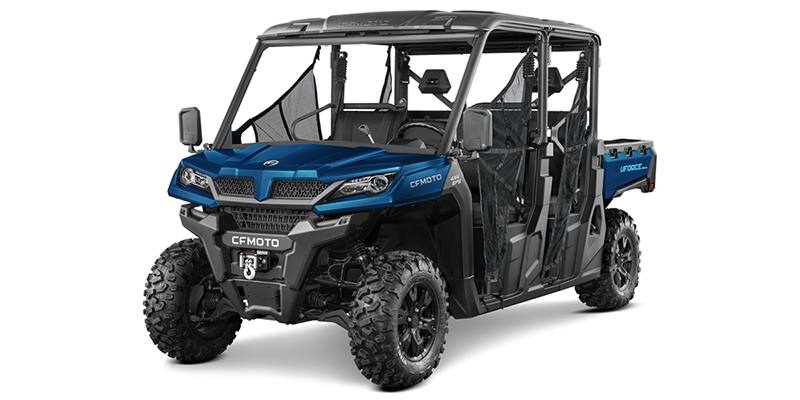
- CFMoto UForce 1000, $14,999. Also has standard EPS, but it makes 79 hp to the Viking’s 47, costs less and tows more. The Yamaha’s answer is a far longer reliability and resale track record. This is the dependability-versus-value question in a nutshell. Compare them →
- Kawasaki Mule PRO-FX 1000, $14,999. Another calm, work-first machine, quieter thanks to its triple and rated to tow more (2,000 lb), though its base trim skips the EPS the Viking includes. Compare them →
- Polaris Ranger 1000, $14,299. More power, more tow and the biggest dealer network around, for a little less money, but you give up standard EPS on the base trim. The mainstream benchmark. Compare them →
If your loads are genuinely light, the cheaper Honda Pioneer 700 ($12,399) offers similar real-world capability with Honda’s own reliability reputation, while the Can-Am Defender HD7 ($12,999) undercuts the Viking on price and out-tows it.
Where it sits in the Yamaha lineup
Yamaha keeps the Viking family simple. This three-seat Viking EPS is the core model. If you need to carry a full crew, the Viking VI EPS ($17,199) stretches the chassis to seat six. And if your interests lean toward recreation and trail riding rather than work, Yamaha’s Wolverine line, such as the Wolverine X2 850, is the more play-focused side-by-side built around the same reputation for durability.
Price and value: is it worth it?
At $15,499 the Viking is not cheap given its modest tow, bed and power figures, and a value shopper will find more raw capability elsewhere for the same money or less. What Yamaha asks you to pay for is the part that shows up over years rather than on day one: the Ultramatic’s belt longevity, the brand’s deep reliability record and strong resale, and standard EPS in the deal.
So is it worth it? If you keep machines a long time and rate dependability above spec-sheet muscle, the Viking is a sound, satisfying buy that tends to reward its owners with quiet years of service. If you need maximum work capability per dollar, look at the more powerful rivals above first. The Viking is a reliability play, and for the right owner that is exactly the right priority.
Pros and cons
The good: standard electronic power steering, Yamaha’s durable Ultramatic transmission with strong engine braking, a deep reliability and resale reputation, a comfortable three-across cabin, a light and nimble feel, and a large fuel tank for long days.
The catch: the lowest tow (1,500 lb) and bed (600 lb) ratings in the full-size class, a modest 47 hp single that is buzzier than a twin, and a price that reflects the badge more than the work numbers.
The verdict
The 2025 Yamaha Viking EPS is the utility side-by-side for buyers who value certainty. It will not out-tow, out-haul or out-power the class, and Yamaha does not pretend it will. What it offers instead is a machine you can trust to start and work for a very long time, with standard power steering and the best belt-drive reputation in the business. If your loads are moderate and your priority is owning something dependable, it is easy to recommend. If you need to work at the heavy end of the class, one of the stronger rivals will serve you better. Know your loads, and the choice makes itself.
Want to see it head to head with something specific? Drop it into the side-by-side comparison tool, or browse the full database to filter by tow rating, power and price.