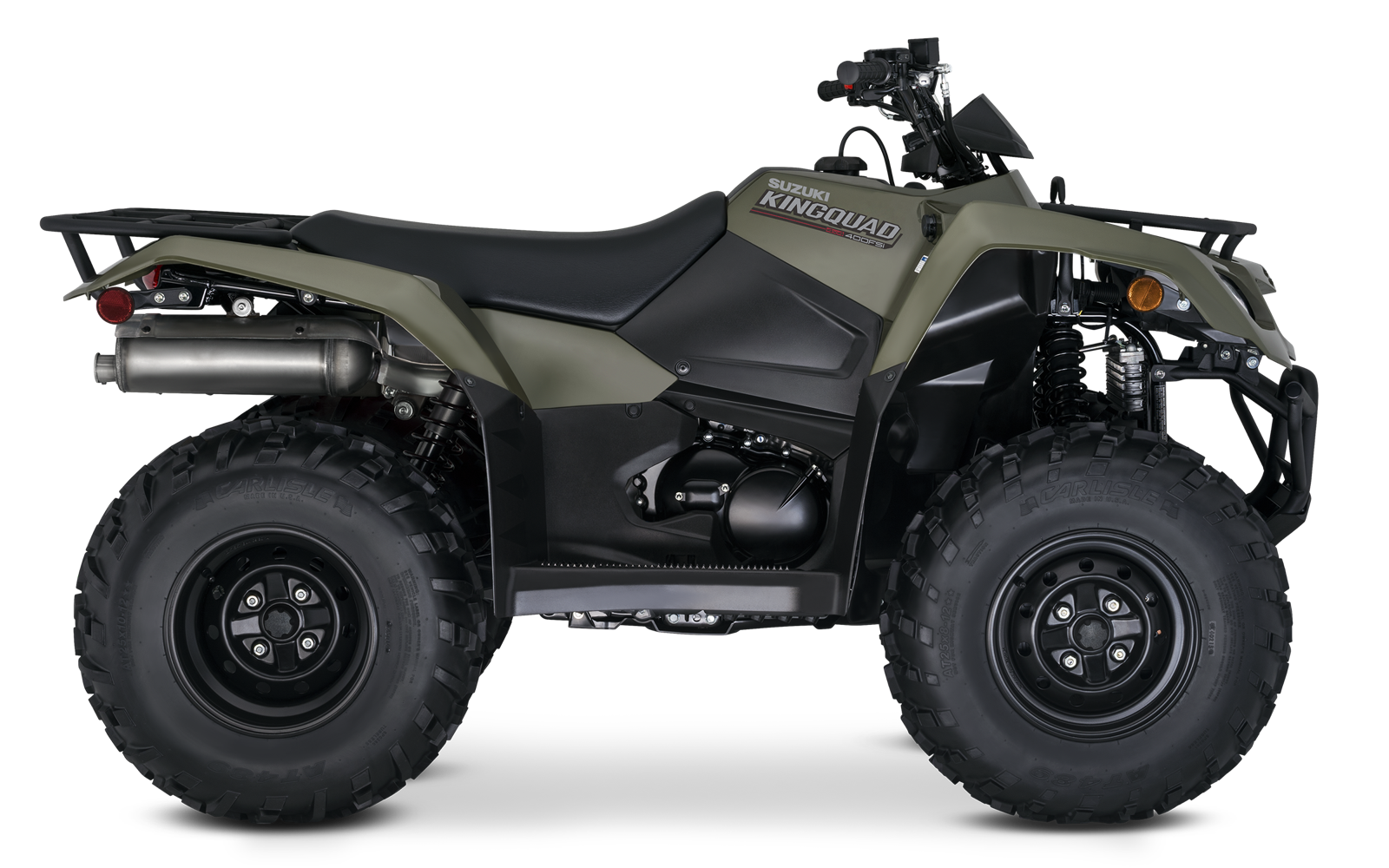
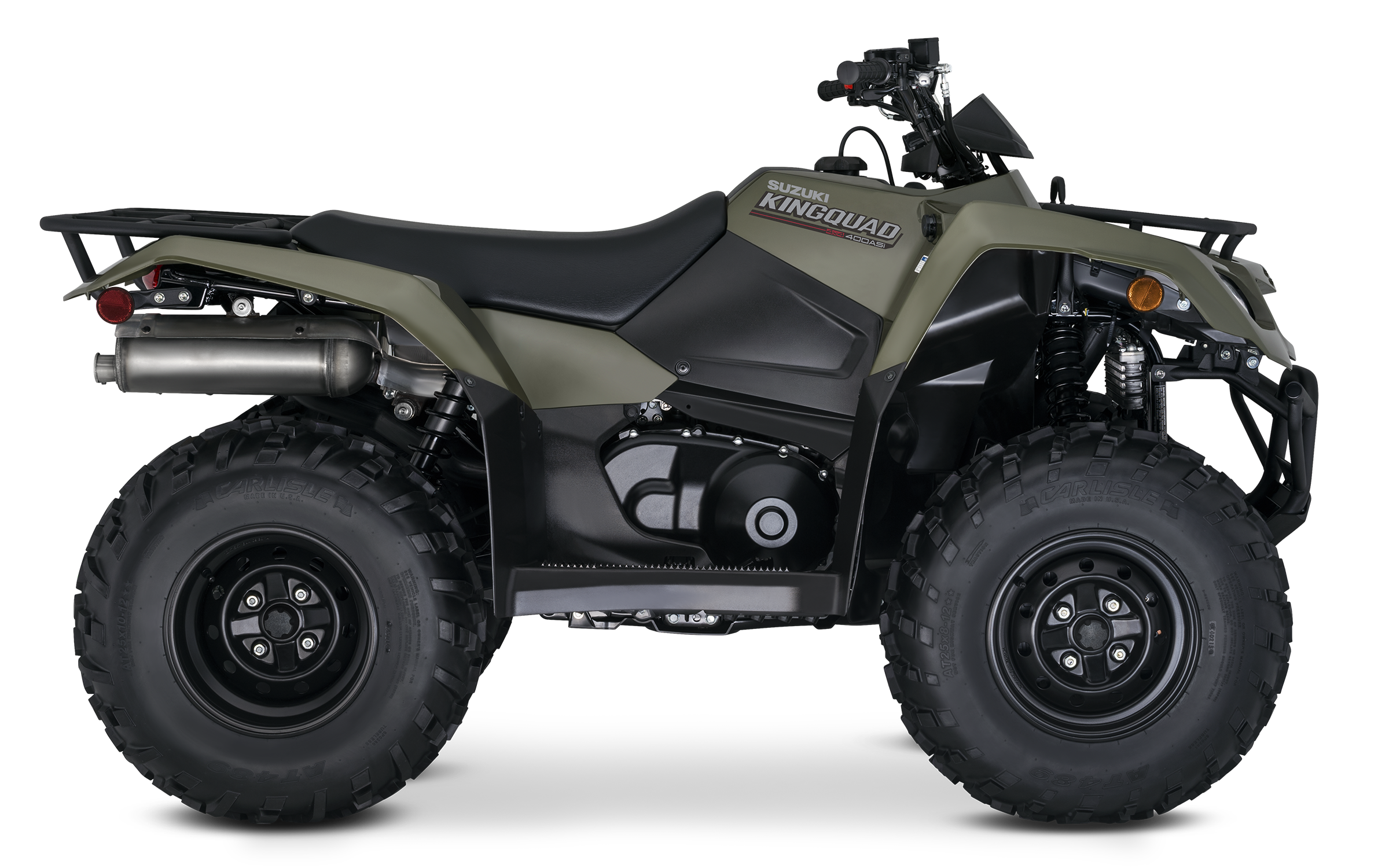
The 2026 Suzuki KingQuad 400FSi is the KingQuad 400 for someone who still wants to choose a gear. It shares the 376cc fuel-injected single and compact utility chassis with the automatic 400ASi, but swaps the Quadmatic CVT for a five-speed manual-shift transmission with a semi-automatic clutch. You select the gear; there is no hand-clutch lever to work every time you shift. Suzuki asks $7,099 MSRP, plus a separate $600 destination charge. The important buying question is whether that extra control appeals to you enough to give up the automatic transmission available at the same base price.
This is a specification-based review of the Terra Green machine on Suzuki’s 2026 U.S. model page, not a road-test verdict. Suzuki’s 2026 brochure supplies the California sales notice and additional feature descriptions. Its final spec table describes an automatic V-belt transmission, conflicting with the live model specifications and multiple brochure feature sections that identify the five-speed semi-automatic. We use those repeated model-specific descriptions for the transmission.
The transmission is the reason to choose it
The five-speed box lets a rider select a gear to suit the slope, load or pace. Suzuki also specifies a high/low sub-transmission and reverse. The clutch is semi-automatic, so this is not the same task as coordinating a hand clutch on a manual motorcycle. It does ask more of the rider than the 2026 KingQuad 400ASi, whose Quadmatic V-belt CVT handles the ratio changes for you. If several people with different experience levels will use the ATV for chores, that distinction matters more than a small difference elsewhere on the spec sheet.
Both versions use a shaft final drive and a handlebar lever to select 2WD or 4WD. The front differential is torque-sensing limited slip when 4WD is engaged. It is not a selectable fully locked front differential. That setup should keep steering easier than a locked front end on mixed ground, but do not buy it expecting the behavior of a dedicated 4WD-lock mode in deep mud or a crossed-up obstacle.
Engine and daily-use hardware
Suzuki’s 376cc four-stroke is an air-cooled OHC single with electronic fuel injection. Its Suzuki Advanced Cooling System adds an oil cooler and thermostat-controlled fan. The manufacturer does not provide a U.S. 2026 horsepower rating. ATVPedia’s about 26 hp catalog entry is an estimate, not a Suzuki-certified output figure; a test ride and the right gear choice will tell you more about how the FSi feels than that number alone.
The chassis is more old-school than a four-corner independent-suspension ATV. Independent A-arms handle the front, while a swingarm and two shocks support the rear. Suzuki quotes 6.7 inches of travel at each end, 9.8 inches of clearance and 25-inch Carlisle tires on steel wheels. Dual front hydraulic discs and a rear drum do the stopping. It is a sensible layout for ordinary trails and property access, with a clear limit when terrain gets choppy enough to reward more suspension travel and an independent rear end.
Steel racks, a front DC outlet, a legible LCD display and winch-ready mounting make it usable for everyday property work. The 4.2-gallon tank is generous for the machine’s size. Suzuki does not, however, publish a current U.S. towing or rack-load rating for this exact FSi on the model page. Racks and a winch mount are not permission to invent a trailer rating. If towing a known load is the main reason for buying, get an explicit rating for the exact ATV from Suzuki or choose a model with a published limit.
Size, price and availability
Suzuki lists 615 lb curb weight, a 45.1-inch overall width, 50.0-inch wheelbase and 33.1-inch seat height. Those are measurements for fit and storage, not a promise that every trail with a width rule accepts it. The 81.1-inch overall length also warrants measuring your own truck bed, ramps and tie-down layout before assuming it will fit.
The base MSRP is $7,099, the same listed price as the 2026 400ASi. Add Suzuki’s $600 destination charge and the starting arithmetic is $7,699 before dealer charges, taxes and registration. Ask for a written out-the-door quote, since Suzuki warns that a freight surcharge can apply to certain model-year 2026 units. The manufacturer lists a 24-month limited warranty and a minimum rider age of 16.
One regional limit is unusually important here: Suzuki’s 2026 FSi brochure says the model is not eligible for sale in California under the state’s off-highway vehicle regulations. Do not assume an out-of-state listing solves local registration or use requirements. Verify availability and paperwork with a dealer before arranging a purchase.
FSi or ASi?
The 400ASi review covers the automatic sibling in detail. Engine displacement, stated price, width and much of the chassis equipment line up closely. The choice is not about finding a secret performance upgrade. Pick the FSi if choosing gears is part of how you like to ride and you are comfortable teaching every operator its shift pattern. Pick the ASi if an automatic CVT will make repeated starts, stops and shared use easier. Neither base 400 includes electronic power steering, and neither current U.S. model page gives a towing figure that should be guessed at.
Suzuki’s ASi specifications print 265 kg (628 lb) curb weight, but those units do not convert to each other. The FSi’s 279 kg (615 lb) does convert. We show Suzuki’s printed pound figures in the catalog, but do not call either sibling lighter by a precise amount until the ASi discrepancy is clarified. The transmission remains the meaningful difference.
For a different kind of step up, the 2026 KingQuad 500AXi adds displacement, independent rear suspension and a published towing rating, at a higher price. That is a more meaningful comparison if you need a confirmed trailer capacity or regularly ride rougher ground. The FSi’s case is narrower and clearer: familiar 400-class utility hardware with a rider-controlled gearbox, a useful two-year warranty and a footprint that remains manageable. Just be sure you want the shifting, not merely the badge.