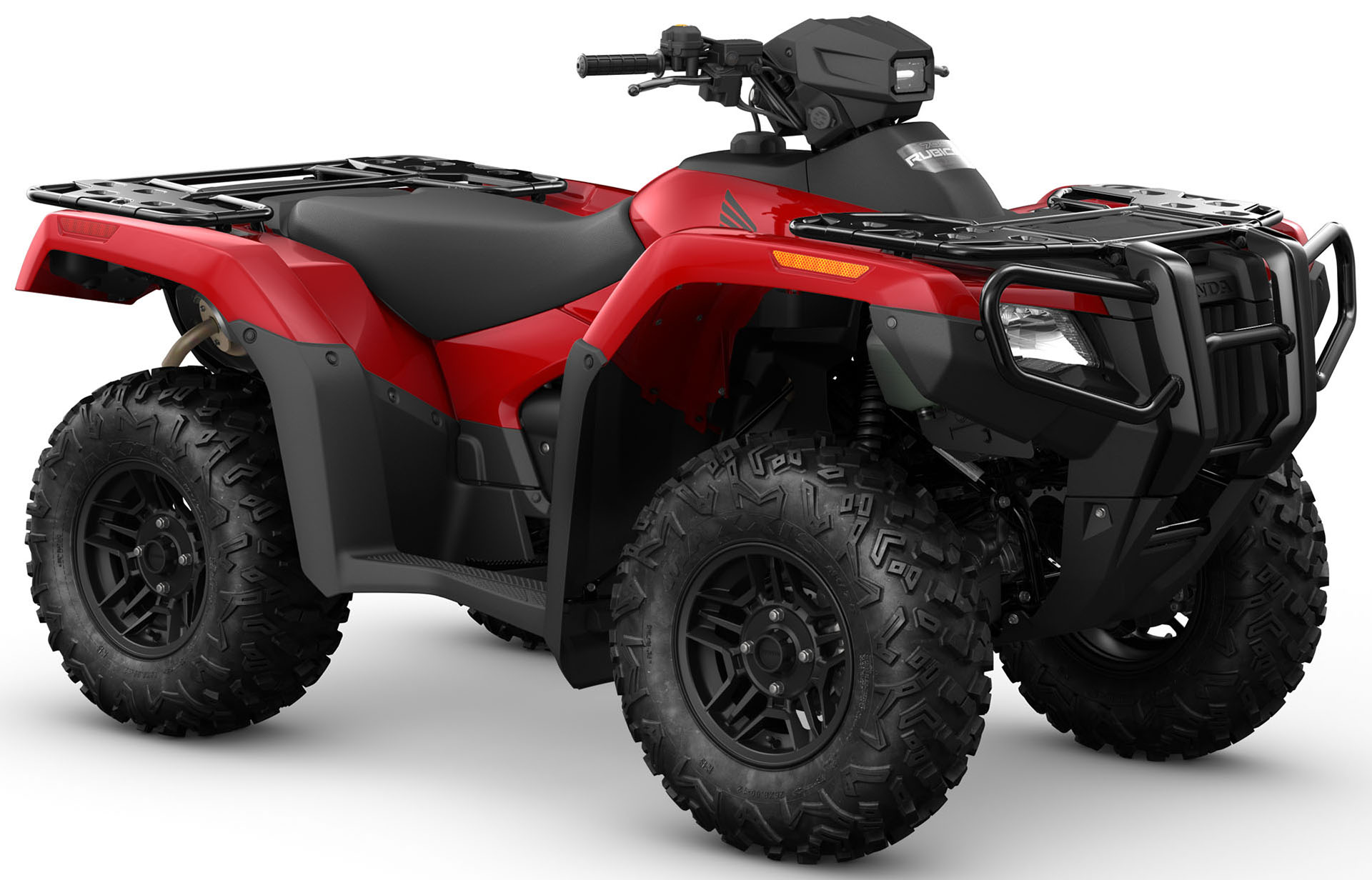
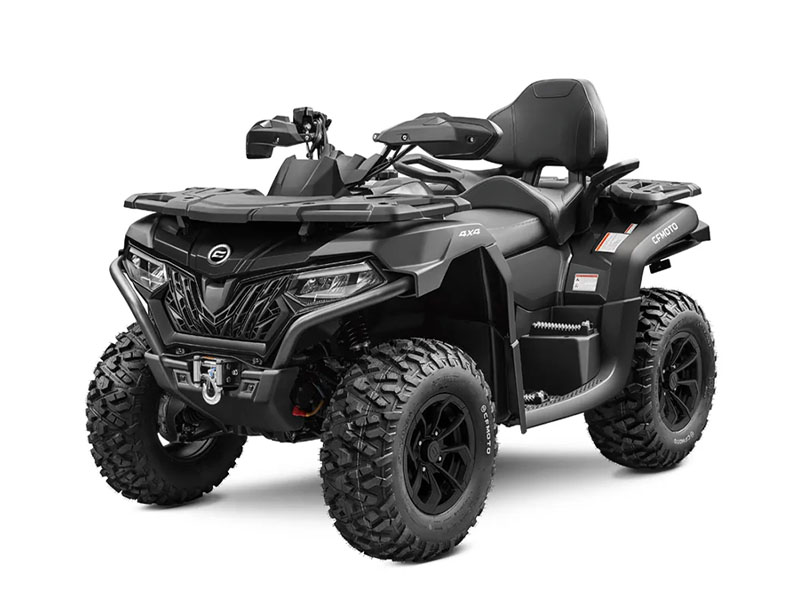
The 2025 Suzuki KingQuad 500AXi is the middle machine in Suzuki’s adult utility ATV range. At $8,749, it combines a 493cc liquid-cooled single, QuadMatic automatic transmission, standard power steering, independent suspension and a 1,322 lb tow rating. Those are useful work credentials, and the 500 avoids the weight and price of the flagship 750. Its challenge is value: several cheaper rivals make more power while matching much of its capability. Our guide to reading ATV and UTV specs explains how the numbers translate into daily use.
The 493cc single-cylinder engine makes about 34 hp. Power goes through Suzuki’s automatic QuadMatic CVT to selectable 2WD and 4WD. The combination is built for predictable low-speed work, moderate trail riding and easy operation rather than aggressive acceleration.
Output is modest for the price. The Can-Am Outlander 500 makes 40 hp, while the Polaris Sportsman 570 reaches 44 hp. Both cost less. The KingQuad still has enough power for its intended jobs, but buyers who ride quickly or climb with heavy loads will notice the difference. Suzuki’s case depends more on controlled delivery and proven hardware than a class-leading number.
Ride and chassis: EPS with independent suspension
Standard power steering is one of the KingQuad’s most valuable features. It reduces effort while turning at low speeds, navigating rough ground and spending a full day on the machine. Independent suspension supports comfort and helps the wheels follow uneven terrain more effectively than a rigid rear arrangement.
The ATV measures 47.6 inches wide and uses a 50.2-inch wheelbase. At 684 lb, it is almost identical in weight to the Yamaha Kodiak 450 EPS and Honda FourTrax Foreman 520. Its 10.4 inches of ground clearance suit ruts, roots and ordinary trail obstacles, though the Sportsman 570 offers 1.1 inches more underneath. The T-shape seat is designed to give the rider room to move body weight when terrain changes.
Work capability: towing is the strong point
The KingQuad 500AXi is rated to tow 1,322 lb, which is excellent beside its direct competitors. That matches the Yamaha Kodiak 450 EPS, exceeds the Outlander 500 by 22 lb and leads the Sportsman 570 by 97 lb. It is also far above the 848 lb Honda Foreman 520.
Front and rear racks support the usual utility load of tools, feed, hunting equipment or supplies. The 4.6-gallon fuel tank is competitive for the class, and selectable four-wheel drive adds traction when a job moves away from firm ground. This remains a single-rider ATV, so the seat should not be treated as passenger accommodation.
Who it is for
The KingQuad 500AXi fits property owners, hunters and trail riders who value standard EPS, strong towing capacity and a mature utility design. It is especially sensible for buyers who find the KingQuad 400 too limited but do not need the 750’s extra output.
It is less compelling for shoppers focused on horsepower per dollar. The Outlander and Sportsman are both stronger and cheaper, while the Kodiak delivers the same tow rating for $1,050 less. Suzuki’s dealer coverage can also be thinner than the largest brands in some regions, so local service access deserves attention.
How it compares
The Yamaha Kodiak 450 EPS costs $7,699 and makes 28 hp. It matches the Suzuki’s 1,322 lb tow rating, includes EPS and has 0.2 inches more clearance. The KingQuad adds six horsepower and a slightly larger fuel tank, but costs $1,050 more. Compare the KingQuad 500AXi and Kodiak 450 EPS.
The Can-Am Outlander 500 costs $7,199 and makes 40 hp. It weighs six pounds more, tows 1,300 lb and carries 0.8 more gallons of fuel. The Suzuki edges it on towing and leans on its established KingQuad character, while the Can-Am offers more power for $1,550 less. Compare the Outlander 500 and KingQuad 500AXi.
The Polaris Sportsman 570 costs $7,499 and makes 44 hp. It has 11.5 inches of clearance and weighs 21 lb more, while its 1,225 lb tow rating trails the Suzuki. Choose the Polaris for power and clearance, or the KingQuad for maximum towing and standard power steering. Compare the Sportsman 570 and KingQuad 500AXi.
Where it sits in the Suzuki lineup
The KingQuad 400ASi costs $7,199 and makes 26 hp. It is 78 lb lighter but tows only 660 lb and does not list power steering. The KingQuad 750AXi costs $9,749, makes 48 hp and shares the 500’s 1,322 lb tow rating. The 500 is the balance point, bringing the chassis equipment and work capacity of the larger model while saving $1,000.
Price and value
At $8,749, the KingQuad 500AXi asks buyers to pay for a proven package rather than the strongest specification sheet. Standard EPS, independent suspension and excellent towing help justify the price. Its power output does not, especially when the Outlander 500 and Sportsman 570 cost substantially less.
The equation improves for owners who keep machines for years, trust their Suzuki dealer and prioritize predictable utility service over outright speed. Buyers should still compare dealer support, financing and the final equipped price. The KingQuad is capable, but its premium needs to make sense beyond brand preference.
Pros and cons
The good: a 1,322 lb tow rating, standard power steering, independent suspension, 10.4 inches of clearance, selectable 2WD and 4WD and a proven utility-focused platform.
The catch: only 34 hp, a higher price than stronger rivals and a dealer network that can be thinner than the biggest ATV brands.
The verdict
The 2025 Suzuki KingQuad 500AXi is a capable middleweight utility ATV that puts towing, rider comfort and familiar engineering ahead of horsepower. Its standard EPS and independent suspension make it pleasant to use, while the 1,322 lb rating gives it real work credibility. The downside is price. Rivals offer more power for less money, and one matches its towing capacity at a substantial discount. For buyers who value the KingQuad platform and have good Suzuki support nearby, the 500AXi is a sound long-term workhorse. Pure value shoppers should compare carefully.
Want to weigh it against another utility ATV? Use the comparison hub, or browse every ATV and UTV by price, power and towing capacity.