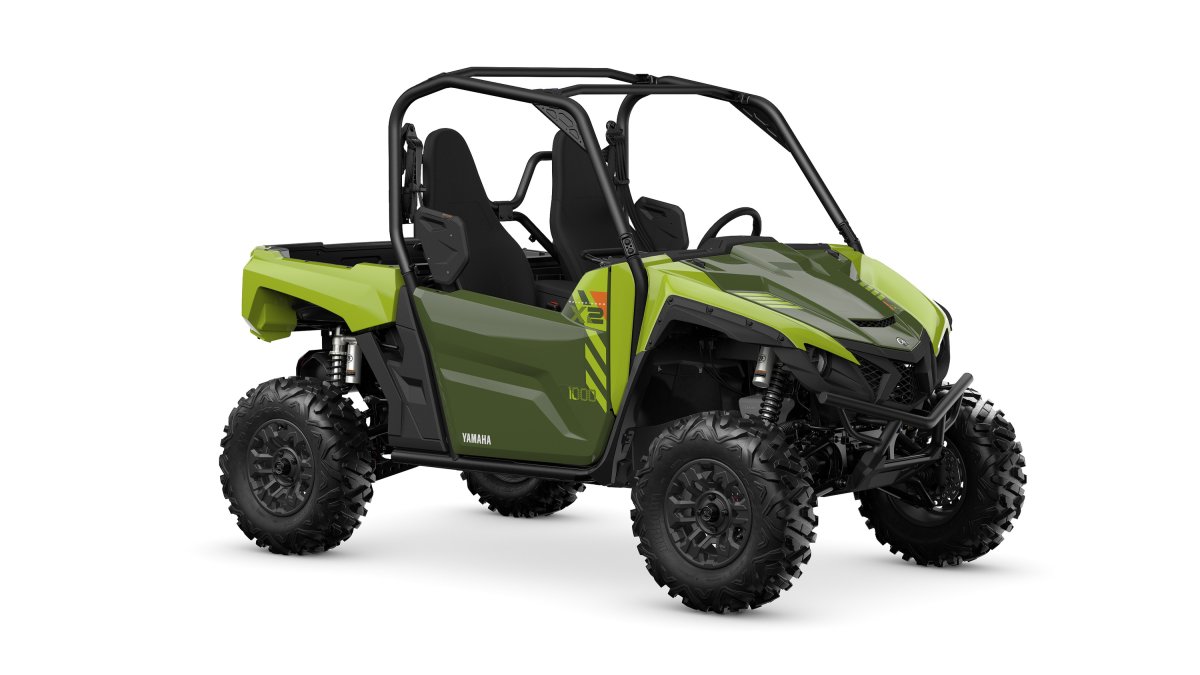
The 2025 Yamaha Viking VI EPS is a six-seat utility UTV built around practical passenger space rather than maximum horsepower. Its 686cc single makes about 47 hp, and Yamaha pairs it with an Ultramatic CVT, selectable On-Command 2WD and 4WD, and electronic power steering. A 600 lb cargo bed and 1,500 lb tow rating cover common property jobs, while the second row lets the machine carry a full crew. The tradeoff is clear: it is long and relatively modest in output beside 1,000cc crew models. Our guide to reading ATV and UTV specs explains how to judge those numbers together.
The Viking VI uses a 686cc liquid-cooled single-cylinder engine producing about 47 hp. An automatic Ultramatic CVT handles power delivery, so there is no manual clutch or gear sequence to manage. The engine is sized for controlled utility travel rather than rapid acceleration.
Forty-seven horsepower can be sufficient for property work, moderate trails and carrying passengers at sensible speeds. It leaves less reserve when the bed is loaded, a trailer is attached or the route includes long grades. Buyers expecting frequent heavy hauling should compare the Viking with the 72 hp Honda Pioneer 1000-6 or 82 hp Polaris Ranger Crew XP 1000.
On-Command 4WD and EPS
On-Command lets the driver select 2WD or 4WD as terrain changes. That direct control suits mixed use, from firm lanes to softer ground. Electronic power steering reduces effort at low speed and helps manage kickback through the steering wheel on rough surfaces.
The combination is straightforward and useful, but the dataset does not list a locking front differential. Buyers who consider that essential should confirm the exact drivetrain functions before purchase. The Viking VI also measures 113.6 inches between the axles, so EPS cannot erase the extra space needed to turn and maneuver a six-seat chassis.
Work capability: 600 lb bed and 1,500 lb towing
The cargo bed is rated for 600 lb, while towing capacity is 1,500 lb. Those numbers suit tools, feed, fencing supplies and a moderate trailer. The 9.7-gallon fuel tank supports a full workday more convincingly than the smaller tanks found on many ATVs.
The Viking VI is not the class leader for heavy work. The Ranger Crew XP 1000 has a 1,500 lb box and 2,500 lb tow rating in the dataset. Passenger weight, cargo, tongue load, terrain and braking distance must also be considered instead of assuming the machine can carry six adults, a full bed and its maximum trailer under every condition.
Six-seat packaging and ride
Two rows provide six seats, which makes the Viking VI useful for crews, families and hunting groups. At 61.8 inches wide, it remains slightly narrower than many full-size crew machines. Its 11.8 inches of ground clearance helps on rutted property tracks and ordinary trails.
Length is the compromise. The 113.6-inch wheelbase is 29.5 inches longer than the three-seat Viking, and weight rises to 1,590 lb. That affects turning room, trailer requirements and breakover behavior. Buyers should measure gates, storage space and transport equipment before treating width as the only fit concern.
Who it is for
The Viking VI EPS suits buyers who regularly need five or six seats but do not require the power or towing capacity of a 1,000cc crew UTV. It makes sense for farms, large properties, guided access and family trail use where a controlled pace is acceptable.
It is less convincing for repeated maximum-load towing, steep terrain with a full cabin or tight wooded trails. Buyers who normally carry only one or two passengers may be better served by the shorter Viking EPS. Those wanting an enclosed climate-controlled cab need to look beyond this open-cab configuration.
How it compares
The Honda Pioneer 700-4 costs $13,199 and seats four. Its 675cc single makes about 36 hp, while the automatic three-speed uses a torque converter rather than a CVT. Both tow 1,500 lb. The Honda is $4,000 less and much shorter, but the Yamaha adds two seats, more power and a larger 600 lb bed specification. Compare their specifications.
The Polaris Ranger Crew XP 1000 seats six, makes 82 hp and tows 2,500 lb. It weighs 1,900 lb and costs $19,999. The Polaris provides far more engine and work capacity for another $2,800, while the Yamaha is 310 lb lighter and slightly narrower. See the direct comparison.
The Honda Pioneer 1000-6 Deluxe Crew makes 72 hp, tows 2,500 lb and uses a six-speed dual-clutch transmission. It costs $23,999 and weighs 2,010 lb. The Honda brings more capability, while the Viking saves $6,800 and 420 lb. Compare both six-seat UTVs.
Where it sits in Yamaha’s lineup
The Yamaha Viking EPS shares the same 47 hp engine, 61.8-inch width, 600 lb bed and 1,500 lb tow rating. It seats three, weighs 1,431 lb and costs $15,499. The VI adds three seats and 29.5 inches of wheelbase for $1,700 more, but does not add power or work capacity. Compare the two Vikings.
Price and value
At $17,199, the Viking VI undercuts the larger 1,000cc crew models while retaining six seats, EPS and a useful drivetrain. Its value is strongest when passenger capacity matters more than headline power.
The savings come with lower towing, a smaller bed rating and less performance reserve. A buyer who regularly pushes those limits may spend less overall by choosing a stronger machine first.
Pros and cons
The good: six seats, selectable 2WD and 4WD, EPS, a 600 lb bed, 1,500 lb towing and a manageable 61.8-inch width.
The catch: only 47 hp, a long 113.6-inch wheelbase and lower work ratings than 1,000cc crew rivals. The open cab and single-cylinder engine also make it a less premium choice than higher-priced alternatives.
The verdict
The 2025 Yamaha Viking VI EPS is a sensible crew UTV for buyers who need six real seating positions without moving to the price and weight of a 1,000cc machine. Its drivetrain, bed and towing capacity cover moderate utility work, and EPS makes the long chassis easier to manage.
Its limits appear under heavy load. If six passengers, steep grades and large trailers are routine, more power and a 2,500 lb tow rating are worthwhile. For moderate work and people hauling, the Viking VI offers useful capacity at a comparatively restrained price. Add it to the comparison tool, or browse the full database by seats, towing and price.