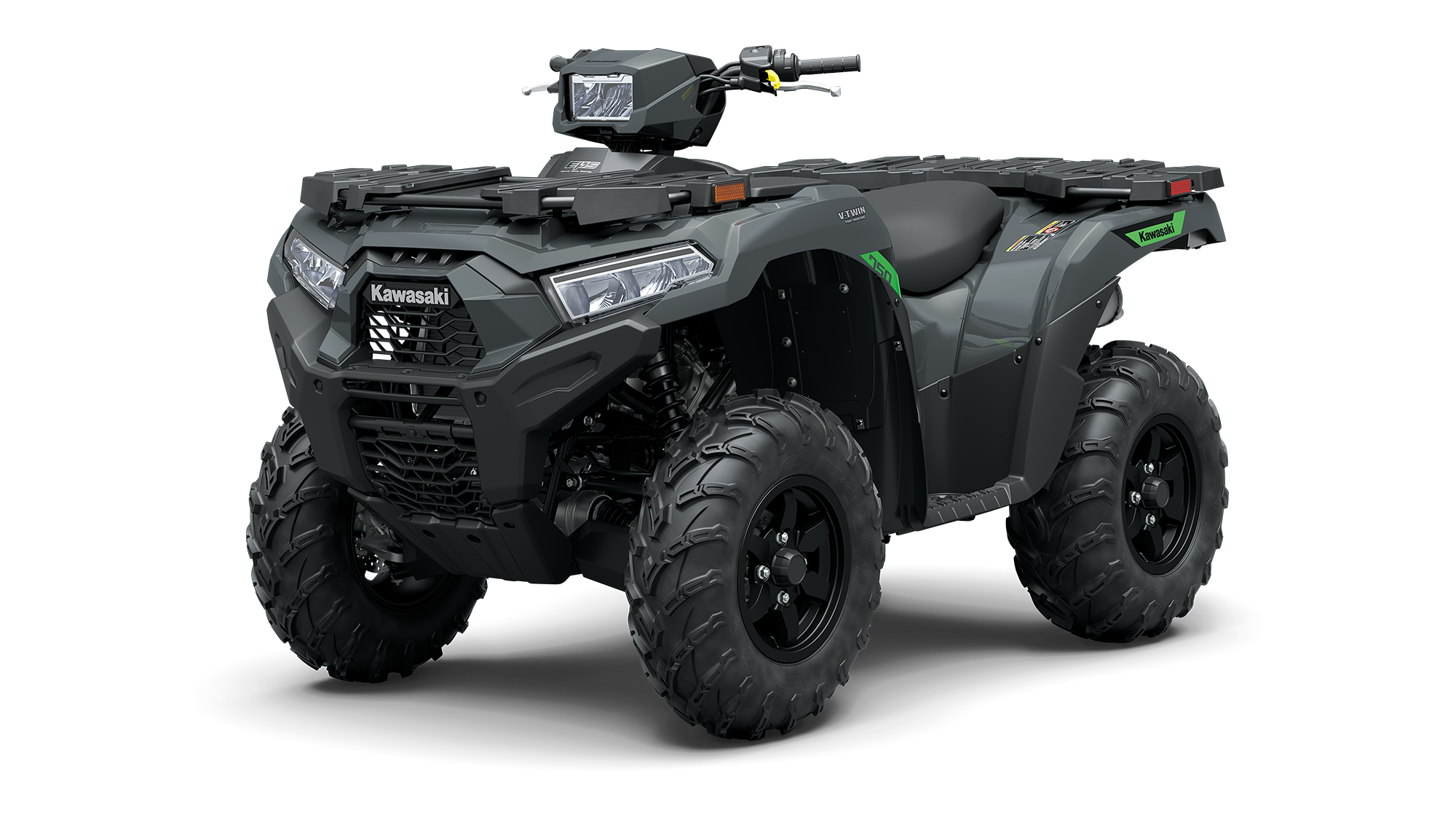
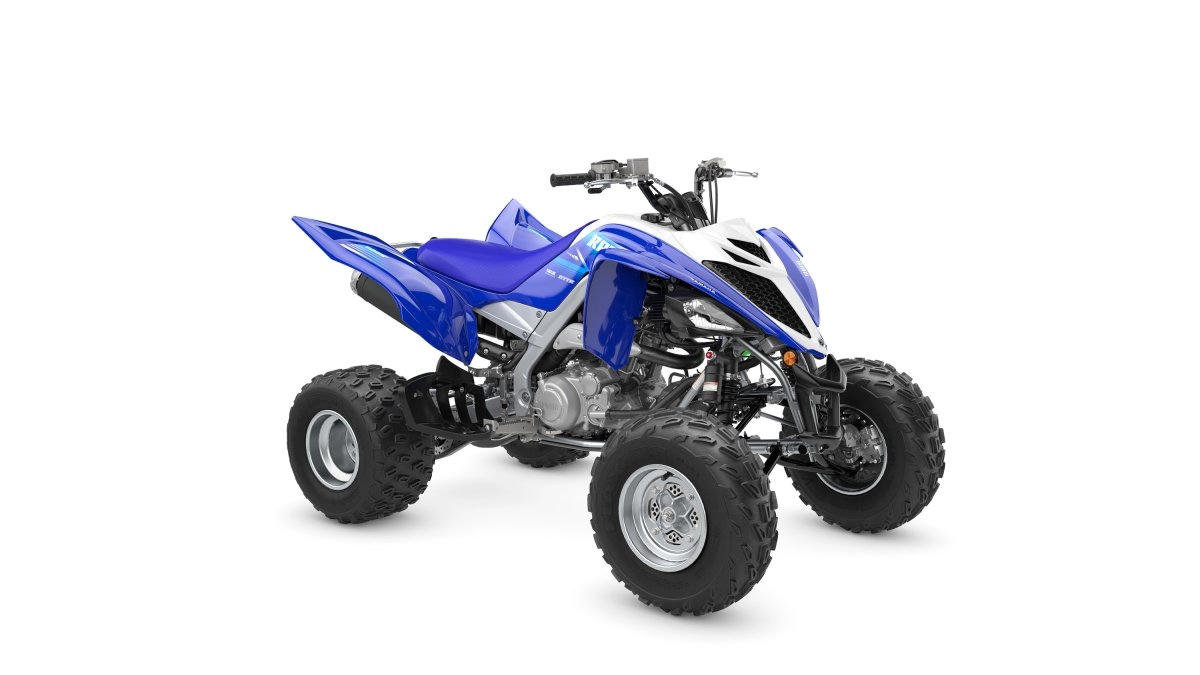
The 2027 Kawasaki Brute Force 750 EPS is a straightforward answer for a rider who wants a V-twin utility ATV without stepping all the way into a special-edition price. Kawasaki gives it 50 horsepower, 42.8 lb-ft of torque, speed-sensitive power steering, selectable 2WD/4WD, a variable-control front differential lock, and 1,250 lb of towing capacity. Base MSRP is $11,499, plus a $785 destination charge.
The Brute Force is not trying to be a two-up touring ATV or an over-accessorized mud rig. It is a one-rider machine with front and rear racks, independent suspension, 25-inch tires, and an engine that supplies useful low- and midrange response. That sounds ordinary until you compare it with a string of single-cylinder ATVs: the V-twin’s smoothness and torque are a meaningful part of this model’s appeal.
Kawasaki publishes the Brute Force’s engine details clearly: a 749cc, liquid-cooled, SOHC V-twin with DFI using two 34mm throttle bodies. Maximum output is listed as 50.0 hp at 6,750 rpm and 42.8 lb-ft at 4,750 rpm. Kawasaki notes that its horsepower figure is measured to ISO 4106, which can differ from the SAE methods commonly quoted for cars. That is the sort of footnote worth preserving, not burying.
The engine connects to an automatic CVT with high, low, neutral, and reverse. Low range is the setting to use when loading, climbing slowly, working a steep trail, or asking the 1,250-lb tow rating to do real work. It is less glamorous than a high-range blast down a road, but it is the difference between using the drivetrain well and merely using it hard.
Variable front-lock control and EPS make the difference
The Brute Force offers selectable 2WD and 4WD with variable-control front differential lock. That system is more useful than a simple on/off traction checkbox because it lets the rider add front drive when the ground calls for it. On a tight, firm trail, 2WD keeps steering light. On loose rock, snow, ruts, or a loaded climb, more front-lock engagement can be the difference between controlled progress and spinning a tire.
Speed-sensitive EPS is standard on this trim. It reduces the physical work at low speed and during a locked-front-differential maneuver without making the front end vague at a quicker trail pace. Kawasaki’s rack-and-pinion setup is not new technology, but it is appropriate technology—especially when the ATV is carrying gear or making repeated low-speed turns.
Work capability: check the weight, not only the engine
Kawasaki lists 1,250 lb of towing capacity and 264.5 lb total rack capacity: 88 lb at the front and 176 lb at the rear. Those are usable specifications for a property owner, hunter, or rider who needs a trailer and a cargo solution, rather than just a fast recreational ATV.
As always, a rated number does not mean every situation is equivalent. Terrain, hitch load, trailer brakes, tire pressure, gradient, cargo position, and rider experience all change what feels controlled. The Brute Force is capable, but an ATV’s short wheelbase and relatively narrow track do not turn it into a small pickup. For a clearer way to compare the important figures, see how to read ATV and UTV specifications.
The listed 685.8-lb estimated dry weight and 732.1-lb curb weight also explain the model’s physical character. It is not a lightweight sport quad. It is a substantial utility ATV with a 50.6-inch wheelbase, a 46.1-inch width, and 9.0 inches of clearance at normal preload (9.7 inches at maximum preload).
Chassis and equipment: solid, not extravagant
Independent double-wishbone suspension is used front and rear, with adjustable spring preload. Kawasaki lists 6.9 inches of travel at the front and 7.4 inches at the rear. These are sensible numbers for a utility/recreation ATV, intended to maintain traction and rider comfort rather than chase whoops at race speed.
The Brute Force uses 25 x 8-12 front and 25 x 10-12 rear tires, dual 176mm hydraulic front discs with two-piston calipers, and a sealed oil-bathed rear multi-disc brake with an independent park brake. All-LED lighting is standard. The full-color TFT instrument display connects to RIDEOLOGY THE APP POWERSPORTS, and the KQR system gives the owner a clean route to Kawasaki accessories.
Those are good quality-of-life features, but the pricing deserves a clear-eyed look. The $11,499 base MSRP becomes $12,284 once Kawasaki’s destination charge is included, before tax, documentation, setup, and accessories. It has racks, but it does not include a winch; budget for one if recovery or plow work is central to the job.
2027 Kawasaki Brute Force 750 EPS specifications
| Specification |
2027 Brute Force 750 EPS |
| Engine |
749cc liquid-cooled SOHC V-twin |
| Factory-rated output |
50.0 hp at 6,750 rpm / 42.8 lb-ft at 4,750 rpm (ISO 4106) |
| Fuel system |
DFI with two 34mm throttle bodies |
| Transmission |
Automatic CVT, H/L/N/R |
| Drive system |
Selectable 2WD/4WD with variable-control front differential lock |
| Steering |
Rack-and-pinion EPS |
| Estimated dry / curb weight |
685.8 / 732.1 lb |
| Width / length / height |
46.1 / 86.0 / 47.6 in |
| Wheelbase / clearance |
50.6 / 9.0 in (9.7 in at maximum preload) |
| Fuel capacity |
5.0 gal |
| Towing / rack capacity |
1,250 lb / 264.5 lb total (88 lb front, 176 lb rear) |
| Suspension |
Double wishbone with preload adjustment; 6.9 in front / 7.4 in rear travel |
| Tires |
25 x 8-12 front; 25 x 10-12 rear |
| Brakes |
Dual 176mm hydraulic front discs; sealed oil-bathed rear multi-disc |
| Display / lighting |
Full-color TFT with RIDEOLOGY connectivity; all-LED lighting |
| Base MSRP / destination |
$11,499 / $785 |
How it compares
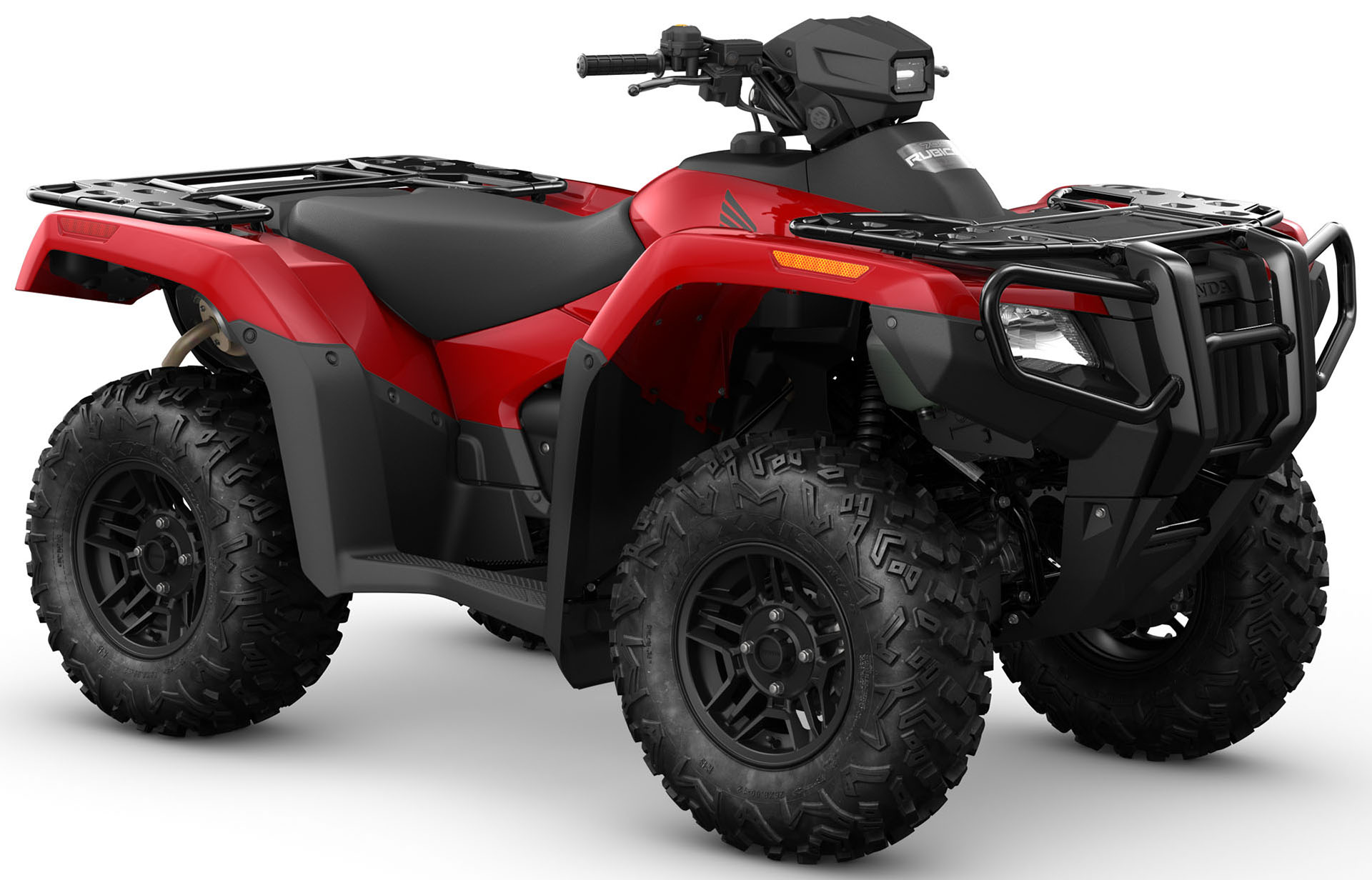
The 2027 Yamaha Grizzly EPS uses a 686cc single and a different personality: compact trail dimensions, Ultramatic engine braking, and Yamaha’s three-mode On-Command driveline. The Brute Force counters with a factory-published 50-hp V-twin, higher tow rating, and more rack capacity. Compare them →
The 2027 Can-Am Outlander 700 is the lower-cost 4WD alternative. Its 650cc Rotax single has a 50-hp rating, but it does not include EPS or a winch in the representative entry trim. The Kawasaki costs more, yet includes EPS and uses the V-twin format. Compare them →
The 2025 Brute Force 750 4x4i EPS is relevant when a left-over or used unit is available. The current 2027 EPS should be compared by its actual equipment, TFT display, price, and warranty—not only by the shared 750 badge. Compare model years →
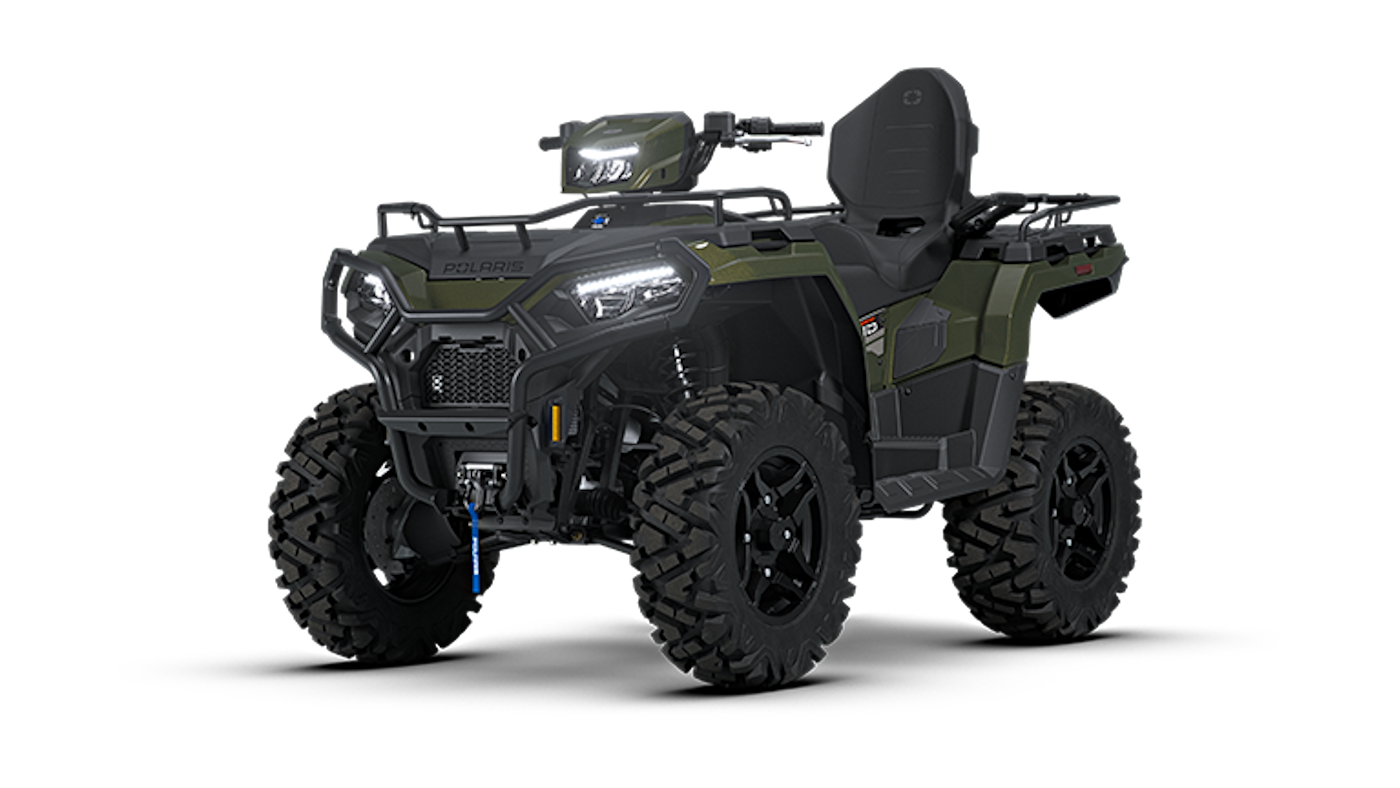
The 2027 Polaris Sportsman 600 is another current one-up utility option. Its single-cylinder layout and different AWD system make it a valid price-and-dealer-network cross-shop, but it does not make the same torque, rack-capacity, or V-twin case. Compare them →
Verdict
The 2027 Kawasaki Brute Force 750 EPS is a competent, well-equipped utility ATV with exactly the right reasons to exist: smooth 749cc V-twin power, EPS, useful traction control, a real 1,250-lb tow rating, generous racks, and a straightforward chassis. It does not hide the price—once destination is included, it is a $12,284 starting point before dealer costs—but it also does not force the buyer into a special edition to get the essentials.
It is most compelling for the solo rider who needs an ATV that can work during the week and make a fast, planted trail machine on the weekend. If a winch, enormous tires, passenger seating, or a luxury package are mandatory, price the right machine instead of pretending the base EPS covers every role. For a durable V-twin utility ATV with no wasted storyline, the Brute Force 750 EPS deserves a serious look.