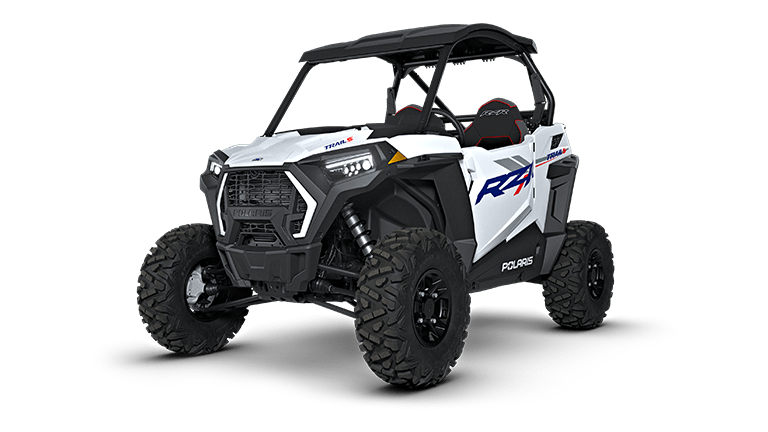
The 2027 Polaris RZR Trail S occupies one of the most useful—and most easily misunderstood—spots in the sport side-by-side market. It is 60 inches wide, makes 100 hp, and turns within a compact 79-inch wheelbase. That makes it meaningfully more capable than a 50-inch machine without pushing it into the 64-, 72-, or 74-inch territory occupied by larger RZRs.
The important word is meaningfully. Polaris did not arrive at the Trail S by adding wheel spacers to the narrow RZR Trail. The Sport has a 999cc engine, extra suspension travel, 27-inch six-ply tires, cast-aluminum wheels, 12.5 inches of clearance, a roof, and VersaTrac Turf Mode. Its $17,999 base price is only $1,000 above the 50-inch RZR Trail Sport. If your local routes admit 60-inch vehicles, that is an unusually strong upgrade on paper.
There is a catch: sixty inches is a rule, not a vague description. A Trail S cannot legally squeeze through a system capped at 50 inches just because its name includes “Trail.” Owners also need to account for mirrors, aftermarket wheels, spacers, and tires that can increase real width. This review treats the Trail S for what it is: a compact, quick recreational UTV for 60-inch routes, not a universal answer for every narrow trail.
What the 2027 RZR Trail S Sport includes
The 2027 U.S. range is refreshingly simple. Polaris lists the RZR Trail S Sport in White Lightning at $17,999, plus a $1,145 destination charge. The mechanical package includes the 100 hp engine, high-performance true on-demand AWD/2WD, Turf Mode, electronic power steering, dual A-arm suspension, ZF twin-tube shocks, four-wheel hydraulic disc brakes, and aluminum wheels.
The practical equipment is better than the word “Sport” sometimes implies. A poly roof and half doors are standard. So are LED headlights, a three-position accessory pulse bar, a 1.25-inch receiver, a 300-lb Lock & Ride cargo box, and adjustable steering. The driver and passenger get bolstered buckets with sliders, although adjustment requires a tool.
What is missing matters just as much. There is no factory winch, touchscreen, navigation, rear camera, audio system, connected-vehicle service, or electronic suspension. The standard instrument cluster uses analog speedometer and tachometer dials around a four-inch LCD. For riders who want a simple cockpit, that is a sensible allocation of money. For someone expecting a fully loaded cabin at nearly $20,000 delivered, the accessory bill can change the value equation quickly.
The Trail S uses a liquid-cooled, fuel-injected 999cc DOHC parallel twin rated at 100 hp. An automatic Polaris PVT supplies park, reverse, neutral, low, and high ranges. High-performance true on-demand AWD engages the front axle when the system detects rear-wheel slip, while 2WD is available for ordinary running.
One hundred horsepower sounds modest beside a 181 hp RZR Pro S or a 275 hp Pro R Boost, but those headline machines are much wider, heavier, and more expensive. The Trail S weighs 1,330 lb dry. That works out to roughly 13.3 dry pounds per horsepower, compared with about 16.7 for the 75 hp, 1,255-lb RZR Trail. Those figures do not predict acceleration by themselves, but they explain why the Trail S should feel like more than a small step up.
The compact wheelbase reinforces that character. Power arrives in a chassis only 110.9 inches long, with 79 inches between the axles and a published 16-foot turning radius. On wooded two-track, the useful performance is not merely the sprint between corners. It is the ability to place the front tires, rotate the machine without a three-point turn, and pick up speed again before the next obstacle.
There is enough output here to demand respect. A short side-by-side changes direction readily, and a 60-inch stance gives away stability to wider machines. Smooth throttle inputs matter on off-camber ground. So does selecting low range for slow climbs, towing, deep mud, or any job that combines low vehicle speed with sustained belt load. The Trail S is quick because its package is compact and light; it does not repeal the need for line choice.
AWD, Turf Mode, and the transmission
The PVT is conventional for Polaris, which is useful rather than glamorous. The shift pattern covers the expected park, reverse, neutral, low, and high positions. Low is the correct tool for technical crawling and heavy loads. High suits ordinary trail speed. Treating low range as optional during slow, loaded driving generates heat in a component that is expensive to neglect.
The Sport specification includes high-performance true on-demand AWD/2WD with VersaTrac Turf Mode. Turf Mode unlocks the rear differential for gentler turns on grass or other delicate surfaces. That gives the Trail S a little more property and campground usefulness than a locked sport driveline, but it is still a recreation-first machine. Select the setting for the surface and traction available; Turf Mode is not the mode for climbing a loose grade.
Polaris lists drive modes as equipped but does not turn the cockpit into a stack of suspension and powertrain screens. The larger point is that the driveline offers choices that owners will actually use: rear drive for normal conditions, AWD for variable traction, and Turf Mode when minimizing surface damage matters.
The 60-inch chassis is the buying decision
Width should be the first question, before horsepower, color, or monthly payment. The factory figure is 60 inches. That fits many state and private trail systems built around a 60- or 62-inch limit, yet it remains ten inches too wide for a genuine 50-inch gate. Rules vary by jurisdiction, and a trailhead sign is more authoritative than a salesperson’s general reassurance.
The Trail S keeps the same 79-inch wheelbase as the narrower Trail. That is unusually short beside the 90.6-inch Can-Am Maverick Sport 1000R and the 90-inch RZR XP. A short wheelbase helps with switchbacks, trailer packaging, and the tight gaps that define wooded routes. It can also make the machine feel busier over closely spaced bumps than a longer platform. There is no universally superior number; the Trail S deliberately favors agility.
Overall dimensions are 110.9 inches long, 60 inches wide, and 69.3 inches high. Ground clearance is 12.5 inches. Owners shopping enclosed trailers should measure the actual opening, ramp angle, roof height, tie-down space, and any accessories—not just compare the advertised box dimensions. A spare-tire carrier, windshield, light bar, or mirror set can be the item that stops an otherwise neat fit.
The 1,330-lb estimated dry weight is also not a ready-to-tow number. Fuel alone adds roughly 57 lb when the 9.5-gallon tank is full. Add occupants’ gear, tools, a spare, winch, protection, and whatever mud returns from the ride. Trailer capacity and tow-vehicle payload should be calculated with the machine in real operating trim.
Suspension: useful travel without exotic hardware
The front suspension uses dual A-arms, a stabilizer bar, and 12.25 inches of wheel travel. The rear is also dual A-arm with a stabilizer bar and offers 13.2 inches. ZF twin-tube shocks control both ends. Polaris calls 13.2 inches class-leading in this 60-inch category, but the more useful conclusion is that the chassis has enough motion for roots, embedded rock, erosion channels, and moderate recreational speed without needing a wide long-travel footprint.
The shocks are straightforward, non-electronic units. That keeps the base price and cockpit complexity down, but it also sets a ceiling. Riders who regularly attack whooped-out roads at speed or load the machine with heavy accessories may want more sophisticated damping and adjustment. No clicker setting can compensate for an overloaded machine, poor tire pressure, or a line chosen for a wider UTV.
The Trail S runs 27x9-12 front and 27x11-12 rear tires. Six-ply construction is a welcome distinction from the narrower Trail Sport’s 26-inch three-ply tires. The larger carcass contributes to obstacle rollover and clearance; the heavier construction gives better puncture resilience in sharp terrain. Cast-aluminum wheels are standard rather than an upgrade.
Four-wheel hydraulic discs use dual-bore calipers at both ends, with park handled in the transmission. Braking performance still depends on surface, tire grip, load, and slope. The 1,500-lb tow rating should never be read as a promise that the machine will stop a maximum trailer normally on every descent.
Cabin comfort and visibility
The Trail S cockpit is compact without feeling like a repurposed utility bench. Bolstered bucket seats, a tilt steering wheel, driver and passenger sliders, half doors, and a factory roof are the basics that support a full day rather than a short demonstration lap. The upright sightline and short nose help the driver judge tight corners and obstacles.
The standard roof is particularly important when comparing prices. The 50-inch RZR Trail Sport does not include one, so its apparent $1,000 savings shrinks if a roof was already on the shopping list. The Trail S also brings aluminum wheels and tougher tires without an accessory order. Those are not glamorous brochure features; they are parts owners otherwise pay to add.
The gauge package is deliberately traditional. The four-inch LCD and analog dials cover speed, rpm, odometer, trip data, clock, hours, gear, fuel, coolant temperature, voltage, service information, diagnostic codes, and the seat-belt reminder. There is a 12-volt outlet, and the 560-watt charging system plus three-position pulse bar makes later electrical work cleaner.
No touchscreen means no integrated trail mapping or rear-camera view. No factory audio means the cabin remains quiet only by sport-UTV standards. Buyers who want those conveniences should price the complete accessory installation, including mounts, harnesses, labor, and electrical demand. A low advertised MSRP is not useful if the first dealer quote rebuilds the machine into a different trim concept.
Cargo, payload, and towing
The Lock & Ride box measures 20.7 by 37 by 7.9 inches and carries up to 300 lb. Total payload is 740 lb, which must absorb occupants, cargo, and installed accessories. A standard 1.25-inch receiver supports the published 1,500-lb tow rating.
That combination makes the Trail S more versatile than many sport UTVs with no towing figure at all. It can move a small utility trailer around property, pull light campsite equipment, or carry tools and a cooler without pretending to be a Ranger. The cargo box is shallow and the cabin has two bucket seats, so work remains a secondary role.
Ratings overlap in the real world. A heavy driver and passenger, full box, winch, spare, and tongue weight all consume the same payload allowance. Terrain changes the safe margin too. Use low range, reduce speed, lengthen stopping distance, and follow the owner’s manual rather than treating the maximum tow number as a target.
2027 Polaris RZR Trail S Sport specifications
| Specification |
2027 RZR Trail S Sport |
| Engine |
999cc liquid-cooled, fuel-injected DOHC parallel twin |
| Factory-rated output |
100 hp |
| Transmission |
Automatic PVT; P/R/N/L/H |
| Drive system |
High-performance true on-demand AWD/2WD; VersaTrac Turf Mode |
| Seating |
2 bolstered bucket seats with individual sliders |
| Estimated dry weight |
1,330 lb |
| Overall size |
110.9 x 60 x 69.3 in |
| Wheelbase / turning radius |
79 in / 16 ft |
| Ground clearance |
12.5 in |
| Fuel capacity |
9.5 gal |
| Payload / cargo-box capacity |
740 / 300 lb |
| Towing / hitch |
1,500 lb / standard 1.25 in receiver |
| Tires |
27x9-12 front; 27x11-12 rear; six-ply |
| Wheels |
12 in cast aluminum |
| Front suspension |
Dual A-arm with stabilizer bar; 12.25 in travel |
| Rear suspension |
Dual A-arm with stabilizer bar; 13.2 in travel |
| Shocks |
ZF twin-tube front and rear |
| Steering / brakes |
EPS and tilt wheel / four-wheel hydraulic discs |
| Standard cabin equipment |
Half doors, poly roof, four-inch LCD with analog dials |
| Lighting / electrical |
LED lighting; 560-watt charging system; three-position pulse bar |
| Base MSRP / destination |
$17,999 / $1,145 |
RZR Trail S versus RZR Trail
The 2027 RZR Trail is the correct answer when the route is capped at 50 inches. It is also $1,000 cheaper, 75 lb lighter, and powered by a 75 hp 875cc twin. Both machines share a 79-inch wheelbase, 9.5-gallon tank, 740-lb payload, 300-lb box, and 1,500-lb tow rating.
Where width rules allow it, the Trail S offers a great deal for the extra $1,000: 25 more horsepower, 1.5 inches more clearance, greater suspension travel, larger six-ply tires, cast-aluminum wheels, Turf Mode, and a roof. The narrower model’s advantage is access, not a better equipment-per-dollar calculation. Compare RZR Trail and Trail S →
RZR Trail S versus Can-Am Maverick Sport 1000R
The 2025 Can-Am Maverick Sport 1000R is the most direct database rival. Both are 60 inches wide, make 100 hp, and use naturally aspirated two-cylinder engines with CVTs. The Can-Am’s 90.6-inch wheelbase is 11.6 inches longer, its listed dry weight is 120 lb higher, and its database MSRP is $1,000 higher.
That makes the choice more interesting than the equal horsepower suggests. The Maverick’s longer footprint may feel calmer over repeated bumps, while the Polaris should be easier to rotate and package. The RZR also publishes a 1,500-lb tow rating. Dealer quality, seating position, control feel, actual out-the-door price, and the suspension response on your terrain should settle a decision this close. Compare Trail S and Maverick Sport →
RZR Trail S versus RZR XP 1000 Sport
The 2027 RZR XP 1000 Sport costs $19,999, $2,000 above the Trail S before destination. It adds 14 hp, four inches of width, eleven inches of wheelbase, 29-inch tires, 20 inches of usable travel, and more sophisticated Walker Evans shocks. It also weighs 256 lb more and carries no tow rating in the ATVPedia record.
The XP is the stronger performance buy when 64-inch access and a larger trailer are assured. The Trail S is the sharper tool for compact routes, storage constraints, light towing, and riders who prefer a smaller machine. Buying the XP simply because the number is higher misses the reason the Trail S exists. Compare Trail S and RZR XP →
RZR Trail S versus CFMOTO ZForce 950 Trail
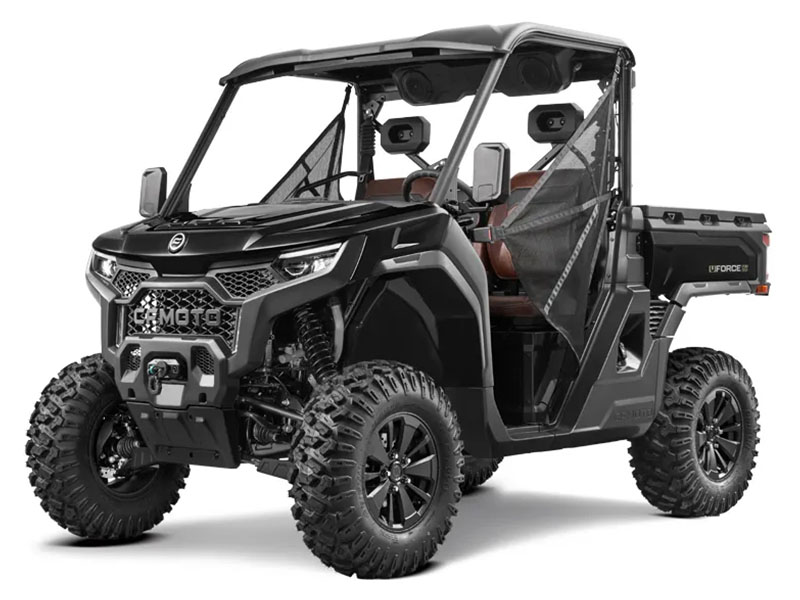
The 2026 CFMOTO ZForce 950 Trail is a $14,999 alternative for buyers who truly need a 50-inch stance. It makes 83 hp and includes a 3,500-lb winch, roof, adjustable piggyback shocks, skid protection, aluminum wheels, and a five-inch display. The Polaris asks $3,000 more and does not include the winch.
The Trail S responds with 17 more horsepower, 2.5 inches more clearance, a wheelbase eleven inches shorter, and a published 1,500-lb towing capacity. More importantly, these machines serve different width rules. The CFMOTO fits a 50-inch gate; the RZR has the broader stance and more output for a 60-inch system. Compare ZForce 950 Trail and RZR Trail S →
What will it cost after the MSRP?
Polaris separates the $1,145 destination charge from the $17,999 MSRP, producing a published subtotal of $19,144. Setup, tax, title, registration, documentation fees, financing, and accessories can raise the transaction substantially. Ask for an itemized out-the-door quote rather than negotiating from a monthly payment.
Then build an honest accessory list. A winch and proper mounting hardware may be essential for solo trail use. Riders in cold rain may want a windshield and rear panel. Rocky terrain can justify additional protection. A spare tire, jack, tools, fire extinguisher, first-aid kit, and communication equipment all require space and add weight.
The Trail S Sport is strongest when the standard mechanical package already suits the mission. It becomes less compelling if the buyer immediately adds premium shocks, integrated mapping, a camera, audio, full weather protection, and every electrical accessory in the catalog. Price the finished machine, not the empty boxes on a configurator.
Who should buy the 2027 Polaris RZR Trail S?
Buy it if your regular routes admit 60-inch UTVs, but agility and compact storage still matter. It is particularly convincing for wooded trail networks, tight two-track, smaller trailers, and owners who mix recreation with light towing or property chores. The combination of 100 hp, a short wheelbase, useful travel, a roof, and a tow rating covers more situations than the “sport” label suggests.
Pass if a strict 50-inch gate is part of the route; buy the RZR Trail or another compliant model instead. Pass if your normal riding is high-speed desert, deep whoops, or open terrain where a 64- to 74-inch chassis can use its extra suspension and stability. Also pause if you consider a touchscreen, camera, premium audio, and a winch mandatory. Adding all of them can erase the Sport’s clean value story.
Sit in one before buying. Seat shape, pedal angle, door opening, sightline, steering effort, and cabin noise are personal. A specification table cannot tell a tall driver whether a short wheelbase machine feels usefully compact or simply cramped.
Verdict
The 2027 Polaris RZR Trail S Sport is one of the more rational RZRs in the current range. It keeps the dimensions that help on wooded trails, adds a 100 hp engine and genuine chassis upgrades, and avoids the cost and mass of the wider performance platforms. The factory roof, aluminum wheels, six-ply tires, Turf Mode, cargo box, EPS, and tow rating make the $17,999 MSRP look considered rather than stripped.
Its limits are plain. Sixty inches will never be fifty. The ZF shocks are serviceable rather than exotic, and anyone who wants navigation, a camera, audio, or a winch will be shopping accessories immediately. Those are acceptable compromises when understood before the contract.
The smartest way to choose is to start with the trail gate. If it says 50 inches, the decision is over. If it allows 60 but not 64, the Trail S lands in a valuable category almost by itself. If 64 inches is legal everywhere you ride, compare it carefully with the RZR XP before deciding how much agility and towing utility are worth. Within the terrain it was designed for, the Trail S is quick, compact, properly equipped, and unusually easy to justify.