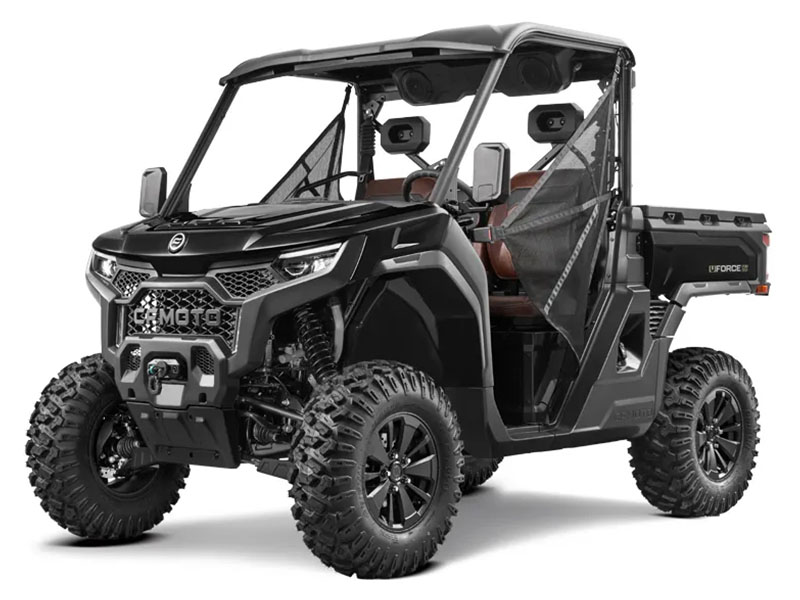
The 2026 CFMOTO UForce U10 Pro is the rare utility side-by-side whose standard-equipment list is more interesting than its accessory catalog. At $17,499, it arrives with an 88 hp three-cylinder engine, 4,500 lb winch, roof, 29-inch tires, power-tilt cargo bed, eight-inch touchscreen, Apple CarPlay and a branded audio system. Those are not dealer-installed talking points. They are part of the base open-cab machine.
That generous specification is the obvious sales pitch, but it is not the only reason the U10 Pro deserves attention. This is a fundamentally newer proposition than the older UForce 1000. The former 963cc V-twin has made way for a 998cc inline-three, the chassis sits higher, towing capacity rises, and the dashboard belongs to a different generation. CFMOTO has not simply renamed its full-size work UTV and bolted on a larger screen.
The standard Pro reviewed here is the three-seat, open-cab version. It has a roof, side nets and mirrors, but not the doors, glass, heat and air conditioning of the Highland. That distinction matters. The Pro is the lighter, cheaper choice for mild climates and riders who prefer airflow; the Highland is the machine for year-round weather protection.
The inline-three changes the UForce character
The U10 Pro’s 998cc liquid-cooled engine uses three cylinders, dual overhead cams and four valves per cylinder. CFMOTO rates it at 88 hp at 7,250 rpm and 69 lb-ft at 6,500 rpm. Those numbers put it well above the 79 hp 963cc V-twin in the previous UForce 1000 and slightly ahead of several full-size utility rivals.
An inline-three does more than improve the brochure number. It has shorter intervals between combustion events than a twin, which generally produces a smoother delivery and a busier, more refined sound as revs rise. That is valuable in a vehicle asked to creep around a property in the morning and cover trail miles in the afternoon. It feels less agricultural than the UForce name might suggest without losing the low-range control a working UTV needs.
Bosch electronic fuel injection handles fueling, while electronic throttle control supports NORMAL and WORK modes. NORMAL gives the engine its more immediate response. WORK softens that response so a boot bouncing over rough ground is less likely to make the vehicle surge while towing, positioning a trailer or carrying a fragile load. It does not reduce the machine to a low-power setting; it makes the available power easier to meter.
CFMOTO pairs the engine with its OmniDrive automatic CVT. The range selector provides park, reverse, neutral, high and low, but gear selection is push-button rather than lever-operated. That clears space in the cabin and removes the familiar hunt through a notchy mechanical gate. Low range remains the correct choice for steep grades, heavy towing and prolonged slow work, regardless of how effortless the buttons make the shift feel.
Drive selection covers 2WD, 4WD and locked 4WD. A locking rear differential is also standard. In practical terms, the U10 Pro can leave the rear open when protecting turf, lock the rear when traction matters, add the front wheels on loose ground and lock the front differential for the worst sections. Electronic power steering is standard, as is hill-descent control.
It earns the utility badge
The cargo bed is rated for 1,000 lb and tilts using an electronic/hydraulic system. That last detail is easy to dismiss until the bed contains wet soil, feed or firewood. A gas-assist bed still asks the operator to lift a meaningful portion of the load; the powered U10 bed turns dumping into a switch operation. Its practical value will depend on how often the machine actually works, but it is not a showroom gimmick.
Towing capacity is 2,500 lb, up 500 lb from the older UForce 1000 in ATVPedia’s data. A receiver, strong engine and low range make that number useful, but the rating is not the whole towing decision. Trailer brakes, tongue weight, surface, slope and the load already in the bed can become the limiting factors. A 2,500 lb trailer on a level private road is a different problem from the same mass on a loose descent.
The factory winch is rated at 4,500 lb and uses synthetic rope. That is enough winch for ordinary self-recovery and many property jobs, and it is already wired and mounted rather than consuming the first weekend after purchase. A roof, full skid plate, side nets, mirrors, front and rear sway bars, a buss bar for accessories and LED head, tail and backup lights are also included.
This is where the U10 Pro’s price starts to look different. A cheaper base-model rival may match the bed or tow rating, but adding power steering, a roof, winch, larger tires, audio and a display can close the sticker gap quickly. Compare complete builds and dealer quotes, not just the lowest number printed above a model family.
A 64-inch chassis on 29-inch tires
At 117 inches long, 64 inches wide and 77 inches tall, the U10 Pro is a full-size machine. Its 81.1-inch wheelbase is compact enough to keep it maneuverable around gates and outbuildings, yet long enough to give three adults usable cabin space. The listed turning radius is 13.9 feet.
Dry weight is 1,742 lb. Fuel, occupants, cargo and accessories push the operating mass well beyond that number, so trailer payload and tie-down ratings deserve the same attention as the tow vehicle’s hitch rating. The 11.8-gallon fuel tank also adds nearly 70 lb when full.
Ground clearance is 13 inches, and CFMOTO fits 29 x 9-14 front and 29 x 11-14 rear tires on 14-inch aluminum wheels. That combination gives the differentials useful breathing room in ruts without turning the vehicle into a tall, vague mud build. The tires are one of the U10 Pro’s genuine standard-equipment advantages over utility machines delivered on 25- or 27-inch rubber.
Front suspension uses high-clearance independent A-arms with 11 inches of travel. The rear is an independent double-A-arm arrangement with 10.4 inches. Spring preload is adjustable, but the oil-damped shocks are conventional units rather than premium multi-adjustable dampers. That is appropriate for the mission: load control and predictable trail comfort matter more here than repeated high-speed impacts.
Hydraulic disc brakes handle stopping, backed by an electronic parking brake. Front and rear sway bars help keep the relatively tall body controlled, particularly when the bed is loaded. No specification sheet can tell a buyer how the suspension will feel on their exact terrain, so a useful test drive should include broken ground at low speed, a short climb in low range and a tight turn in both locked and unlocked rear-differential settings.
The cabin is unusually well equipped
The U10 Pro has a three-person bench, with the driver’s section adjustable. Three full-size adults will still need to test shoulder and knee room together; a three-seat rating does not guarantee three people will want to spend all day abreast. For one or two occupants, the flat bench makes entry easy and leaves the cabin feeling open.
The centerpiece is an eight-inch CFMOTO RideSync MMI touchscreen. It supports Apple CarPlay and presents vehicle diagnostics, while RideSync app compatibility adds connected functions through the T-box. MB Quart audio is standard, as are USB and 12-volt outlets. An NFC key replaces a purely conventional key arrangement.
The screen is useful, but it should not distract from the controls needed with gloves on. Push-button shifting and clearly separated drive controls are more important during a workday than another home-screen graphic. Before buying, try the main functions with the gloves normally worn on the property and make sure the display remains legible in direct sun.
Open-cab construction is the central compromise. The standard roof stops overhead sun and rain, but side nets do little against dust, crosswind or winter air. Owners who immediately plan to add a windshield, hard doors, rear panel and heater should price the finished machine against the factory Highland. Piecemeal enclosure can cost more, introduce sealing gaps and still lack the Highland’s integrated air conditioning and electrical capacity.
2026 CFMOTO UForce U10 Pro specifications
| Specification |
UForce U10 Pro |
| Engine |
998cc liquid-cooled DOHC 12-valve inline-three |
| Output |
88 hp at 7,250 rpm; 69 lb-ft at 6,500 rpm |
| Fuel system |
Bosch electronic fuel injection |
| Throttle / modes |
Electronic throttle; NORMAL and WORK |
| Transmission |
OmniDrive CVT; P/R/N/H/L with push-button shifting |
| Drive system |
2WD / 4WD / locked 4WD; locking rear differential |
| Steering |
Electronic power steering |
| Front suspension |
High-clearance independent A-arm; 11 in travel |
| Rear suspension |
Independent double A-arm; 10.4 in travel |
| Brakes |
Hydraulic discs; electronic parking brake |
| Tires |
29 x 9-14 front; 29 x 11-14 rear |
| Wheels |
14-inch aluminum |
| Length x width x height |
117 x 64 x 77 in |
| Wheelbase |
81.1 in |
| Ground clearance |
13 in |
| Dry weight |
1,742 lb |
| Fuel capacity |
11.8 gal |
| Seating |
3-person bench |
| Cargo-bed capacity |
1,000 lb; electronic/hydraulic tilt |
| Towing capacity |
2,500 lb |
| Winch |
4,500 lb with synthetic rope |
| Display |
8-inch RideSync MMI touchscreen with Apple CarPlay |
| Base MSRP |
$17,499 |
U10 Pro versus the older UForce 1000
The 2025 UForce 1000 remains the useful value reference. Its $14,999 listed price is $2,500 below the 2026 U10 Pro, and both are 64 inches wide with three-person benches. If the job is mostly hauling tools at low speed, the older model’s simpler 963cc V-twin may be all the machine required.
The U10 Pro justifies its premium with 88 hp instead of 79, 2,500 lb of towing instead of 2,000, 13 inches of clearance instead of 11, and an 11.8-gallon tank instead of 8.7. It also adds the power-tilt bed, push-button transmission controls, drive modes, larger tires, modern touchscreen and a much richer standard-accessory package. Compare the U10 Pro and UForce 1000 directly.
U10 Pro versus Polaris Ranger 1000
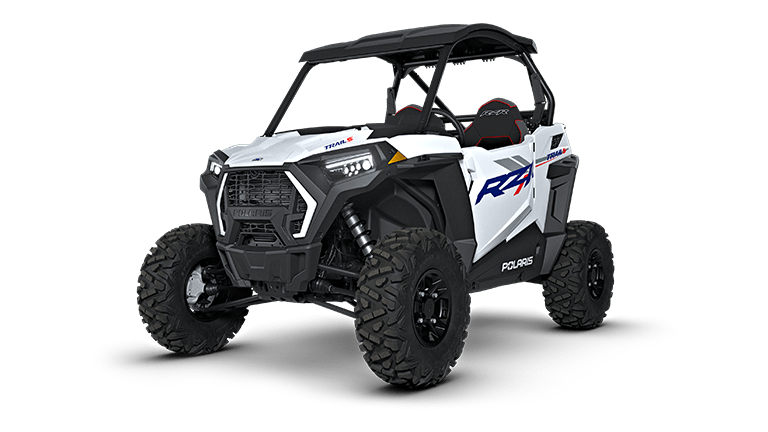
The 2027 Polaris Ranger 1000 starts at $14,499 before its separate destination charge. It matches the CFMOTO’s 1,000 lb bed and 2,500 lb tow ratings while weighing 255 lb less in the published fields. At 62.5 inches wide, it is also 1.5 inches narrower.
The base Ranger is deliberately spare: its 999cc twin makes 61 hp, and the trim in our database has no EPS or winch. The CFMOTO costs $3,000 more at MSRP but brings 27 additional horsepower, EPS, a 4,500 lb winch, roof, 29-inch tires, audio and a touchscreen. A Ranger buyer who values a lighter, proven work platform may prefer the Polaris; a buyer who would add those options anyway should compare completed invoices. See the U10 Pro and Ranger 1000 side by side.
U10 Pro versus Can-Am Defender XT HD10
The 2027 Can-Am Defender XT HD10 costs $19,799, $2,300 more than the U10 Pro. Both seat three, carry 1,000 lb in the bed, tow 2,500 lb and include a 4,500 lb synthetic-rope winch. The Defender’s 80 hp Rotax triple trails the U10 Pro’s rating by eight horsepower, while its 65-inch body is an inch wider and its listed dry weight is 128 lb greater.
Can-Am counters with a well-developed utility chassis, Quick-4Lok front differential and a broad dealer and accessory ecosystem. CFMOTO answers with lower MSRP, the power-tilt bed, larger standard display, Apple CarPlay and audio. This is the comparison where a back-to-back drive and local dealer quality should outweigh brand assumptions. Open the full U10 Pro versus Defender XT comparison.
Pro or Highland?
Choose the open-cab Pro if most use happens in fair weather, cabin airflow is welcome, or keeping purchase price and complexity down matters. Its roof, side nets and windshield-ready structure provide a sensible starting point without pretending to be a sealed vehicle. It is also the version to choose when doors and climate control would spend most of their life open.
Choose the UForce U10 Pro Highland if plowing snow, winter feeding, rain or dust make enclosure essential. The Highland’s full doors, power windows, power-opening glass windshield, heater and air conditioning are integrated as a system. Its higher-output electrical setup is another advantage for cold-weather accessories. The upgrade is not merely cosmetic, so compare it before ordering several enclosure parts for the regular Pro.
Who should buy it
The U10 Pro suits an owner who needs a genuine working bed and 2,500 lb tow rating but does not want a bare fleet machine. Farmers, acreage owners, hunting clubs and trail riders can use the winch, roof, large tank and power bed immediately. The three-cylinder engine and cabin tech then make the trip between jobs less austere.
It is less convincing for buyers whose trails impose a 60-inch width limit, anyone who needs six seats, or operators who require a sealed climate-controlled cab. It is also more equipment than necessary for light yard work. A smaller UTV will be easier to store, transport and maneuver, and it will consume less of the budget before tools or a trailer are purchased.
Verdict
The 2026 CFMOTO UForce U10 Pro succeeds because the expensive-looking features sit on top of credible work specifications. An 88 hp triple, 1,000 lb power-tilt bed, 2,500 lb tow rating and 4,500 lb winch make a solid utility foundation. The RideSync display, Apple CarPlay, audio, roof and 29-inch tires then reduce the list of accessories most owners would otherwise add.
Its open cabin and substantial 1,742 lb dry weight need to fit the job, and the electronic equipment makes dealer support more important—not less. But at $17,499, the U10 Pro occupies a persuasive middle ground between stripped base machines and premium enclosed cabs. It is not simply good value because the feature list is long; it is good value because most of those features are genuinely useful. Browse more CFMoto models, explore utility UTVs, visit the 2026 model-year hub, or build another matchup in the comparison tool.