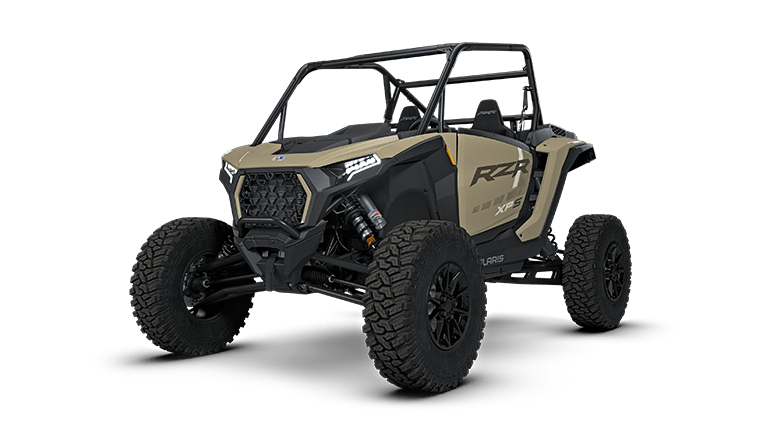
The Polaris RZR XP S 1000 is the new wide-body trail RZR, built to run fast and stay planted without stepping up to a turbo. It pairs the familiar 114 hp ProStar twin with an all-new 72-inch stance, up to 25 inches of suspension travel and a driveline Polaris says is 30 percent stronger than before. The result is a naturally aspirated sport machine aimed at open, rough, fast terrain. It is quick and composed, but the width and the missing turbo both shape who it is for. Here is what it does well, where it holds back, and who should buy it. (New to spec sheets? Our guide on how to read ATV & UTV specs covers which numbers matter.)
The XP S runs Polaris’s 999cc ProStar parallel-twin making about 114 horsepower through the automatic PVT transmission. Naturally aspirated, it is genuinely quick, with a clean, linear pull that is easy to place on a fast trail and never feels peaky. Owners of the naturally aspirated XP generally report a top speed in the low-70s mph, which is plenty to find trouble on most trails. What it is not is a turbo. The boosted RZRs deliver a harder, endless-feeling shove the XP S cannot match, and if your yardstick is the fastest thing in the dunes, you will feel the ceiling here. Take the XP S the way it is meant: a fast, friendly, naturally aspirated trail machine rather than a maximum-output desert weapon.
The 72-inch chassis and its trade-off
The headline is the stance. At 72 inches wide on a 90-inch wheelbase, the XP S plants itself the way narrower machines cannot, staying flat and calm through rough corners and high-speed washes where a 64-inch car would start to feel tippy. There is 16 inches of ground clearance to clear rocks and ruts. This is a chassis you can lean on when the trail opens up. The trade is real, though. A 72-inch machine is simply too wide for a lot of tight, technical trail systems, some of which cap machines at 64 or even 60 inches. Before you buy, check the widths where you actually ride, because the stance that makes the XP S so stable in the open is the same thing that shuts it out of the narrow woods.
Suspension and terrain: built to run fast
This is where the XP S earns its keep. Up to 25 inches of usable wheel travel is a serious number, enough to swallow big hits and stay composed at speed on whooped-out two-track, desert washes and open trail. Polaris also claims a 30 percent stronger driveline for the new platform, which speaks to durability under exactly the hard, fast use this machine invites. Point it at fast, rough, open ground and it is in its element. The one thing to manage is the belt. Like any CVT sport machine, the XP S rewards smart driving and proper belt care when you push it, where a Honda Talon’s automatic DCT sidesteps that worry entirely.
Where it sits in the RZR range
The XP S slots into a deep RZR ladder. Just below it, the RZR XP 1000 ($21,299) uses the same 114 hp engine in a narrower 64-inch body with 16 inches of travel, so it is lighter, sharper on tight trails and about $1,200 cheaper. That is the key internal decision: width and travel versus agility and price. Above the XP S, the turbocharged RZR Pro XP ($27,999) and RZR Turbo R ($30,999) bring 181 hp for riders who want boost, and the naturally aspirated RZR Pro R ($35,999) tops everything with a 225 hp four-cylinder. The XP S is the sweet spot for buyers who want the wide, long-travel chassis without turbo money.
Who it’s for
The XP S 1000 is the right pick if you ride fast and open, want the stability of a wide stance and the composure of long travel, and would rather put your money into chassis and suspension than into a turbo. Fast-trail riders, desert and dune runners on a budget, and anyone stepping up from a narrower trail car for more high-speed confidence are the target. For them it is a lot of capable chassis for the money.
It is the wrong pick if your trails are tight and narrow, where 72 inches will not fit and a 64-inch or 60-inch machine is the smarter tool. It is also wrong if you want maximum speed, since the turbo and big-bore RZRs are built for that, or if you need to tow, haul or carry more than a passenger, because this is a two-seat sport machine with no work rating at all.
How it compares
At $22,499 the XP S 1000 lands in the thick of the naturally aspirated sport class:
- Honda Talon 1000R, $22,699. The closest rival, a long-travel desert-sport machine at almost the same price. The RZR answers with more power (114 vs 104 hp) and a wider 72-inch stance, while the Talon counters with its automatic DCT gearbox, which takes the CVT belt out of the equation entirely. Power and width versus driveline peace of mind. Compare them →
- Kawasaki Teryx KRX 1000, $22,199. Similar money, different mission. The KRX is a rugged rock-crawler and technical-trail rig on 31-inch tires, where the XP S is built to run fast and open. Choose by terrain. Compare them →
- Polaris RZR XP 1000, $21,299. The in-house alternative, the same engine in a narrower, lighter, cheaper 64-inch package. If your trails are tighter or your budget is firm, the XP 1000 is the sharper tool. Compare them →
Two more to weigh: the Arctic Cat Wildcat XX ($21,999) makes a strong 130 hp from a naturally aspirated triple for less money, and the Yamaha YXZ1000R SS ($22,299) hands drivers a paddle-shift sequential gearbox for those who want to shift for themselves.
Pros and cons
The good: a quick and linear 114 hp naturally aspirated twin, an all-new 72-inch stance that stays planted at speed, up to 25 inches of travel with 16 inches of clearance, a claimed 30 percent stronger driveline, and a price that undercuts every turbo RZR.
The catch: a 72-inch width that locks it out of tight and width-limited trails, no turbo in a family that offers 181 and 225 hp above it, a CVT belt that needs respect under hard use, and no tow or work capability with only two seats.
The verdict
The 2026 Polaris RZR XP S 1000 is a smart piece of the RZR lineup: the wide, long-travel chassis that makes fast, open riding feel calm, without the price of a turbo. For the rider who lives on open trail and desert and wants stability and suspension over outright boost, it is one of the better value plays in the sport class. Just weigh two things before you buy. The 72-inch width will keep it off some trails, so check where you ride, and if you know you will always want more speed, the turbo RZRs are right there above it. Matched to fast, open ground, though, the XP S delivers a lot of capable chassis for the money.
Want to see it head to head with something specific? Drop it into the side-by-side comparison tool, or browse the full database to filter by power, width and price.