The 2025 Honda Talon 1000R is the wide, open-terrain member of Honda’s sport side-by-side family. It combines a 999cc twin, 104 hp and 14.5 inches of ground clearance with a six-speed dual-clutch transmission that removes the CVT belt used by most competitors. At $22,699, it lands directly among the core naturally aspirated sport machines. Its strengths are distinctive, but the 68.4-inch width and modest power advantage over cheaper models narrow its audience. Our guide to reading ATV and UTV specs explains which numbers matter most.
The liquid-cooled 999cc parallel-twin makes about 104 hp, but the Talon does not lead this group. The Polaris RZR XP 1000 makes 114 hp, while the Yamaha YXZ1000R SS and Kawasaki Teryx KRX 1000 list 112 hp.
Its naturally aspirated engine avoids turbo complexity and works with fixed ratios, creating a direct connection between throttle, gear and speed. Drivers seeking the hardest acceleration will find more powerful choices. Those valuing predictable delivery have a stronger reason to stay.
Six-speed DCT: the defining feature
Honda’s six-speed dual-clutch automatic is the Talon’s clearest point of difference. It shifts through real gears rather than changing ratios through a belt-driven CVT. The driver can leave it in automatic operation or use paddle shifters for more control.
The design removes the CVT belt from the maintenance equation and provides defined gear selection and engine braking. It feels different during slow maneuvers because individual shifts remain noticeable. Neither approach suits everyone, but the Honda gives enthusiasts a rare alternative.
Wide chassis and open-terrain focus
At 68.4 inches wide, the Talon 1000R is built for roomier routes. Its 92.7-inch wheelbase and wide stance support stability when terrain opens up, while 14.5 inches of ground clearance helps it pass over rocks, ruts and sharp crests.
Those dimensions limit access. The Talon does not fit 64-inch trail systems and needs more trailer and storage width than the Talon 1000X. Choose the R only where terrain rewards width and clearance.
The dataset lists Fox Live Valve as available, not standard across every configuration. Buyers interested in electronically managed suspension should confirm the exact trim rather than assuming every 1000R includes it.
Weight, range and everyday realities
The Talon weighs 1,546 lb, almost identical to the 1,543 lb RZR XP 1000 and only 34 lb more than the Yamaha YXZ1000R SS. It is far lighter than the 1,896 lb Kawasaki KRX 1000. That helps the Honda avoid the heavy, deliberate character associated with the rock-focused Kawasaki.
Fuel capacity is 7.3 gallons, the smallest figure among those three rivals. The RZR carries 9.5 gallons, the Yamaha holds 9 and the Kawasaki reaches 10.6. Actual range depends on terrain and driving, but the specification gives the Talon less fuel margin for long remote loops.
There is no tow rating. This is a two-seat sport machine rather than a utility crossover, so buyers wanting cargo and trailer capability should look elsewhere.
Who it is for
The Talon 1000R suits two-person riders with access to open, rough terrain who want a geared transmission instead of a CVT. It is particularly appealing to drivers who enjoy using paddle shifters and value ground clearance more than fitting width-restricted trails.
It is the wrong choice for narrow wooded routes, family seating or property work. It also may disappoint buyers shopping only for maximum horsepower. If utility is part of the mission, our ATV versus UTV guide helps separate the categories, but the Talon’s role is firmly recreational.
How it compares
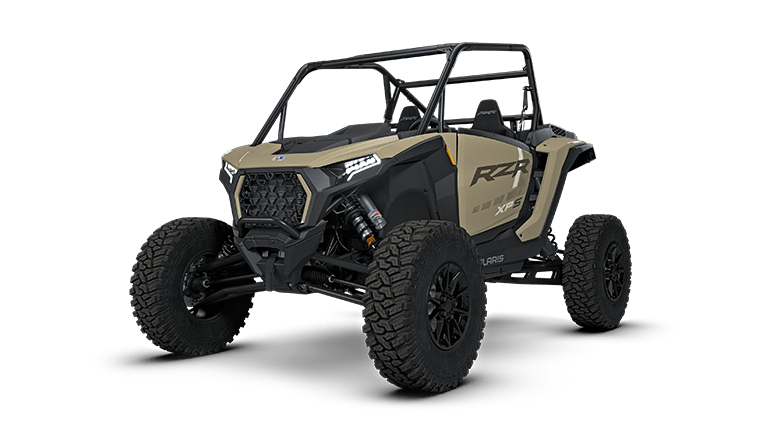
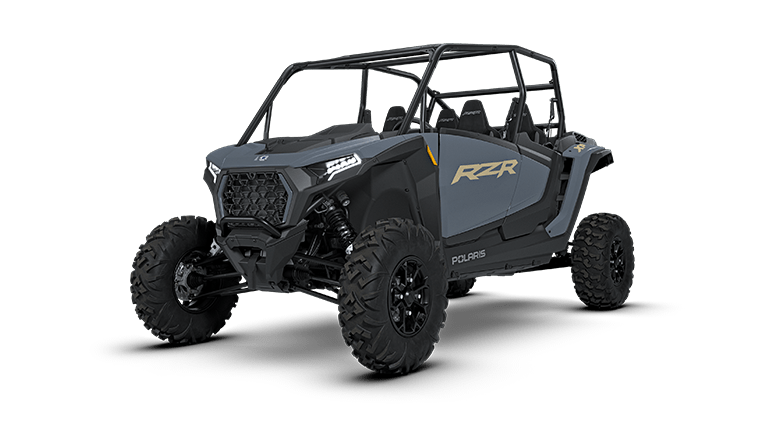
The Polaris RZR XP 1000 costs $21,299 and makes 114 hp. It is 64 inches wide, weighs 1,543 lb and has 13.5 inches of clearance. The Polaris saves $1,400, adds 10 hp and fits narrower routes. The Honda provides another inch of clearance and its geared DCT. Compare them directly.
The Yamaha YXZ1000R SS costs $22,299. Its 998cc triple makes 112 hp and uses a five-speed paddle-shift sequential transmission. It is 64 inches wide and has 13.2 inches of clearance. The Yamaha is the more manual-feeling driver’s machine, while the Honda adds automatic operation, more clearance and a broader stance. See the Honda and Yamaha comparison.
The Kawasaki Teryx KRX 1000 costs $22,199 and makes 112 hp. Its 68.5-inch width nearly matches the Honda, but it weighs 350 lb more and has 0.1 inch less clearance. The Kawasaki’s dataset position is rugged rock crawling, while the lighter Talon is the more open-terrain choice. Compare the Honda and Kawasaki.
Where it sits in the Talon lineup
The Talon 1000X costs $21,199 and shares the 104 hp engine, six-speed DCT and two-seat layout. It narrows to 64 inches, shortens the wheelbase to 87.6 inches and has 13.1 inches of clearance. It is the better choice for tighter trail systems.
The Talon 1000X-4 costs $25,999 and adds two seats. Its wheelbase stretches to 116.9 inches, weight rises to 1,740 lb and clearance is 12.7 inches. The 1000R remains the dedicated two-seat open-terrain option.
Price and value
At $22,699, the Talon 1000R costs more than the RZR XP 1000, YXZ1000R SS and KRX 1000 entries. It also makes less power than all three. The DCT, 14.5-inch clearance and Honda ownership reputation must therefore carry the value argument.
That equation works for a buyer specifically avoiding a CVT and riding terrain suited to the wide chassis. If transmission type does not matter, the RZR offers stronger paper value. If rough low-speed terrain dominates, the KRX has a clearer specialization.
Pros and cons
The good: a beltless six-speed DCT with paddle control, 104 hp from a naturally aspirated twin, 14.5 inches of ground clearance, a stable wide chassis and relatively low weight beside the KRX.
The catch: a 68.4-inch width that blocks narrower trails, the smallest fuel tank among its main rivals, no tow rating and a price above competitors that make more power.
The verdict
The 2025 Honda Talon 1000R is not the default naturally aspirated sport UTV. It is the distinctive choice for riders who want real gears, paddle control and a wide chassis with generous clearance.
Its drawbacks are easy to identify. It costs more, makes less power than several rivals and needs open terrain. When those limitations do not matter, the DCT gives the Talon a character that no CVT competitor can duplicate. Choose it for that experience, not simply for the Honda badge.
Want to compare it with another sport UTV? Add it to the comparison tool, or browse the full database by power, width and price.