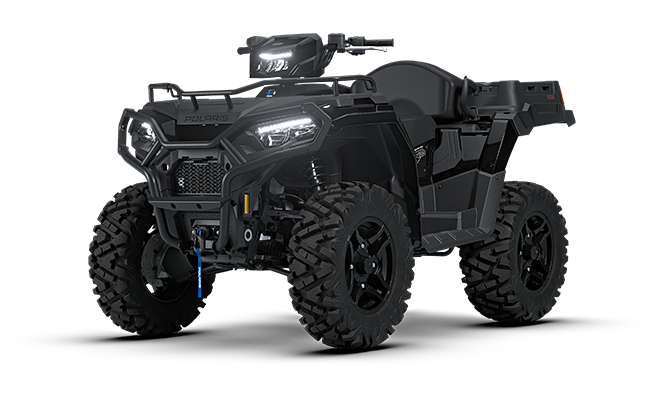
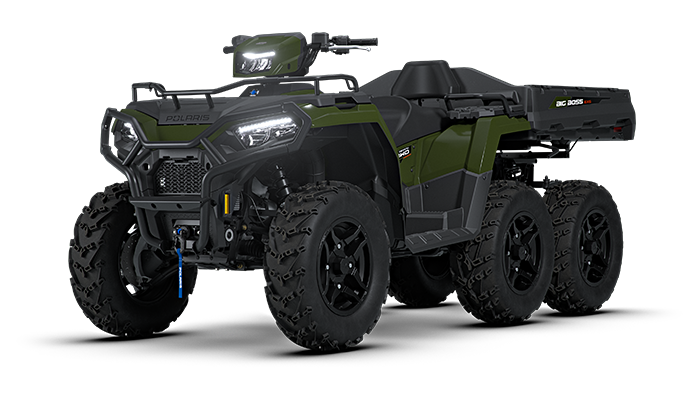
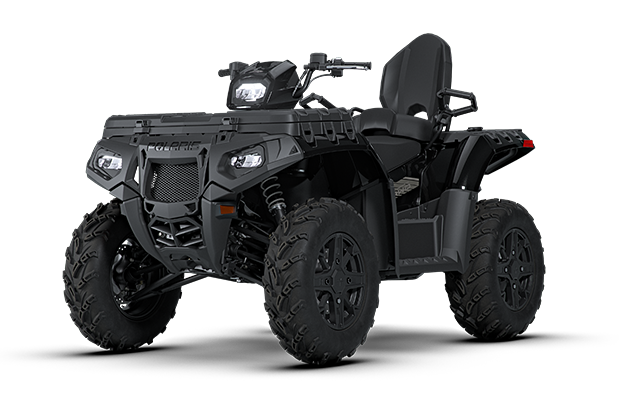
The 2027 Polaris Sportsman X2 600 is what happens when a two-up ATV and a miniature utility vehicle share the same rear half. Raise the convertible passenger seat and it carries two people on a chassis designed for the job. Fold the passenger arrangement away and the same space becomes a 400-lb dumping cargo box. That transformation—not the “600” badge—is the reason this model exists.
The badge is less exciting than it sounds. The X2 600 is the former Sportsman X2 570, and Polaris says the vehicle is largely unchanged for 2027. It still uses a 567cc single rated at 44 hp. The primary model-year update is new graphics, not a larger engine or a performance redesign.
What remains is a highly specific and unusually capable ATV: 1,350 lb of towing, 705 lb of payload, a 3,500-lb winch, engine braking, Active Descent Control, multi-select power steering, Turf Mode, and electronic Ride Control. It starts at $14,399 plus $700 destination. That is expensive for a 44-hp single, so the X2 only makes sense if its ability to switch between passenger and cargo duty will be used rather than admired.
The 2027 name change, explained plainly
Polaris moved several 570-branded Sportsman models to the 600 name for 2027. The X2 followed that change. It did not receive a 600cc cylinder, a second cylinder, or a new horsepower rating. Its ProStar four-stroke DOHC single still displaces 567cc and produces a published 44 hp.
Polaris is unusually direct about this. Its current FAQ describes the X2 600 as the same vehicle previously known as the X2 570, with no significant difference in engine size, horsepower, or performance. Parts and accessories remain compatible because the underlying vehicle has not changed. The substantive 2027 update identified for the X2 is its graphics.
That honesty should shape the buying decision. An owner of a healthy recent X2 570 has little mechanical reason to trade solely for the 2027 badge. A new buyer, however, is still getting a well-developed platform with a stronger combination of passenger and cargo functions than a conventional rack-equipped ATV.
Exact configuration and price
ATVPedia’s entry covers the Onyx Black Sportsman X2 600, the only trim currently displayed on Polaris’s U.S. model page. MSRP is $14,399. The manufacturer lists a $700 destination charge, creating a published subtotal of $15,099 before tax, title, registration, dealer setup, accessories, financing costs, or other local fees.
Standard equipment is unusually complete. The X2 includes multi-select electronic power steering, a 3,500-lb synthetic-rope winch with Auto Stop, front bumper, front rack extender, A-arm guards, 14-inch aluminum wheels, LED pod and low-beam headlights, Engine Braking System, Active Descent Control, Ride Control, P.A.S.S. security, and the convertible rear seat and dump box.
There is no touchscreen or connected-vehicle service. Accessory display options are available, but the standard instrument is an all-digital gauge. That is a sensible line to draw on a work-oriented ATV; buyers should add navigation only if their routes justify another screen.
The liquid-cooled ProStar engine uses electronic fuel injection and drives through an automatic PVT with park, reverse, neutral, low, and high. Forty-four horsepower is adequate for property work, trail travel, and moderate towing, but it is not generous relative to a 928-lb dry ATV.
The weight is the more revealing figure. The X2 is 225 lb heavier than the one-seat 2027 Sportsman 600 in ATVPedia’s current data. That extra structure supports the longer chassis, passenger conversion, dump box, larger fuel capacity, protective hardware, and standard equipment. It also means acceleration and response should be judged as utility performance rather than sport-ATV performance.
Low range is appropriate for slow pulling, steep ground, and heavy cargo. High range suits ordinary riding. A CVT makes the X2 easy to operate, but sustained heavy work in high range can create unnecessary belt heat. The owner’s manual, load, grade, and speed should determine the range selection—not the desire to avoid one movement of the shifter.
The 6.75-gallon fuel tank is substantially larger than the base Sportsman 600’s 4.5-gallon tank. Range still depends on load, speed, surface, temperature, and riding style, but the added capacity suits a model intended to spend long days carrying a passenger or working beyond the yard.
The convertible rear is the whole argument
In passenger form, the X2 provides a raised rear saddle with a backrest and a clear view over the driver. In work form, that structure converts into a shallow cargo box measuring 37.5 by 19.5 by 6.5 inches. The box is rated for 400 lb and uses quick latching for dumping.
This arrangement solves a real limitation of two-up ATVs. A conventional touring machine offers excellent passenger comfort, but the rear seat occupies the space where a large box or substantial rack load would otherwise sit. A utility ATV offers racks, but adding an aftermarket passenger seat does not turn a one-person chassis into a legal factory two-up vehicle. The X2 is engineered for both roles from the beginning.
Conversion does not make it both things at the same time. When the rear area is arranged for a passenger, box utility changes. When it is configured as a dump box, there is no legal second seating position. Buyers who need to carry a passenger and 400 lb of cargo simultaneously need a different format, probably a side-by-side.
The dump body is also shallow. It is well suited to mulch, fencing tools, feed bags, firewood, sprayers, game-recovery equipment, and compact cargo that can be tied down. Loose material can sit above the sides only if it is contained safely. Long tools still require careful placement. The box is more capable than a rear rack but much smaller than a UTV bed.
Payload and towing: do the arithmetic first
Polaris rates the X2 for 705 lb of payload and 1,350 lb of towing through a standard 1.25-inch receiver. The front rack holds 90 lb, while the rear cargo system is rated for 400 lb in box form.
Payload includes the driver, passenger, cargo, accessories, and trailer tongue weight. Two adults can use a large portion of 705 lb before a cooler, winch accessories, tools, or hitch load are counted. Likewise, placing 400 lb in the dump box leaves 305 lb for the rider, installed accessories, and any other load. The published capacities describe different parts of one load plan, not prizes that can all be collected at once.
The 1,350-lb tow rating is strong for an ATV, but an ATV remains a light tow vehicle with a short wheelbase. A maximum trailer on level, firm ground is a different job from the same trailer on wet grass or a long descent. Braking traction, grade, speed, tongue weight, trailer balance, tire condition, and local regulations matter as much as the engine’s ability to make the load move.
The standard winch is rated at 3,500 lb and uses synthetic rope plus Auto Stop. Its rating should not be confused with permission to recover any 3,500-lb object in any direction. Rigging angle, anchor strength, layer of rope on the drum, vehicle stability, and line protection determine what is safe. A snatch block, tree saver, gloves, and actual recovery training are more useful than relying on the number printed on the fairlead.
AWD, Turf Mode, and descending control
The drive selector provides 2WD, On-Demand AWD, and Turf Mode. In AWD, the system brings the front wheels into the job when rear slip is detected. It is designed to give useful four-wheel traction without asking the rider to manage a manual front differential lock.
Turf Mode unlocks the rear differential, allowing the inside rear tire to travel a shorter distance in a turn. That reduces tire scrub on grass and tightens low-speed maneuvering on firm ground. It also gives away rear-axle traction, so it should not be left engaged for mud, steep climbs, or other conditions where both rear tires need to drive.
Engine Braking System and Active Descent Control assist with speed management downhill. EBS helps use the driveline to slow the ATV when the throttle closes. ADC works through all four wheels under the conditions described by Polaris. Neither system replaces the brakes or correct line selection. They reduce workload; they do not make a loaded 928-lb ATV immune to momentum.
The X2’s combination is particularly useful because its duty can change so much. A rider may use Turf Mode around a lawn in the morning, 2WD on a firm lane, and AWD with descent assistance on a rough trail later the same day. Selecting the appropriate mode before traction disappears remains better than reaching for switches after the machine is stuck.
Suspension, dimensions, and trail fit
The chassis is 92 inches long, 49 inches wide, and 51 inches tall, with a 56-inch wheelbase. Ground clearance is 11.5 inches. A sealed MacPherson-strut front end provides 8.2 inches of travel, while the sealed dual-A-arm independent rear suspension provides 9.5 inches.
Those figures prioritize all-day compliance and load control over aggressive high-speed riding. Independent rear suspension helps each back wheel follow uneven ground and keeps the passenger ride more civilized than a solid rear axle would. Sealed bushings reduce contamination and routine grease demands, though they do not eliminate inspection for play or damage.
At 49 inches wide, the X2 is close to the common 50-inch trail limit, but “close” is not legal proof. Trail-system rules may measure vehicle width differently or restrict particular classes. A rider should check the current rule for the actual route, including whether two-up ATVs are permitted, before traveling.
The 56-inch wheelbase improves passenger space and stability compared with a short one-seat ATV, but it also changes breakover behavior and turning feel. The machine will not pivot through trees exactly like the one-up Sportsman 600. Its 35.35-inch seat height and tall passenger position also put human weight high on the chassis. Smooth steering and deliberate body movement matter when a second person is aboard.
Twenty-six-inch Duro tires are mounted on 14-inch aluminum wheels. The size is a practical compromise: enough clearance for common ruts and trail debris without the gearing penalty and steering load of oversized aftermarket tires. Any tire change affects effective gearing, handling, clearance, and stress on driveline parts, so “bigger” should not be treated as automatically better.
Passenger comfort and responsibility
The X2 is rated for two, unlike a one-seat ATV with an accessory pad strapped to its rack. That distinction is fundamental. The longer chassis, second foot position, raised saddle, handholds, suspension, and payload rating are designed around passenger use.
The passenger still needs suitable protective equipment and the physical ability to hold on, keep feet in the intended positions, and move with the machine. Their weight changes steering, braking, climbing, and side-hill behavior. A driver accustomed to riding alone should reduce speed and relearn how the ATV responds before taking a passenger into technical terrain.
Polaris’s conversion hardware must be fully secured in the correct position. The passenger area is not seating when configured as cargo space, and the dump box is not a place to carry a person. The owner’s manual controls the conversion procedure and age or fit requirements.
Multi-select EPS helps manage the extra steering effort created by low speed, rough ground, cargo, and a passenger. More assist can reduce fatigue during work; less assist can preserve more feedback at speed. Steering assistance cannot create front-tire grip when weight distribution, surface, or speed has already used it up.
Ride Control and useful electronics
Ride Control combines an easy-effort throttle, selectable speed limiting, geofencing, PIN-based security, and three drive modes. This is one of the X2’s strongest differences from a basic mid-size ATV.
A speed limit can help with spraying, towing, new operators, or work that requires consistent pace. Geofencing can define an operating area. P.A.S.S. adds PIN-activated theft deterrence. These tools support supervision and repeatable work, but they do not replace training, physical keys, secure storage, or direct oversight of an inexperienced rider.
The standard digital gauge displays speed, engine rpm, gear, fuel, coolant temperature, AWD status, voltage, hours, odometer, and trip information. A 12-volt socket and trickle-charging port are included, and the machine is pre-wired for heated grips and thumb warmer accessories. That is more relevant to long-term ownership than an expensive screen that may never leave the home trail network.
Sportsman X2 600 versus Sportsman Touring 600
The 2027 Sportsman Touring 600 Premium is the most important comparison. It starts at $11,499—$2,900 less than the X2—and uses the same 567cc, 44-hp single. Both have a 56-inch wheelbase, 11.5 inches of clearance, 6.75 gallons of fuel, two-person capacity, multi-select EPS, EBS, ADC, a 3,500-lb winch, and a 1,350-lb tow rating.
The Touring is the simpler passenger machine. Its dedicated rear seat can be removed without tools, and it uses conventional racks with 270 lb of combined capacity plus generous sealed storage. The X2 is one inch wider and only four pounds lighter in published dry form, so there is no meaningful size or weight bargain.
The X2 earns its premium with the 400-lb dumping box, 705-lb payload rating, Turf Mode, and Ride Control functions. If a passenger travels on most rides, the Touring’s conventional layout and lower price are persuasive. If the ATV alternates between two-up weekends and one-up hauling, the X2’s conversion is the feature worth paying for.
Sportsman X2 600 versus cheaper alternatives
The 2026 CFMOTO CForce 600 Touring costs $8,799 in ATVPedia’s current record. It also makes a published 44 hp, seats two, includes EPS and a 3,500-lb winch, and is rated to tow 1,500 lb. At 863 lb dry, it is 65 lb lighter than the X2. The CFMOTO saves $5,600 and is the clear value play for buyers who mainly want two-up trail capability.
The Polaris responds with a dumping cargo body rather than a fixed passenger-only rear, 530 lb of combined rack/box capacity versus the CFMOTO’s 175 lb of rack capacity, more payload, Turf Mode, EBS with ADC, and more extensive electronic work controls. Dealer proximity, parts support, warranty experience, and actual delivered price deserve as much weight as the specification table.
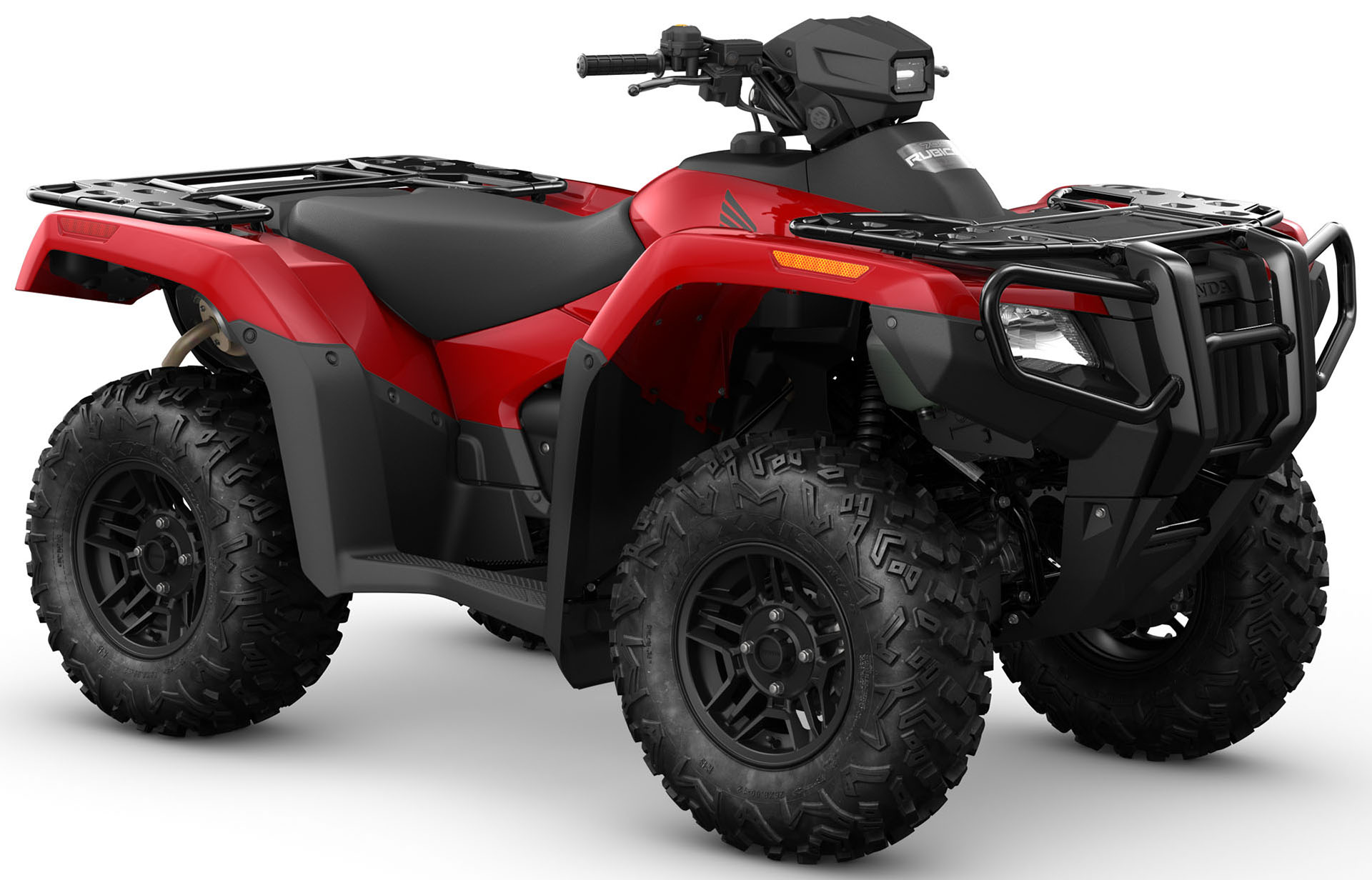
The 2027 Honda FourTrax Foreman Rubicon Automatic DCT EPS starts at $10,499 in ATVPedia’s record. It is a one-person ATV with a five-speed dual-clutch transmission rather than a belt CVT, selectable 2WD/4WD with a locking front differential, and a 1,322-lb tow rating. It is substantially lighter and suits a buyer who prioritizes a conventional Honda work ATV. It cannot legally replace the X2’s second seat or match its dump-box transformation.
The base 2027 Sportsman 600 begins at $7,999. It provides the same 44 hp and 1,350-lb tow rating in a much lighter one-person package. The $6,400 gap to the X2 is the clearest test: if the second seat, dump bed, Turf Mode, Ride Control, EPS, EBS/ADC, and larger winch are not all relevant, the simpler Sportsman is the better buy.
Ownership and transport
The X2 weighs 928 lb dry and 981 lb at the published curb figure. Add fuel beyond the curb assumptions, accessories, mud, and carried equipment when calculating trailer load. A nominal 1,000-lb trailer payload can become inadequate very quickly. Trailer tires, axle, ramp, tie-down points, tow-vehicle rating, and tongue weight all need margin.
The 49-inch width makes it easier to transport than a side-by-side, while the 92-inch length asks for more deck space than a short utility ATV. Measure between trailer rails and across the narrowest ramp opening. Do not assume a trailer that carried an older one-up ATV will accept the longer X2 with safe tie-down angles.
Polaris promotes extended service intervals that provide twice as much time between certain oil changes and routine maintenance compared with the earlier schedule it references. The exact interval depends on the manual and use conditions. Dust, water, towing, low-speed load, and severe service can require more attention. CVT intake and belt inspection, air filtration, fluids, brakes, suspension, tires, and winch rope remain routine ownership items.
The current model carries a one-year limited factory warranty. Written terms for the actual unit and sale date govern. For a machine with specialized conversion hardware and electronic controls, dealer familiarity is worth checking before purchase.
Who should buy it?
The strongest X2 buyer genuinely splits time between carrying a passenger and carrying material. A landowner might use the dump box for fencing and feed during the week, convert the rear for a spouse on the weekend, then select Turf Mode around finished property. A hunter may value the box, winch, payload, large tank, and the option to bring a partner. A small farm may use speed limiting for spraying and the passenger seat for moving between jobs.
It is a poor value when the rear stays in one position. A buyer who always carries a passenger can save money with the Touring 600. A solo rider who only needs racks can save much more with the base Sportsman 600. Anyone who frequently needs two people and a full bed at the same time should move to a UTV rather than force the X2 to perform two mutually exclusive jobs.
Verdict
The 2027 Polaris Sportsman X2 600 is not a new 600-class performance ATV. It is the proven X2 570 under a clearer family name, still powered by a 567cc, 44-hp single. Owners should treat the badge as catalog organization, not mechanical progress.
Taken on its actual merits, the X2 remains clever. Its rear conversion provides a legal second seat or a 400-lb dumping box on the same 49-inch-wide chassis. A 705-lb payload, 1,350-lb tow rating, Turf Mode, EBS, ADC, multi-select EPS, Ride Control, strong lighting, and a 3,500-lb winch make it far more than an ATV with a folding cushion.
The problem is price. At $14,399 before destination, it costs substantially more than the Touring 600 and nearly twice as much as the base Sportsman 600. The premium is justified only when one machine truly needs to change roles. For that buyer, the X2 is one of the most useful ATVs on the market. For everyone else, its versatility is expensive capacity left parked in the wrong position.