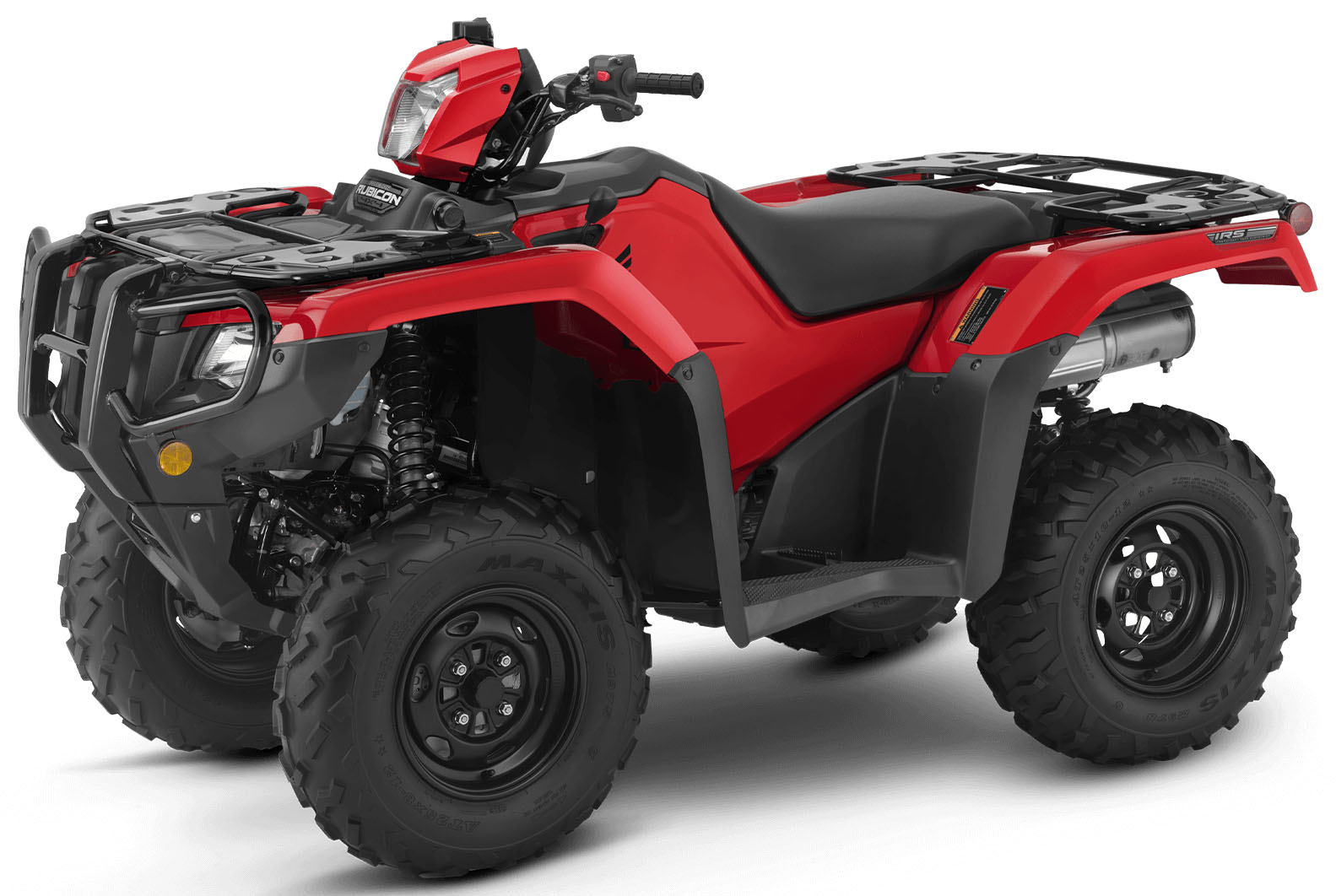
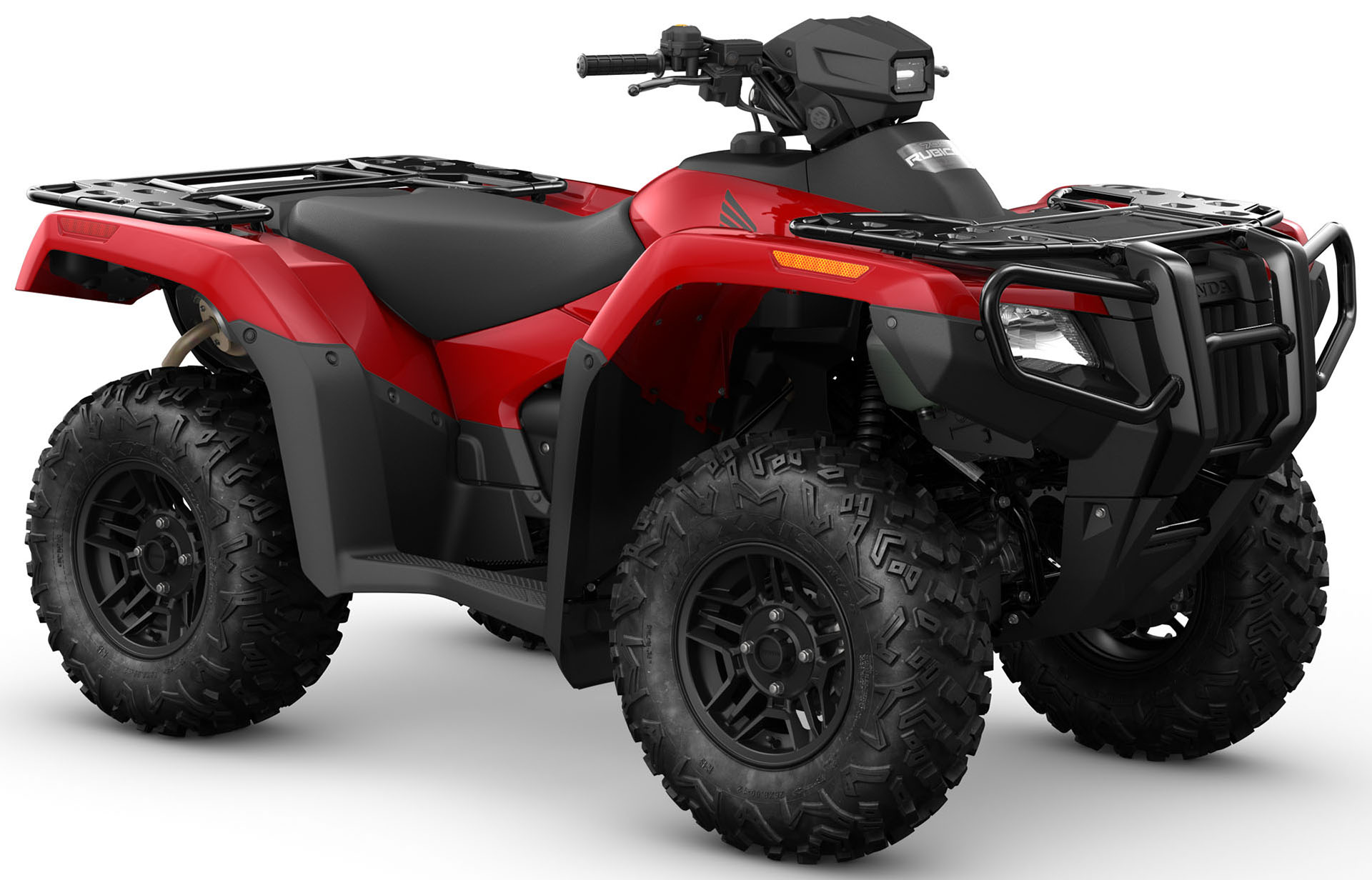
The 2027 Honda FourTrax Foreman Rubicon 4x4 Automatic DCT EPS is the higher-capacity one-rider utility ATV in Honda’s familiar 520-class lineup. Its $10,499 MSRP is only $1,350 above the 2027 Rancher DCT IRS EPS, but that money buys more than a displacement number: a 518cc engine, a low-range subtransmission, 1,322 lb of towing, 286 lb of rack capacity, and a stronger work-first brief. Add Honda’s $620 destination charge and the honest starting figure is $11,119 before tax, dealer setup, and accessories.
This is a model where the trim name matters. The Rubicon is not just a Foreman with a fancier seat. The automatic DCT EPS version combines independent rear suspension, power steering, a locking front differential, and the low-range DCT hardware. It is the right target for a buyer who regularly pulls, plows, rides broken ground, or simply wants a more relaxed automatic utility ATV. It is overkill for someone who needs a simple rack carrier twice a month.
Honda lists the Foreman Rubicon DCT EPS at $10,499 and the Rancher DCT IRS EPS at $9,149. Both have another $620 destination charge. The Rubicon is 39 lb heavier at 725 lb curb weight, but its 518cc engine, 1,322-lb tow rating, and 286-lb combined rack rating give it a different job description. The Rancher is the more compact, lower-cost answer; the Rubicon is the better fit when a trailer, plow, or loaded racks are a normal part of ownership.
Be realistic about the final price. Honda sells an extensive range of Pro-Connect cargo pieces and protection accessories, but they are not silently included. A winch, plow gear, added armor, storage, and dealer-installed equipment can alter the comparison quickly. Price the exact ATV you would actually bring home instead of comparing a bare MSRP to an equipped showroom unit.
Engine and DCT: geared, automatic, and genuinely useful in low range
The liquid-cooled 518cc longitudinal single uses PGM-FI through a 36mm throttle body and a five-speed automatic Dual-Clutch Transmission with reverse. Unlike a belt CVT, this is a geared DCT. More importantly on the Rubicon, Honda pairs it with a dual-range subtransmission. Low range is not just marketing language: it is the setting to use for slow technical ground, a loaded trailer, or a plow where controlled wheel speed and engine braking matter more than making time.
Honda does not publish a horsepower number for this engine. The 35-hp figure in the vehicle data is an ATVPedia estimate, not a factory claim. That distinction is worth keeping because buying a work ATV by an unverified output number is a good way to miss the parts that make it useful. The DCT’s low range, shaft drive, traction system, braking, and towing rating tell a more meaningful story here.
The single-lever reverse is another small but sensible piece of the package. Anyone backing up repeatedly while plowing, moving a trailer, or working around a gate will notice it. It is a detail that sounds insignificant in a spec table and feels worthwhile every time a routine task changes direction.
IRS and EPS are about keeping a long day civilized
The Rubicon has independent double-wishbone suspension front and rear, with 7.3 inches of front travel and 8.5 inches at the rear. It rides on 25-inch tires, has 9.7 inches of ground clearance, and remains a manageable 47.4 inches wide. That layout makes sense on rough property trails and uneven jobsites: the tires have more opportunity to stay in contact, and the rear end is less punishing than a solid-axle utility ATV.
EPS is speed- and torque-sensitive, reducing steering effort and kickback when the front tires encounter ruts, rocks, or a loaded implement. It is a useful fatigue reducer, not an excuse to overload the racks or rush a sidehill. The 725-lb curb weight and a high cargo load still demand careful turning, braking, and line choice.
The DCT IRS trim is also the one with four-wheel disc braking: dual 190mm discs at the front and a 170mm rear disc. Honda calls out controllable terrain braking on its DCT models. That is a welcome part of the package on descents, but it should supplement—not replace—proper speed and braking discipline when towing or descending with cargo.
Capacity and traction: where the Rubicon earns its name
Honda rates the Rubicon to tow 1,322 lb. The front steel rack is rated for 99 lb, the rear for 187 lb, totaling 286 lb. Those numbers represent a meaningful step over the Rancher’s 848-lb towing rating and 199-lb combined racks. They also give a buyer a concrete reason to choose the bigger ATV rather than assuming that a few extra cubic centimeters will transform every trail ride.
The drivetrain uses selectable 2WD/4WD, direct front and rear driveshafts, and a torque-sensitive locking front differential. In difficult ground, use the traction hardware early and deliberately instead of relying on a burst of throttle. It is there to help the ATV proceed smoothly through a slick approach or a rutted climb, not to turn a poor line into a good one.
Fuel capacity is 3.9 gallons, the warranty is a transferable one-year limited warranty, and the available colors are Hero Red and TrueTimber Atera Camo. The loaded-seat comfort, practical rack system, and generous alternator output support long work days well, but this remains a one-rider ATV. If carrying another person is a routine need, a side-by-side is usually the more honest solution.
2027 Honda FourTrax Foreman Rubicon DCT EPS specifications
| Specification |
2027 FourTrax Foreman Rubicon 4x4 Automatic DCT EPS |
| Engine |
518cc liquid-cooled, longitudinal OHV single; PGM-FI |
| Factory-rated output |
Not published by Honda |
| Transmission |
Five-speed automatic DCT with reverse; dual-range subtransmission |
| Drive system |
Selectable 2WD/4WD; torque-sensitive locking front differential |
| Seating |
1 |
| Curb weight |
725 lb, including standard equipment, fluids, and a full tank |
| Width / length / height |
47.4 / 86.0 / 48.7 in |
| Wheelbase / clearance |
50.9 / 9.7 in |
| Fuel capacity |
3.9 gal |
| Towing |
1,322 lb |
| Rack capacity |
99 lb front / 187 lb rear / 286 lb combined |
| Suspension travel |
7.3 in front / 8.5 in rear |
| Brakes |
Dual 190mm front discs / 170mm rear disc |
| Base MSRP / destination |
$10,499 / $620 |
How it compares
The 2027 Honda FourTrax Rancher 4x4 Automatic DCT IRS EPS offers the same basic DCT/IRS/EPS idea for $1,350 less before destination. It is lighter and is likely the smarter choice for occasional chores and tight property trails. The Rubicon justifies its price when its 518cc engine, dual-range transmission, 1,322-lb towing, and larger racks would get used. Compare them →
The 2027 Yamaha Grizzly EPS is very close in MSRP before destination and brings a 686cc single, 26-inch tires, and more ground clearance. The Honda’s DCT low range and published 1,322-lb tow rating will appeal to work-focused buyers, while the Yamaha’s lighter 701-lb wet weight and drivetrain approach may suit others. Compare them →
The 2027 Can-Am Outlander 700 costs much less and publishes 50 hp from its 650cc Rotax single, with a very high 1,830-lb braked towing rating. But the base Outlander does not include EPS, and its equipment position is deliberately simpler. Compare the whole job—steering assist, transmission behavior, rack capacity, dealer support, and actual towing needs—rather than buying by one headline number. Compare them →
The 2025 Honda FourTrax Foreman Rubicon 520 is the relevant used or leftover option. It can represent value, but confirm whether the exact ATV has DCT, EPS, IRS, and the equipment you expect. Honda sold several Rubicon configurations, and a name on a dealer listing is not a full trim sheet. Compare model years →
Verdict
The 2027 Honda FourTrax Foreman Rubicon 4x4 Automatic DCT EPS earns its price when utility work is real, not hypothetical. Its 518cc engine, automatic dual-range DCT, EPS, IRS, locking front differential, 1,322-lb tow rating, and 286-lb rack capacity make it a thoroughly capable one-rider property and trail ATV.
It is not the cheapest way into a Honda 4x4, and Honda does not provide the horsepower figure some shoppers expect. That is fine. This Rubicon is compelling because its equipment makes difficult, slow, repetitive work easier and makes rough trails less tiring. For buyers who will use that hardware, it is the sensible premium trim; for everyone else, the Rancher DCT IRS EPS is likely the more rational spend.