The 2025 Honda Pioneer 700-4 packages four-person flexibility into a compact utility UTV. Its QuickFlip system turns the rear cargo area into two passenger seats, then folds them away when the bed is needed. It also uses an automotive-style three-speed automatic instead of a belt-driven CVT. At $13,199, it is cheaper than many four-seat machines. The compromise is a modest 36 hp engine. Our guide to reading ATV and UTV specs explains how the figures interact.
Power comes from a liquid-cooled 675cc single-cylinder engine making about 36 hp. With one or two occupants, it is adequate for chores, hunting access and moderate trail travel. The engine is tuned for utility use rather than speed.
Four adults add a meaningful load before cargo or a trailer is attached. On grades, acceleration will feel more limited than in twin-cylinder recreation models. Buyers expecting regular four-person rides at a brisk pace should look above the 700 class.
QuickFlip seating: the central advantage
Honda’s QuickFlip system is the reason to choose the 700-4 over the standard Pioneer 700. Two seats fold up from the rear cargo area when passengers need them, then fold down again to restore the bed. The conversion does not require a separate bench or parts left in the garage.
Raising the rear seats uses cargo space, so the machine cannot offer its normal bed area and maximum seating together. The rear positions are best evaluated in person for passenger fit. Buyers carrying four people daily may prefer a dedicated multi-row machine. For alternating between people and cargo, QuickFlip is clever and efficient.
Three-speed automatic: fixed gears instead of a belt
The 700-4 uses an automatic three-speed transmission with a torque converter. Unlike the CVTs fitted to most competitors, it works through fixed gears without a drive belt. That distinction appeals to owners who want direct engagement and no CVT belt to inspect or replace.
Three ratios mean shifts remain noticeable, and the transmission does not blend through a continuous range like a CVT. Its strongest case is utility use where direct engine control matters more than seamless acceleration.
Dimensions, clearance and towing
At 59.7 inches wide with a 76.8-inch wheelbase, the Pioneer is compact for a four-seat UTV and far shorter than a conventional crew cab. That helps around trees and property structures.
Ground clearance is 10.5 inches. It handles maintained trails and ordinary ruts, but deeper obstacles require careful line choice. Selectable 2WD and 4WD allow the driver to keep the driveline simple on firm surfaces and add front-wheel traction when conditions deteriorate.
The 1,500 lb tow rating covers a moderate trailer or property load. Passenger weight, cargo and tongue load draw from the machine’s overall capacity, so four occupants and maximum towing should not be treated as independent abilities. The dataset does not list bed capacity.
Who it is for
The Pioneer 700-4 fits families and property owners who usually need a cargo bed but sometimes carry three or four people. It offers seating flexibility without the length and cost of a full crew UTV. A geared automatic and Honda’s ownership reputation add appeal.
It is less suitable for four adults traveling together on every trip. The rear seats share space with the bed, and 36 hp is modest under a full passenger load. Drivers focused on acceleration, rough-terrain clearance or frequent heavy towing should move to a stronger platform. Our ATV versus UTV guide covers the format choice for buyers still deciding.
How it compares
The Yamaha Wolverine X4 850 costs $17,999. It makes 70 hp, tows 2,000 lb and has 11.4 inches of clearance. It is only 0.1 inch wider, but weighs 308 lb more and costs $4,800 extra. The Yamaha offers much stronger performance, while the Honda is the affordable utility choice. Compare them directly.
The Kawasaki Teryx4 S LE costs $18,199 and makes about 50 hp. It weighs 1,600 lb, spans 61.6 inches and tows 1,300 lb. The Kawasaki is recreation-focused, while the Honda saves $5,000, weighs 242 lb less and tows another 200 lb. See the Honda and Kawasaki comparison.
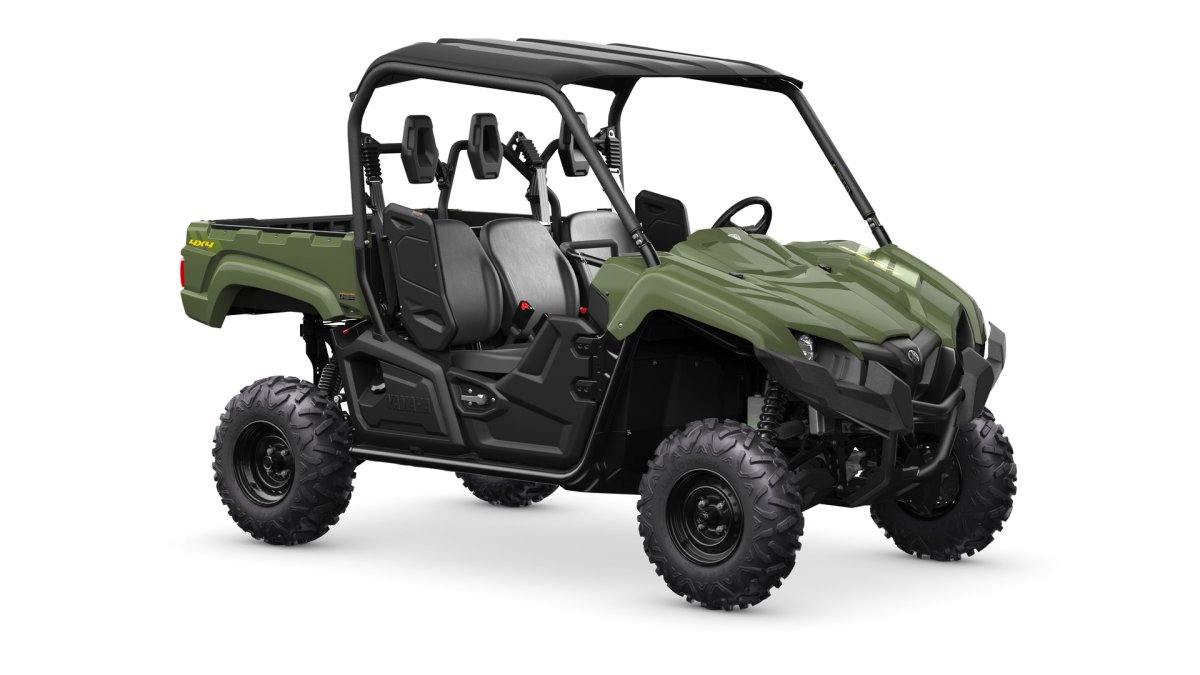
The Yamaha Viking VI EPS costs $17,199 and seats six. Its 47 hp single, 600 lb bed and 1,500 lb tow rating suit larger groups. The Honda is $4,000 cheaper, 420 lb lighter and much shorter. Compare the Honda and Yamaha.
Where it sits in the Pioneer lineup
The standard Pioneer 700 costs $12,399. It shares the same power, drivetrain, dimensions and work ratings, but seats three in one row and weighs 68 lb less. The 700-4’s $800 premium buys the rear QuickFlip system and one additional seat.
The Pioneer 1000-5 Deluxe applies the idea to a stronger platform. It makes 72 hp, tows 2,500 lb and uses a six-speed DCT, but costs $20,300 and weighs 392 lb more. The 700-4 is the budget choice.
Price and value
At $13,199, the Pioneer 700-4 is one of the more affordable four-seat UTVs in the dataset. It undercuts the Wolverine X4 850 by $4,800 and the Teryx4 S LE by $5,000. It also remains compact and light compared with both.
The lower price buys less power and a cargo-versus-passenger compromise. Value is strongest when the rear seats are needed occasionally. Full-time adult seating or stronger trail pace calls for a pricier twin-cylinder rival.
Pros and cons
The good: flexible two-to-four QuickFlip seating, a beltless three-speed automatic, compact 59.7-inch width, a 1,500 lb tow rating, selectable 2WD and 4WD and an accessible price for a four-seat UTV.
The catch: only 36 hp, rear seats that consume cargo space, modest 10.5-inch clearance and less reserve under a full passenger load than stronger four-seat competitors.
The verdict
The 2025 Honda Pioneer 700-4 is a practical solution for buyers whose passenger needs change from day to day. It carries four when required, restores its bed when they are not, and avoids the cost and length of a traditional crew machine.
That flexibility comes with limits. The engine is modest and the rear seats compete with cargo space. If those compromises match how the machine will actually be used, the 700-4 offers unusually sensible four-seat value. If four adults ride every day, a dedicated and more powerful platform is worth the extra money.
Want to compare it with another four-seat UTV? Add it to the comparison tool, or browse the full database by seating, power and price.