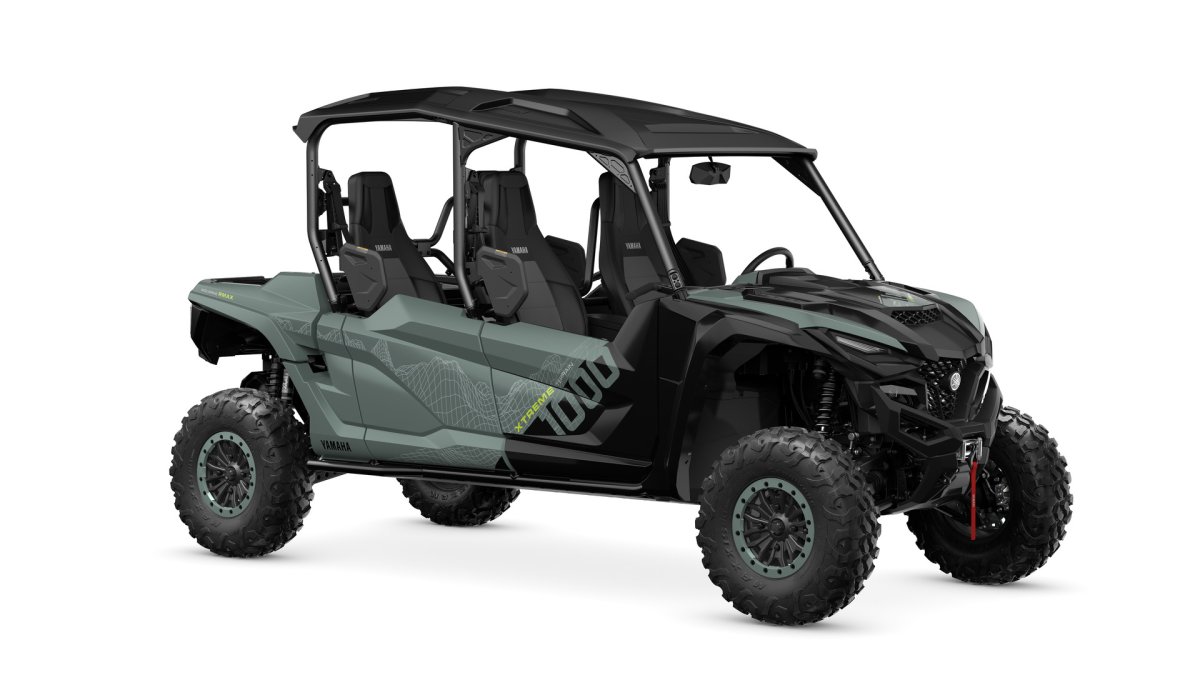
The 2026 Yamaha Wolverine RMAX4 1000 XT-R is the long-wheelbase, four-seat RMAX—not the Compact model with a similar name. That distinction matters more than the trim badge. The full-size XT-R measures 150.8 inches long, rides on a 118.1-inch wheelbase, provides four fixed passenger positions behind full-length doors, and carries 600 pounds in a separate dumping bed. It is built for four adults who want to travel together without turning the cargo area into the second row.
Yamaha asks $25,999 plus a $1,500 destination charge, putting the published starting total at $27,499 before tax, registration, dealer preparation, and accessories. Standard XT-R equipment is unusually complete: 108 horsepower, 30-inch Maxxis Carnivore tires, beadlock wheels, a WARN winch, suntop, seven-inch Adventure Pro display, MTX audio, selectable steering assist, and FOX QS3 shocks. This is expensive, but it is not a base machine wearing graphics.
The model-year story also needs correcting. The full-size platform debuted for 2025, so the 2026 XT-R is a continuation rather than an all-new design. The meaningful 2026 change is commercial: MSRP falls by $2,000 from the 2025 XT-R’s $27,999, while destination rises by $200. Yamaha’s current specification pages list the same core dimensions and chassis hardware for both years.
Price and XT-R equipment
At $27,499 including destination, the RMAX4 XT-R sits above several capable four-seat recreation UTVs. Its value depends on whether the factory equipment is equipment you would have added anyway. A roof, winch, navigation-capable display, audio system, beadlock wheels, and premium tires can make a lower-priced machine considerably less cheap once a buyer builds it to the same brief.
The XT-R package includes color-matched 14-inch aluminum beadlock wheels, 30-inch Maxxis Carnivore radials, a WARN VRX 45 winch, painted bodywork, trim-specific graphics, premium cut-and-sew seats, and a factory suntop. LED headlights, taillight, brake light, marker lights, and reverse lighting are also standard. The hardware is aimed at owners who expect rocks, rough two-track, and long days rather than occasional campground loops.
The seven-inch Adventure Pro system combines Bluetooth and USB connectivity with compatible navigation, GPS mapping, phone and audio controls, customizable screens, and a drive-mode display. Yamaha pairs it with an MTX audio system on the XT-R. That integration is cleaner than hanging a tablet and aftermarket speaker pods around the cabin, though owners should still judge screen visibility, maps, and phone behavior in person instead of assuming every connected feature works identically to a road vehicle.
The full-size and Compact split
Yamaha now sells two distinct RMAX4 platforms. The full-size machine reviewed here has a 118.1-inch wheelbase and measures 150.8 inches nose to tail. The 2026 RMAX4 Compact in ATVPedia has a 90.2-inch wheelbase and is 128.1 inches long. The difference is 27.9 inches between the axles and 22.7 inches overall—large enough to affect breakover behavior, trailer fit, garage space, and every tight switchback.
The full-size layout gives rear passengers full-length doors and materially more room. Yamaha says the platform provides more rear space than the Compact, while the separate cargo bed remains available with every seat occupied. The bed is the same larger style used on the RMAX2 and is rated for 600 pounds. That is a different kind of versatility from the Compact’s sliding and folding rear seats, which trade passenger space for cargo space inside a shorter footprint.
Width needs careful reading. Yamaha advertises a 64-inch stance width, but the specification sheet lists 66.7 inches as overall width. ATVPedia uses the overall figure because it is the safer number for a trailer, gate, garage opening, or width rule. Neither version belongs on a 50-inch restricted trail.
The Compact remains the logical choice when maneuverability and transport size lead the decision. The full-size RMAX4 earns its extra length when four adults and their gear travel regularly, not when the rear seats spend most weekends empty.
Engine, throttle mapping, and Ultramatic CVT
The 999cc liquid-cooled parallel twin uses dual overhead cams, eight valves, an 11.2:1 compression ratio, and two 48mm throttle bodies. Yamaha publishes a 108-hp rating, so this is a factory figure rather than an ATVPedia estimate. The number puts the RMAX4 in strong recreation territory without moving into turbocharged pure-sport output.
Yamaha Chip Controlled Throttle supports three D-Mode calibrations. Sport gives the sharpest response for open terrain, Trail smooths the delivery for general riding, and Crawl meters power for slow technical work. These modes do not change the peak horsepower. They change how pedal movement becomes engine response and how engine braking is coordinated, which is more useful than an extra dashboard label suggests when terrain alternates between rock steps and fast connecting roads.
The Ultramatic CVT offers low, high, neutral, and reverse ranges with all-wheel engine braking. A centrifugal wet clutch maintains belt tension instead of asking the belt itself to slip every time the vehicle pulls away. Yamaha backs the original belt with a separate ten-year limited warranty for eligible pleasure-use vehicles; the vehicle itself has a six-month limited factory warranty. Those are different coverages with different conditions, not a ten-year warranty on the entire side-by-side.
On-Command drive and steering
The four-position On-Command system provides Turf Mode, 2WD, 4WD, and locked 4WD. Turf Mode opens the rear differential to reduce scuffing and tighten low-speed turns. Two-wheel drive suits firm surfaces, 4WD adds front traction, and full differential lock is available when wheel slip or cross-axle terrain demands it.
Three-mode electric power steering lets the driver choose assistance to suit preference and conditions. A separate differential-lock strategy adds maximum steering assist when the front is locked. That matters because a locked front differential naturally resists turning, especially when the Carnivore tires are loaded against rock or deep soil.
The system gives the driver meaningful choices, but it still rewards restraint. Locking every differential before the trail becomes difficult adds steering effort and driveline bind without creating ground clearance. Use the least aggressive setting that keeps the machine moving.
Suspension, tires, and trail behavior
Independent double-wishbone suspension uses anti-roll bars at both ends. FOX 2.0 QS3 piggyback shocks provide 14.2 inches of front travel and 16.9 at the rear, with three tool-free damping positions. The adjustment is simple enough to use during a trip, which is preferable to offering many clicks that most owners never revisit after delivery.
The 30x10R-14 Maxxis Carnivore tires are mounted at all four corners. A square tire size simplifies carrying a compatible spare, although wheel offsets and rotation instructions still need to be checked. Beadlock wheels help retain the tire bead at reduced pressures, but they also introduce fasteners that deserve the torque checks specified in the owner’s information.
Ground clearance is 13.8 inches. The long wheelbase improves high-speed composure and gives occupants space, but it increases the distance between the axles that must pass over a crest. Good clearance does not erase breakover geometry. Drivers moving from a Compact should expect to choose lines with the center of the machine in mind.
Dual hydraulic discs handle braking front and rear. Yamaha lists wet weight at 2,381 pounds, including standard equipment, fluids, and a full fuel tank. That makes the number useful for real trailer planning, although riders, cargo, accessories, and spare fuel still have to be added.
Passenger room and storage
The full-size cabin has four individual seating positions, six-position seat belts, full-length rear doors, adjustable passenger handholds, and a tilt steering wheel with 17 degrees of movement. Thick knee pads and smooth front seatbacks reduce the hard contact points rear passengers find on rough ground. A rear center console adds a light, USB connection with cable routing, and a drain.
The dedicated 600-pound dump bed is the strongest practical reason to buy the long model. Four people can remain seated while coolers, recovery gear, tools, or camping supplies stay behind the cabin. Interior consoles handle smaller items that should not roll around the cargo box.
Yamaha also fits a two-inch receiver and publishes a 2,000-pound towing maximum. The rating does not mean a loaded bed, four occupants, accessories, and a maximum trailer can all be combined without further calculation. Tongue weight, total payload, terrain, speed, and braking room remain part of the safe-load decision.
2026 Yamaha Wolverine RMAX4 1000 XT-R specifications
| Specification |
2026 full-size RMAX4 1000 XT-R |
| Engine |
999cc liquid-cooled DOHC eight-valve parallel twin |
| Output |
108 hp, factory rated |
| Fuel system |
Yamaha fuel injection; dual 48mm throttle bodies |
| Transmission |
Ultramatic CVT; L/H/N/R; all-wheel engine braking |
| Drive |
Turf / 2WD / 4WD / full diff-lock 4WD |
| Seating |
4 individual positions |
| Wet weight |
2,381 lb |
| Overall size |
150.8 x 66.7 x 82.7 in |
| Stance width |
64 in |
| Wheelbase |
118.1 in |
| Ground clearance |
13.8 in |
| Fuel capacity |
9.2 gal |
| Suspension travel |
14.2 in front / 16.9 in rear |
| Tires |
30x10R-14 Maxxis Carnivore front and rear |
| Cargo capacity |
600 lb dumping bed |
| Towing capacity |
2,000 lb |
| Warranty |
6 months vehicle / separate 10-year eligible V-belt warranty |
| MSRP / destination |
$25,999 / $1,500 |
How the full-size RMAX4 XT-R compares
The 2026 Wolverine RMAX4 1000 Compact R-Spec has the same 108-hp engine and four-seat count for $3,000 less. It saves 267 pounds of listed wet weight, 22.7 inches of overall length, and 27.9 inches of wheelbase. The full-size XT-R answers with more rear room, a dedicated 600-pound bed, 3.6 inches more rear travel, larger tires, beadlocks, winch, audio, Adventure Pro display, and a higher equipment level. Compare the two RMAX4 layouts →
The audited 2025 Wolverine RMAX4 1000 represents the first-year full-size XT-R. It has the same 118.1-inch wheelbase, 66.7-inch overall width, engine, tires, suspension travel, towing rating, and bed capacity. The 2026 model is therefore a price-and-model-year decision rather than a generational upgrade: MSRP is $2,000 lower, destination is $200 higher, and Yamaha lists 66 pounds more wet weight. Compare 2025 and 2026 →
The 2027 Kawasaki Teryx KRX4 1000 TR is the more trail-specialized rival. It is narrower at 63.8 inches, has 31-inch tires, and offers 17 inches of front and 18.6 inches of rear travel. The Yamaha has a shorter wheelbase, a larger 600-pound bed, and a 2,000-pound tow rating, plus factory audio and navigation-oriented hardware. The published weights use different methods—Kawasaki dry and Yamaha wet—so the raw gap should not be treated as an exact curb-weight comparison. Compare Yamaha and Kawasaki →
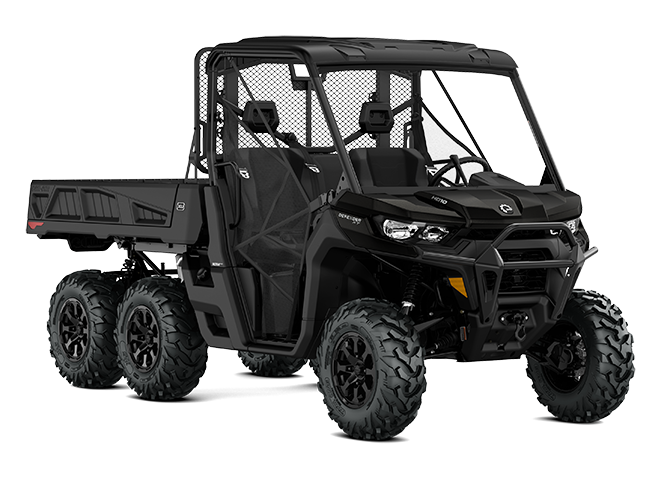
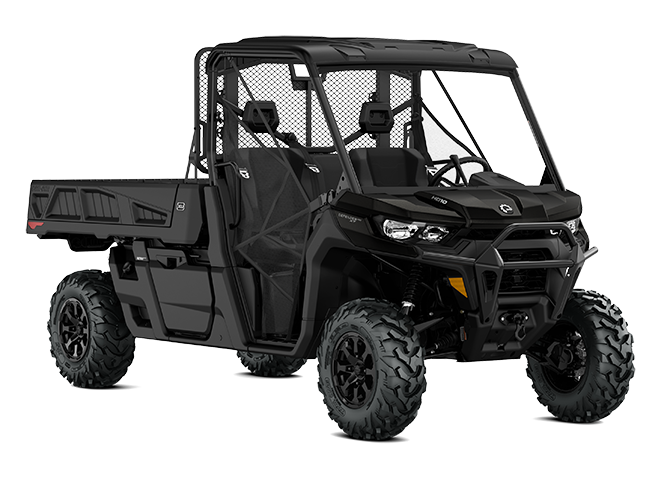
The 2025 Can-Am Commander MAX XT starts $4,500 lower in the database, makes 100 hp, and uses a 130-inch wheelbase. It is a strong value play for four-seat recreation and utility. The RMAX4 brings eight more horsepower, more towing capacity, longer-travel suspension, larger tires, and a richer factory electronics package. Compare RMAX4 XT-R and Commander MAX XT →
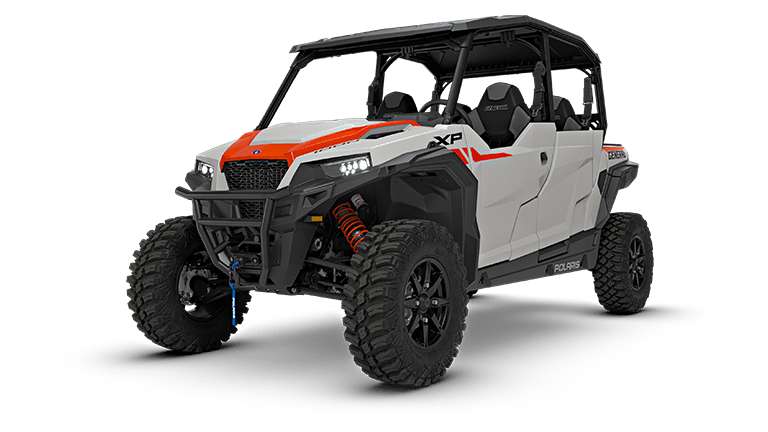
The 2025 Polaris General XP 1000 is close in purpose and price. Its database figures show 100 hp, four seats, a 117-inch wheelbase, 13.5 inches of clearance, and 1,500 pounds of towing. The Yamaha adds power, towing capacity, a longer rear-travel figure, and the XT-R package’s integrated display, audio, winch, and beadlocks. Compare Yamaha and Polaris →
Verdict
The 2026 Yamaha Wolverine RMAX4 1000 XT-R makes sense when four adults, real cargo, and difficult trails belong in the same trip. Its 108-hp twin is strong without chasing a turbo headline, the suspension has useful travel and simple adjustment, and the full-size chassis gives rear occupants space the Compact cannot create. A 600-pound bed and 2,000-pound tow rating keep it from becoming a one-purpose trail toy.
The costs are equally real. It is long, 66.7 inches wide overall, and 2,381 pounds wet before people or gear. Buyers who rarely fill the rear seats are carrying a great deal of unused vehicle. Those who ride tight wooded routes should measure their trailer and access points before being seduced by the advertised 64-inch stance.
For the right owner, the XT-R package is coherent rather than decorative. The winch, roof, beadlocks, Carnivore tires, Adventure Pro display, audio, and premium cabin are all things an adventure-focused family can use. For everyone else, the shorter RMAX4 Compact or a less lavish four-seater will be easier to justify. The full-size XT-R is best understood as a well-equipped four-person expedition machine with a working bed—not simply the biggest Wolverine on the page.