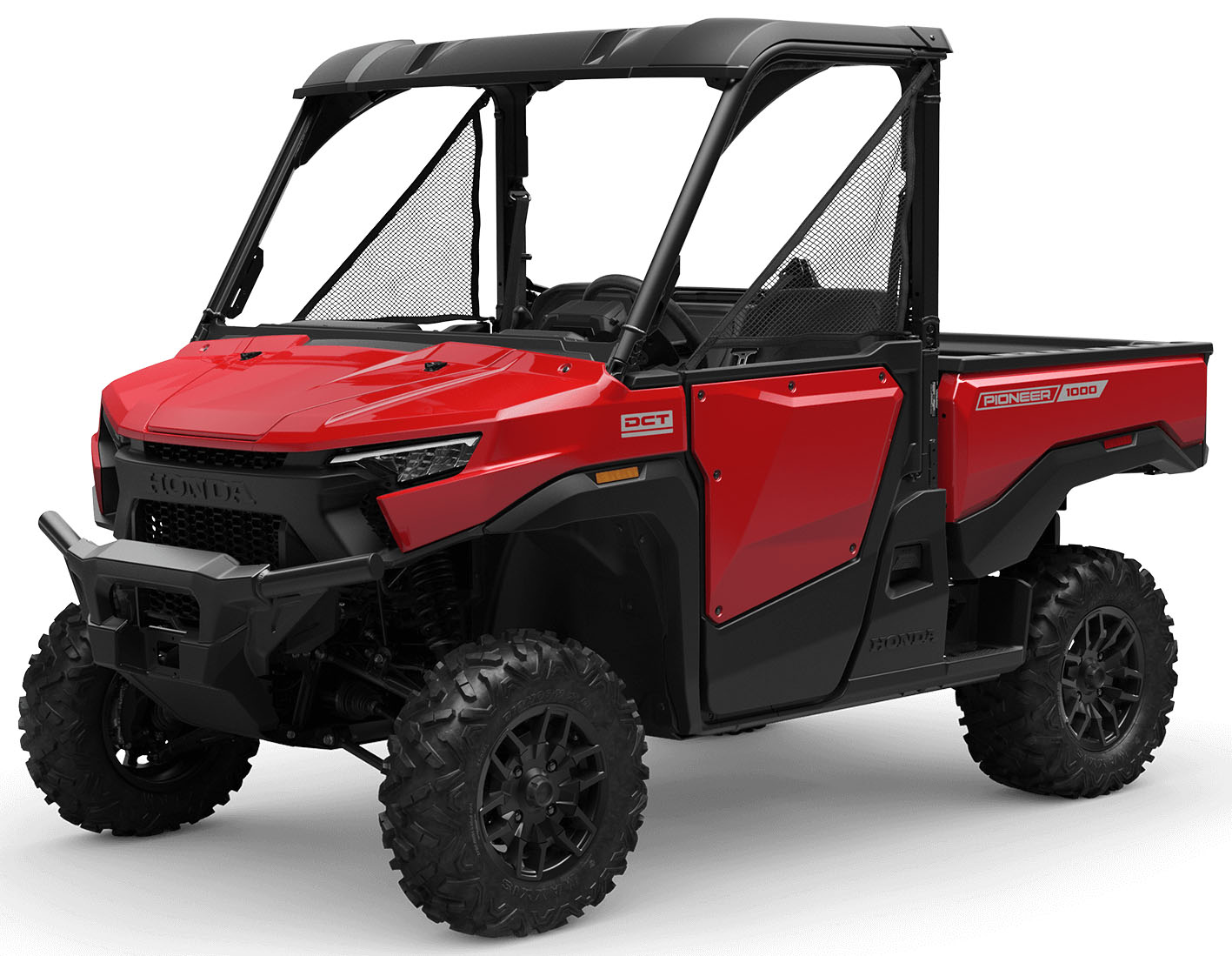
The 2025 Honda Talon 1000X is the trail-focused alternative to the wide Talon 1000R. It places the same 104 hp engine and six-speed dual-clutch transmission in a 64-inch chassis with an 87.6-inch wheelbase. That fits common full-size trail systems while preserving the geared experience that separates every Talon from CVT rivals. At $21,199, it is competitively priced, but the 7.3-gallon tank and lower power than close rivals are drawbacks. Our guide to reading ATV and UTV specs explains the trade-offs.
The liquid-cooled 999cc parallel-twin makes about 104 hp. That is substantial naturally aspirated power for recreational riding, though it trails the 114 hp Polaris RZR XP 1000 and 112 hp Yamaha YXZ1000R SS.
Honda’s engine works through fixed transmission ratios rather than a CVT. Throttle response, gear choice and vehicle speed feel directly connected. Buyers chasing the strongest acceleration will see better numbers elsewhere, but the Talon offers a distinct mechanical character without turbocharging.
Six-speed DCT and paddle control
The six-speed dual-clutch transmission is the Talon’s defining feature. It can shift automatically or respond to paddle inputs, giving the driver a choice between simple operation and direct gear control. It also removes the drive belt found in most sport UTVs.
The design provides defined shifts and useful engine braking. At low speeds, shifts remain noticeable, while a CVT can change ratios without discrete steps. Drivers wanting seamless point-and-go response may prefer a belt machine. Those enjoying gear control without a clutch pedal have reason to favor Honda.
A 64-inch sport-trail chassis
The 64-inch width matches the RZR XP 1000 and YXZ1000R SS, while measuring 4.4 inches narrower than the Talon 1000R. Its 87.6-inch wheelbase creates a compact package for winding routes.
Width still determines access. A 64-inch vehicle cannot enter 60-inch or 50-inch trail systems. Owners need to confirm local rules rather than assuming every public route accepts a full-size sport machine.
Ground clearance is 13.1 inches. That is useful for ruts and moderate obstacles, though the RZR offers 13.5 inches and the Yamaha has 13.2. Honda’s i-4WD is listed as a feature, giving the four-wheel-drive system electronic traction management without requiring the driver to manage a conventional front differential lock.
Weight, fuel and practical limits
At 1,508 lb, the Talon is the lightest of the three direct 64-inch machines here. It saves 35 lb against the RZR XP 1000 and 4 lb against the YXZ1000R SS. The difference is small, but the Honda does not carry unnecessary mass.
Fuel capacity is less competitive. The 7.3-gallon tank gives up 2.2 gallons to the RZR and 1.7 gallons to the Yamaha. Actual range varies with terrain and pace, but remote trips require more planning.
The Talon seats two and has no tow rating in the dataset. It is a dedicated sport UTV, not a crossover for chores or trailer work. Buyers wanting cargo capacity and broader property use should consider a recreation crossover instead.
Who it is for
The Talon 1000X suits two-person trail riders who want a 64-inch chassis and prefer a geared automatic over a CVT. It rewards drivers who use paddle control, while automatic operation keeps the machine approachable when the route demands more attention.
It is not suitable for narrow trail networks, four-person groups or utility work. Riders focused only on horsepower may prefer the Polaris, while those wanting a more involved sequential gearbox should consider the Yamaha. If the machine must also work around a property, our ATV versus UTV guide helps frame the broader decision.
How it compares
The Polaris RZR XP 1000 costs $21,299, only $100 more. It makes 114 hp, has 13.5 inches of clearance and carries 9.5 gallons of fuel. The RZR is 35 lb heavier and uses a CVT. On specifications, Polaris offers more power, clearance and fuel capacity for almost identical money. The Honda’s answer is its DCT and shorter wheelbase. Compare them directly.
The Yamaha YXZ1000R SS costs $22,299. Its 998cc triple makes 112 hp and uses a five-speed paddle-shift sequential transmission. The Yamaha weighs only 4 lb more and has 0.1 inch more clearance, plus a 9-gallon tank. It asks the driver for more involvement, while the Honda can shift fully automatically and saves $1,100. See the Honda and Yamaha comparison.
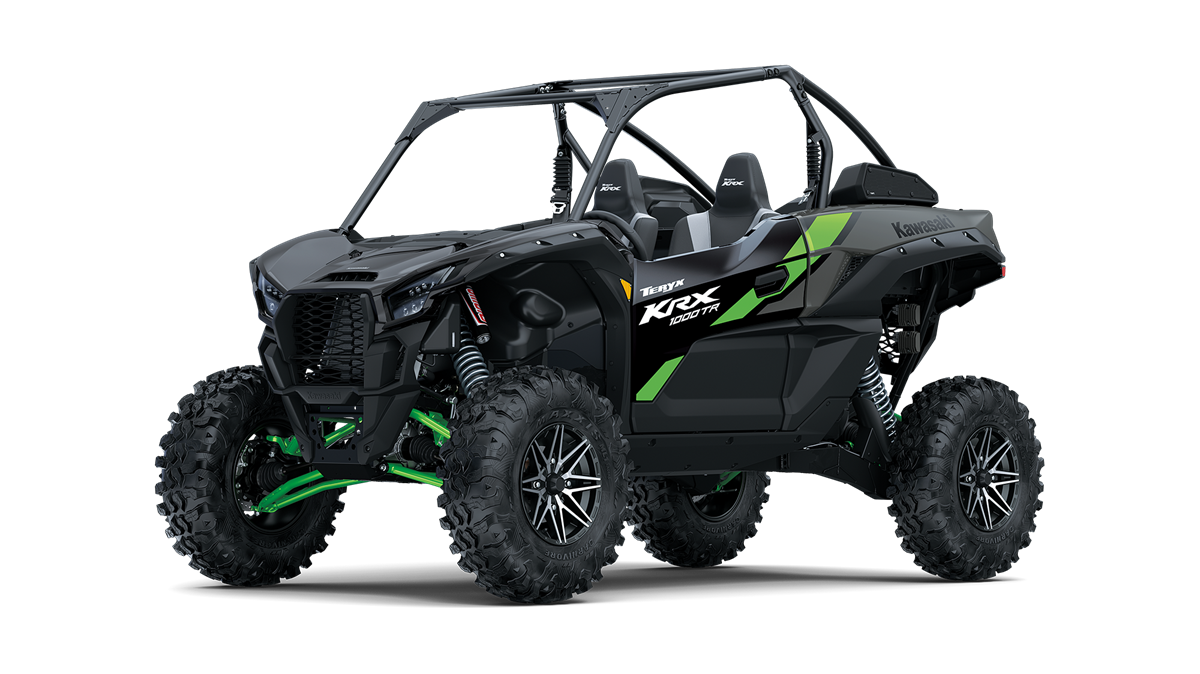
The Can-Am Maverick Sport 1000R costs $18,999. It makes 100 hp, weighs 1,450 lb and narrows to 60 inches. The Can-Am saves $2,200 and 58 lb while fitting more restricted routes, but has one inch less clearance and uses a CVT. Compare the Honda and Can-Am.
Where it sits in the Talon lineup
The Talon 1000R costs $22,699 and uses the same engine, power and transmission. It grows to 68.4 inches wide, stretches the wheelbase to 92.7 inches and raises clearance to 14.5 inches. Choose the R for open terrain and the X for tighter full-size trails.
The Talon 1000X-4 adds a second row for $25,999. It keeps the 64-inch width and 104 hp output, but weighs 1,740 lb and uses a 116.9-inch wheelbase. The two-seat X is the lighter and more compact choice.
Price and value
At $21,199, the Talon 1000X costs almost exactly the same as the RZR XP 1000 and $1,100 less than the YXZ1000R SS. Its price is reasonable within the class, but it cannot win the specification comparison on power, clearance or fuel capacity.
Value depends heavily on transmission preference. Avoiding a CVT while retaining automatic operation makes the Honda unusual. If powertrain layout does not matter, the RZR provides more capability for another $100.
Pros and cons
The good: a beltless six-speed DCT with automatic and paddle control, a trail-friendly 64-inch width, compact 87.6-inch wheelbase, 13.1 inches of clearance, i-4WD and the lowest weight among its closest 64-inch rivals.
The catch: less power and clearance than the RZR XP 1000, a small 7.3-gallon tank, no tow rating and no access to trails restricted below 64 inches.
The verdict
The 2025 Honda Talon 1000X is the balanced Talon. It keeps the engine and geared transmission that define the family, then packages them for common 64-inch sport trails at a lower price than the wide 1000R.
It does not dominate the spec sheet. The RZR offers more for nearly the same money, while the Yamaha brings its own compelling geared experience. The Honda earns its place by combining automatic convenience with paddle-controlled real gears. For the right driver, that distinction matters more than another 10 hp.
Want to compare it with another sport UTV? Add it to the comparison tool, or browse the full database by power, width and price.