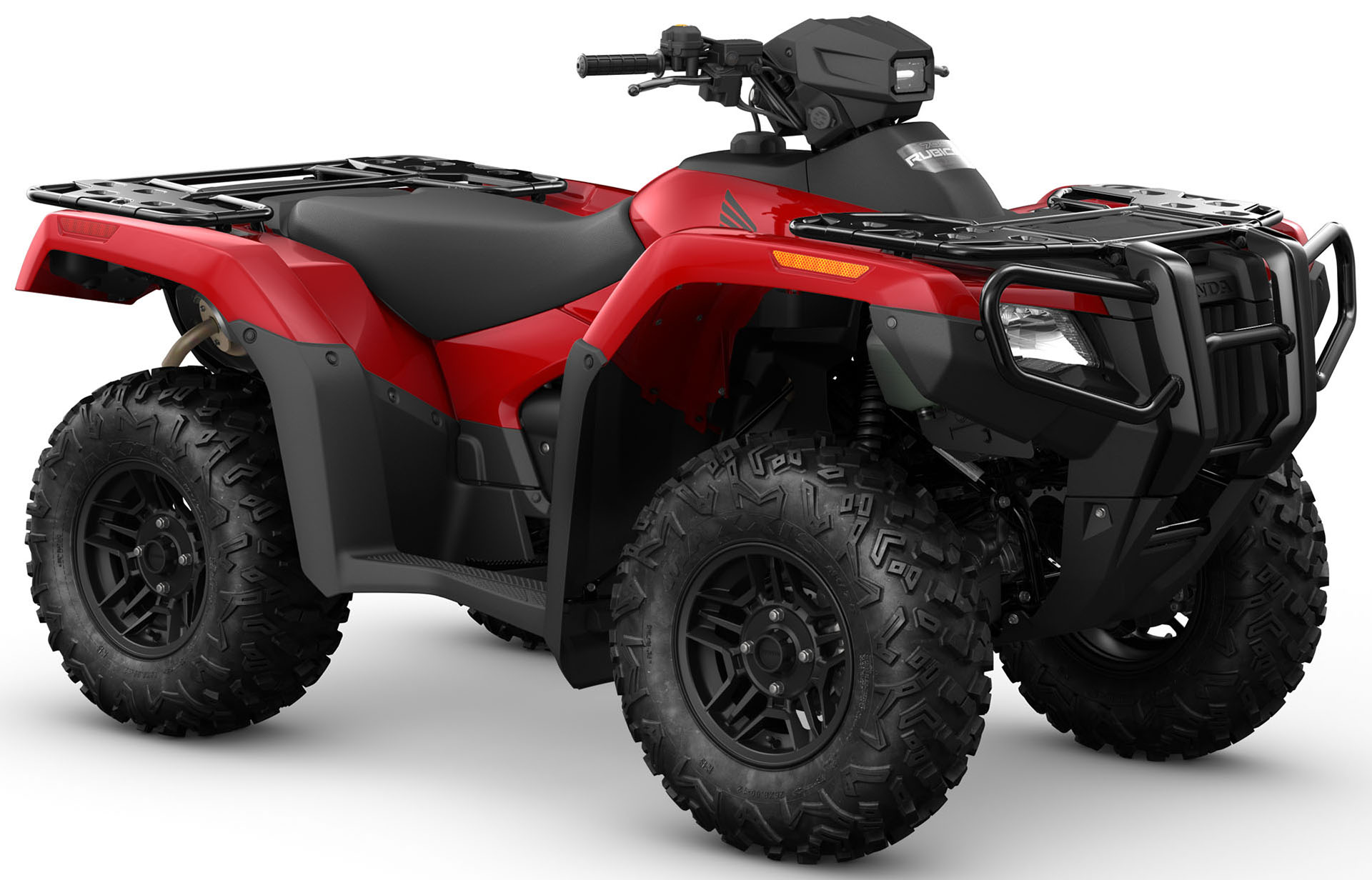
The Honda FourTrax Rancher 420 is the machine a lot of people picture when they say “a good, reliable ATV.” It has been a best-seller for years by being approachable, endlessly configurable and almost impossible to wear out. It is not the most powerful quad in its class, and it sits lower than the burly utility machines, but for a first real ATV or a dependable chore partner, few things make more sense. Here is what the Rancher does well, where it holds back, and who should buy it. (New to spec sheets? Our guide on how to read ATV & UTV specs covers the numbers, and if this is your first quad, start with our best beginner ATVs guide.)
The Rancher runs a 420cc single making about 27 horsepower. That is squarely mid-size, below the big-bore Sportsman 570 (44 hp) or Kodiak 700 (47 hp), and it is meant to be. The Rancher’s power is friendly and predictable, strong enough to handle property chores, light towing and trail riding without ever feeling intimidating. For a new or returning rider, that approachability is a feature rather than a shortfall. If you want big-bore muscle Honda points you up the range, but plenty of buyers find 27 hp is exactly enough for real work without the handful.
Transmissions: manual, ESP and the belt-free DCT
The Rancher’s party trick is choice. Honda offers it with a traditional foot-shift manual, with ESP electric push-button shifting, and with a genuine automatic DCT, the dual-clutch transmission that shifts itself yet keeps real gears. That last option matters. Unlike the CVT machines that dominate the class, the DCT uses no drive belt, so there is nothing to slip or burn, and it delivers strong engine braking on descents. It is the same philosophy Honda brings to its Pioneer side-by-sides. Whether you want the simplicity of an automatic or the control of shifting yourself, there is a Rancher built for it.
Reliability and configurations: the Honda case
Reliability is the reason the Rancher sells the way it does. Honda’s utility ATVs have a near-legendary record for starting and running for years with minimal drama, and that reputation holds resale value strongly. On top of that, the Rancher line is unusually flexible. You can order 2WD or 4WD, the transmission of your choice, and on higher trims independent rear suspension and electronic power steering. It lets you buy exactly the machine you need and skip what you do not, which is a big part of its enduring appeal.
Drivetrain and ride: TraxLok, comfort and the clearance caveat
Four-wheel-drive versions use Honda’s TraxLok system, a simple push-button switch between 2WD and 4WD, so you can save the front driveline and lighten the steering on easy ground, then add traction when it turns slick. The Rancher rides smoothly and is genuinely easy to place, which suits its role as an approachable all-rounder.
The number to note is ground clearance. At 6.9 inches the Rancher sits low, well under a Kodiak 700 (11.4 inches) or Sportsman 570 (11.5 inches). On graded trails, fields and yards that is no problem, and the low stance actually helps stability. On deeply rutted or rocky ground, though, you will scrape where a taller machine clears. Power steering is not standard either, so if you want EPS you will be looking at the higher DCT and independent-suspension trims.
Work capability: towing and chores
For chores the Rancher covers the basics well. Honda rates it to tow 848 lb, and while that number looks low next to rivals, Honda is famously conservative with its figures, and in the real world the Rancher pulls a small trailer or yard cart without complaint. The racks take the usual boxes and tool mounts, and the light 639 lb machine is easy to load and maneuver. It is a single-rider quad, so once you need to carry a passenger you are into side-by-side territory, but as a solo work and trail machine it earns its keep.
Who it’s for
The Rancher 420 is the right pick if you want a dependable, approachable, endlessly configurable utility quad and you do not need big-bore power. It is one of the best first “real” ATVs you can buy, easy for a newer rider to grow with, and it is equally at home as a no-drama chore machine on a property. Buyers who value Honda reliability and resale over raw numbers gravitate here for good reason.
It is not the pick if you want maximum power, since the mid-size single trails the big-bore machines, or if you tackle rough, rutted terrain where the low ground clearance will hold you back. And like any utility ATV, it seats one.
How it compares
At $6,199 the Rancher is one of the best values in the utility ATV world, and it anchors the class. Three rivals to weigh:
- Yamaha Kodiak 450 EPS, $7,699. Similar mid-size power (28 hp) but with standard EPS and Yamaha’s Ultramatic, for about $1,500 more. If assisted steering is a must, it makes a strong case. Compare them →
- Polaris Sportsman 570, $7,499. The best-selling utility quad, with more power (44 hp) and more clearance, though it costs more and its base trim also skips EPS. The natural step up if you want more machine. Compare them →
- Honda FourTrax Foreman 520, $7,499. The bigger, tougher Honda sibling, with more torque and clearance for heavier work. Same reliability, more capability. Compare them →
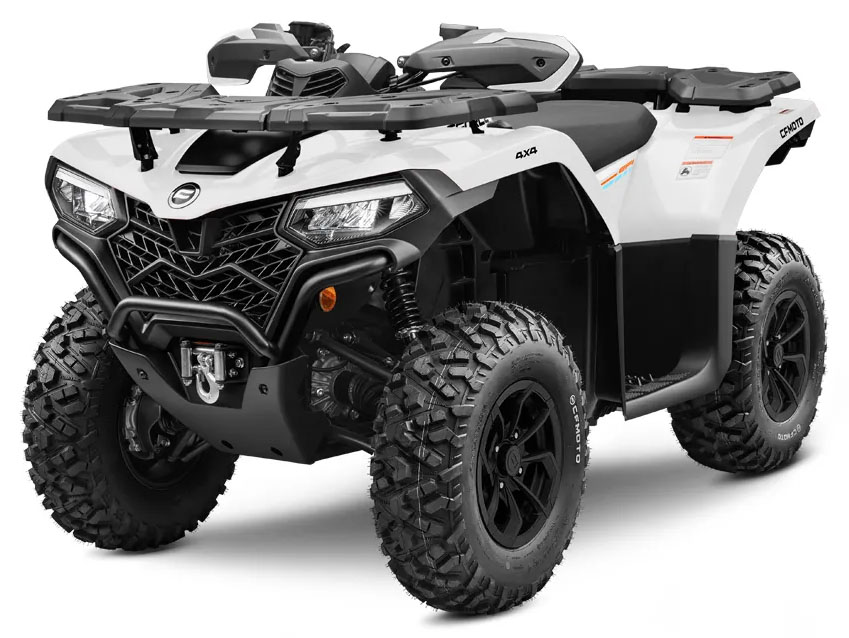
On a tighter budget, the CFMoto CForce 400 ($5,999) matches the Rancher’s power and adds standard EPS for less, trading Honda’s reputation for value, and the Suzuki KingQuad 400ASi ($7,199) is another proven, easy-riding mid-size option.
Where it sits in the Honda lineup
Honda’s utility ATV ladder is deep. Below the Rancher, the FourTrax Recon ($5,249) is a smaller, simpler 229cc machine for lighter duty and tighter budgets. Above it, the Foreman 520 ($7,499) steps up to more torque and clearance for harder work, the Foreman Rubicon 520 ($8,999) adds independent rear suspension and a smoother ride, and the Rincon 680 ($9,799) tops the range with a big automotive-style automatic. The Rancher sits right in the value heart of that lineup.
Price and value: is it worth it?
At $6,199 the Rancher 420 is a benchmark for value in the ATV world. It undercuts nearly every big-bore rival, and against similarly sized machines it counters with Honda’s reliability, the belt-free DCT option and resale value that stays strong for years. You can spend less on a value-brand quad and get more features, or spend more for big-bore power, but few machines match the Rancher’s blend of low price, dependability and configuration choice.
So is it worth it? For the buyer who wants a quad that will simply keep working, and who does not need big-bore power or high ground clearance, absolutely. It is one of the safest, smartest buys in powersports. If you want more muscle or more clearance, Honda and its rivals have machines for that, but the Rancher remains the default answer to “what is a good, reliable first ATV” for a reason.
Pros and cons
The good: Honda’s legendary reliability and strong resale, a wide choice of transmissions including the belt-free DCT, a friendly and approachable 27 hp engine, a light and easy-to-ride chassis, and a low, value-leading price.
The catch: modest mid-size power, low 6.9-inch ground clearance that limits rough terrain, a conservative tow rating, and no power steering on the base trims.
The verdict
The 2025 Honda FourTrax Rancher 420 is the default recommendation for a good, reliable utility ATV, and it earns that the old-fashioned way, by lasting. It is not the most powerful or the tallest quad in its class, but it is approachable, deeply configurable and backed by the best reliability reputation in the business, at a price that undercuts most rivals. For a first real ATV or a dependable property machine, it is one of the easiest buys to recommend. Just go in knowing the low clearance and mid-size power, and decide whether you would rather step up for more of either.
Want to see it head to head with something specific? Drop it into the side-by-side comparison tool, or browse the full database to filter by power, price and weight.